


Summary
- EA's strategy games like Populous: The Beginning offer unique, experimental gameplay mechanics.
- Dungeon Keeper by EA allows players to be evil by managing a dungeon and employing strategic tactics.
- Spore and Command & Conquer series showcase EA's diverse range of strategy games, blending creativity, conquest, and unique gameplay.
EA might be known for its massive franchises like FIFA or The Sims, but its contributions to the strategy genre deserve just as much attention. Behind the scenes of sports arenas and battlefield shooters, EA has quietly backed some of the smartest, strangest, and most creative strategy titles to ever grace a PC screen.

10 Best 4X Strategy Games Ever, Ranked
Throughout the years, many 4X strategy games have been released, but the following have earned their spot in the genre's hall of fame.
From god sims to Cold War mind games, these EA strategy games not only did it best, but still hold up today, sometimes because of their mechanics, and sometimes in spite of them.
Strategy games either published and/or developed by EA will be considered for this list.
6 Populous: The Beginning
The World Ends When You Forget to Cast Lightning
Populous: The Beginning
- Released
- November 17, 1998
- Platform(s)
- PC, PlayStation (Original), PlayStation Portable, PlayStation 3, PS Vita

The third entry in Peter Molyneux’s Populous series ditched the old isometric view and fully embraced 3D terrain at a time when most strategy games were still struggling with pixels. But what really set Populous: The Beginning apart was its fusion of god-game mechanics with real-time strategy. Instead of merely influencing followers from on high, players directly controlled a shaman—an actual unit on the battlefield—who could cast apocalyptic spells like tornadoes, firestorms, and yes, lightning that could instantly vaporize enemy troops.
There was something mesmerizing about raising or lowering land to shape the perfect battlefield, then calling down divine wrath on a rival tribe just when they thought they had the upper hand. The game was oddly personal for a strategy title, where success depended less on economy management and more on timing chaos just right. It was weird, bold, and wonderfully experimental in a way few RTS titles have dared to be since.
5 Dungeon Keeper
Management By Torture Trap

Dungeon Keeper
- Released
- June 26, 1997

WHERE TO PLAY

- ESRB
- m
- Developer(s)
- Bullfrog Productions
- Genre(s)
- Real-Time Strategy
- Platform(s)
- PC

Long before indie games made being evil trendy, Dungeon Keeper was already letting players stuff heroes into spike traps and slap minions into working harder. The entire premise revolved around building and defending a twisted dungeon while keeping a growing roster of monsters well-fed, loyal, and brutally efficient. Instead of protecting kingdoms, players were the ones running hell.
Beneath the surface-level gimmick, there was some real strategy at play. Digging out corridors wasn’t just aesthetic—it shaped AI behavior. Rooms had actual functions, like hatcheries or training areas, and getting their layout wrong could cause mutinies. Plus, Dungeon Keeper had a genius possession mode, where players could see the world from a minion’s perspective, even if it was just to run screaming at the sight of an overpowered knight invading the lair.

15 Games That Let You Build Dungeons
There aren't a whole lot of games out there that let you be the one in control of the 'evil villains' dungeon, but the few that exist are a blast.
Bullfrog's signature British wit made sure it never felt too grim, even when bodies piled up. And it didn’t hurt that the entire game was narrated by the silky, sinister voice of Richard Ridings, making every command sound like bedtime stories from Satan.
4 Spore
Evolution Is Messy

Spore
- Released
- September 7, 2008
WHERE TO PLAY
Calling Spore a strategy game feels strange at first—until players realize they’re literally designing a species and guiding it from tidepool goo to galactic empire. Will Wright’s experimental sandbox blurred the line between creativity and conquest. It wasn’t just one game, but five stitched together: cell stage, creature stage, tribal stage, civilization stage, and finally, space stage.
Each phase had different mechanics, with tribal and civilization phases bringing in the most traditional RTS elements. Players built armies of singing diplomats or warmongering religious zealots, all based on how their creatures evolved earlier. There was an odd beauty in watching a creature that started life as a bug-eyed blob eventually drop a nuke on an enemy city while still waddling on chicken legs.
The late-game space stage became its own microcosm of galactic politics, terraforming, and interplanetary warfare. And even if the gameplay sometimes buckled under its own ambition, Spore remains one of the most unusual strategy-adjacent titles EA ever published, mostly because no one else dared to even try something this sprawling again.
3 Command And Conquer: Generals
Terrorism, Propaganda, and a Truckload of C4

Command & Conquer: Generals

- Released
- February 10, 2003
- Developer(s)
- EA Pacific, i5works, Aspyr
- Genre(s)
- Strategy, Real-Time Strategy
- Platform(s)
- PC, macOS
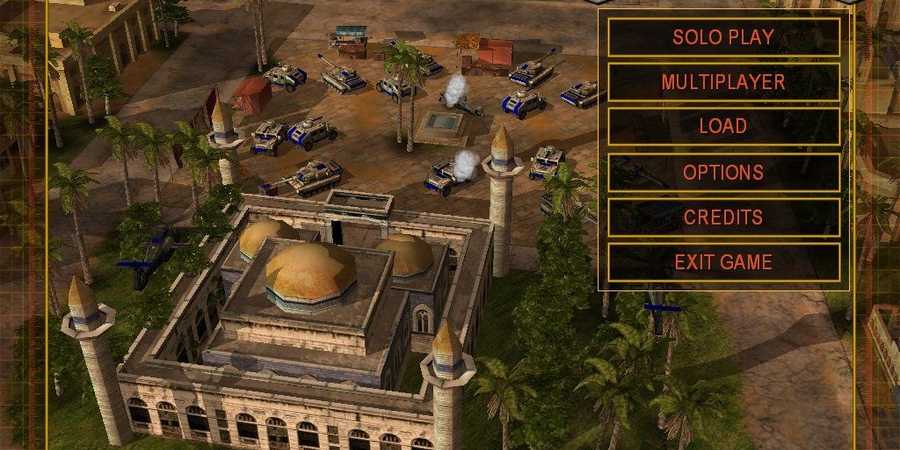
This one was controversial from the start, not just for the sharp turn into modern warfare, but for how uncomfortably close it came to real-world geopolitics. Gone were the tongue-in-cheek FMVs of Kane and his Brotherhood. Command & Conquer: Generals brought in factions based on the USA, China, and a fictional terrorist network called the Global Liberation Army.
Each faction played like a completely different strategy game. America relied on air superiority and precision, China went all-in with numbers and nuclear might, and the GLA... Well, the GLA was the strategy equivalent of throwing a Molotov cocktail at a tank and somehow winning. Their gameplay revolved around sneak tactics, tunnel networks, and ambushes using disposable troops. It was messy, chaotic, and extremely fun.

7 Command & Conquer Mods That Are Worth Playing
The Command & Conquer modding community have been at it for decades, creating brand new twists and unique takes on the RTS formula of the series.
Generals also introduced the Generals system in Zero Hour, giving players unique sub-faction abilities like fuel-air bombs or sneaky hacker units. And thanks to an active modding community, it still enjoys a cult following, especially for those who love watching a carpet bomb take out half a base in one swoop.
2 Command And Conquer: Red Alert 2
The Chrono Legionnaires Don’t Wait For You To Finish That Tank

Command & Conquer: Red Alert 2
- Released
- October 23, 2000
WHERE TO PLAY
- ESRB
- t // Animated Violence
- Developer(s)
- Westwood Studios
- Genre(s)
- Real-Time Strategy
- Platform(s)
- PC

If Generals was EA’s brutally modern take on strategy, Red Alert 2 was its Saturday morning cartoon fever dream—and that’s what made it so beloved. Set in an alternate timeline where Albert Einstein erased Hitler from history, the Soviets and Allies go head-to-head with psychic beacons, mind-controlled squids, and Tesla-powered war bears.
Every unit was distinct. The Allies had weather control devices and time-traveling Chrono Legionnaires who could erase enemies from existence. The Soviets had Kirov Airships that floated menacingly above battlefields while casually announcing their presence like flying doomsday blimps. It all looked like nonsense on paper, but Red Alert 2 made it work with tight balancing and absurdly fun missions.
Even the live-action cutscenes added to the charm, with hammy acting and nuclear brinkmanship somehow coexisting in the same narrative. It was a rare RTS that didn’t care about realism, and because of that, it felt limitless. Strategy was important, sure, but so was style, and Red Alert 2 had it in spades.
1 SimCity 4
When Traffic Management Feels Like Chess

SimCity 4
- Released
- January 14, 2003


WHERE TO PLAY


No military, no monsters, no mind control—just a growing city and the impossible task of keeping it from imploding. SimCity 4 might not seem like a strategy game at first glance, but players who’ve tried to fix a single clogged avenue without destroying half their tax revenue will tell people otherwise.
Unlike its more casual descendants, SimCity 4 gave players full control over zoning, infrastructure, ordinances, and more, without holding their hand. The simulation ran deep. High-income Sims didn’t want to live near pollution, fire stations had coverage radii that actually mattered, and misplacing a power line could spark a full-on neighborhood collapse. The tiniest decisions rippled out in ways that felt both satisfying and terrifying.
And for those who really wanted to dig in, the Rush Hour expansion added regional connections, customizable transit networks, and actual traffic analysis tools. It also turned road layout into a legitimate science experiment. No other city-builder has been quite as complex or as punishing—and that’s precisely why it’s still unmatched.

8 City-Builders With The Best Disaster Management Systems
These city-builders will throw devastating disasters the player's way but ensure they have the means to survive them and continue building.