


Summary
- Ultimecia Castle in FF8 features unique mechanics and an oppressive atmosphere that mirrors the sorceress antagonist.
- Kefka's Tower in FF6 breaks from norms by requiring players to assemble three parties, creating a unique structure.
- Orphan's Cradle in FF13 is a visually impressive and narratively essential dungeon with a futuristic and surreal aesthetic.
One of the most enjoyable and iconic aspects of Final Fantasy is surely its dungeons, which pose challenges and sometimes even unique mechanics for players to explore, especially those that mark the last stretch of each adventure. Thus, the Final Dungeons of the franchise usually set the stage for memorable battles, equally striking soundtracks, and the closing of the entire narrative players have witnessed up to that point.

8 Best References To Final Fantasy Games In Magic The Gathering’s Set, Ranked
Discover the best Final Fantasy references in Magic: The Gathering, featuring iconic scenes, characters, and hidden easter eggs from the series.
Therefore, the best Final Dungeons of Final Fantasy are those that manage to deliver a good experience to players, offering an atmosphere as strong as their layout, allowing players to explore the JRPG one last time. So, whether through the atmosphere they create or even the enemies present in their corridors, they manage to establish themselves as some of the finest ever made in the genre and a great way to close the adventure.
10 Orphan's Cradle (Final Fantasy 13)
A Visually Impressive And Narratively Essential Dungeon

Final Fantasy 13

- Released
- March 9, 2010



WHERE TO PLAY



- ESRB
- t
- Genre(s)
- JRPG

Orphan's Cradle, the final dungeon of Final Fantasy 13, stands as one of the most visually impressive in the franchise, reflecting the futuristic and surreal aesthetic that runs through the game's narrative. Located inside Cocoon, the structure defies conventional logic with floating platforms, glowing paths, and vibrant visual elements that perfectly represent the protagonists' inner conflict and the emotional weight of their journey.
Beyond its visuals, Orphan's Cradle is also crucial from a narrative standpoint, serving as the arena for the ultimate showdown against Orphan, a central entity to the fate of Cocoon and the world. While progressing through the dungeon, players face challenging enemies that demand full mastery of the combat mechanics, culminating in an intense, emotionally charged battle that encapsulates the themes of sacrifice and redemption central to the JRPG's story.
9 Interdimensional Rift (Final Fantasy 5)
A Chaotic But Fun Final Dungeon

Final Fantasy 5
- Released
- December 6, 1992
WHERE TO PLAY
- ESRB
- T For Teen due to Mild Fantasy Violence, Partial Nudity
- Genre(s)
- JRPG
Unlike many other Final Dungeons of Final Fantasy that provide players with a cohesive structure to explore as they pursue the final confrontation against the game's villain, the Interdimensional Rift of the fifth entry breaks that rule a bit. This is because its theme, with the villain Exdeath causing the collapse of dimensional boundaries, forces the characters to traverse fragmented, chaotic areas until reaching the fight against him.
So, within the narrative of Final Fantasy 5, the Interdimensional Rift makes perfect sense, since it represents Exdeath's final plan to consume everything, and it is therefore logical that each area of the dungeon differ completely from the last. Moreover, the final battle with the villain is unique, as he transitions through three different forms culminating in the fight against Neo Exdeath, which feels ripped from a horror film.
8 Lunar Subterrane (Final Fantasy 4)
The Dungeon Design Is Well Crafted
After three games that followed a similar structure and placed limited emphasis on narrative, Final Fantasy 4 delivered a more developed story and more creative gameplay design, culminating in an epic conclusion. Lunar Subterrane became one of the series’ first truly grand dungeons, transporting the party to the moon and, despite relatively simple visuals compared with later entries, showcasing excellent design that elevated the finale.
Thus, given the game's expanded scope, especially in its narrative, Lunar Subterrane is also one of the most ambitious Final Dungeons in Final Fantasy, requiring players to leave Planet Earth to face the true villain, Zeromus, on the moon. Furthermore, even though the visuals are simple, its transparent scenery heightens the feeling of being in a truly different place.
7 Inside Sin (Final Fantasy 10)
Offers One Of The Best Settings In The Franchise

Final Fantasy 10
- Released
- December 17, 2001

WHERE TO PLAY





- ESRB
- T for Teen: Mild Blood, Mild Suggestive Themes, Violence
- Genre(s)
- JRPG
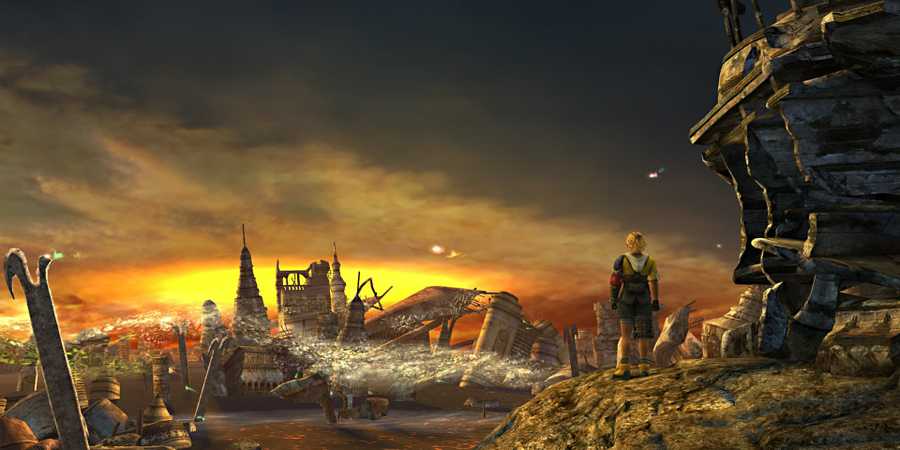
Delivering a significant leap in graphical quality over its predecessors, Final Fantasy 10 presented one of the most beautiful games on the PlayStation 2, taking players on a spiritual journey through Spira. That entire journey is literally concluded inside Sin, the giant beast that serves as one of the main antagonists of the JRPG, offering an incredible setting as players advance to bring the narrative to a close.

8 Strongest Protagonists In Final Fantasy Games, Ranked
The Final Fantasy games have introduced fans to many powerful protagonists, but few can deny that the following stand out in terms of strength.
Given the game's own narrative, Inside Sin provides several interesting moments for those who enjoy the story of Final Fantasy 10, offering points filled with symbolism along the path. Thus, as Tidus finally understands his true role in that cycle, the JRPG guides players toward an epic battle against Yu Yevon, while also delivering one of the most satisfying and saddest endings in the entire franchise.
6 Pandæmonium (Final Fantasy Type-0)
The Final Dungeon Is An Incredible Experience

Final Fantasy Type-0
- Released
- October 27, 2011

WHERE TO PLAY
- ESRB
- m
- Genre(s)
- Action RPG
Final Fantasy Type-0 delivers one of the most intense final dungeons in the entire franchise with Pandæmonium, an enormous, demanding gauntlet where players must apply and refine every mechanic learned throughout the game’s fast-paced campaign. The dungeon is divided into thematic sections that rigorously test party balance, forcing thorough preparation before advancing to each fresh challenge.
Pandæmonium’s main highlight lies in the way it fuses narrative and gameplay into a single relentless flow, mirroring the characters’ struggle against fate. With mechanics such as buff disruption, no automatic regeneration, and back-to-back bosses, the final challenge rightfully secures Type-0’s dungeons a place among the finest, truly iconic, ever crafted in any spin-off of the franchise.
5 Northern Cave (Final Fantasy 7)
A Good Warm-Up For One Of The Franchise’s Best Villains

Final Fantasy 7
- Released
- January 31, 1997
WHERE TO PLAY
- ESRB
- T for Teen: Blood, Fantasy Violence, Language, Mild Suggestive Themes
- Genre(s)
- RPG
After all the growth Cloud experiences throughout the game, recovering his memories and discovering who he truly is, the moment arrives for players to descend into the planet’s core for the climactic showdown with Sephiroth. As the party moves downward through the dungeon’s corridors, the environment steadily transforms, abandoning the game’s steampunk style to embrace an organic, crystalline, and even alien aesthetic.
In this way, the presence of Sephiroth and of Jenova herself can be felt throughout the area, while the planet’s own struggle for survival is made equally clear. The setting is expertly crafted, and its design, occasionally presenting optional routes that reward exploration with useful items, serves as an effective warm-up that prepares the entire party for the final battle against the story’s towering antagonist.
4 Insomnia (Final Fantasy 15)
One Of The Final Dungeons With The Best Atmosphere In The Series

Final Fantasy 15
- Released
- November 9, 2016
WHERE TO PLAY
- ESRB
- T for Teen: Language, Mild Blood, Partial Nudity, Violence
- Genre(s)
- Action RPG
The ruins of Insomnia in Final Fantasy 15 provide one of the franchise’s most distinctive, visually arresting final dungeons, turning a modern metropolis into a devastated battlefield. Broken towers, shattered stained-glass windows, and a red-tinged mist produce a melancholy yet somber and grand atmosphere, while raging flames ignited by Ardyn cast the scene in dramatic light.
Beyond its striking visuals, Insomnia stands out for its varied challenge, packing powerful enemies, multiple bosses, and mechanics that restrict item use. Yoko Shimomura’s score intensifies the melancholic tone, and the narrative climaxes in the decisive confrontation between Noctis and Ardyn, making this urban dungeon a vivid symbol of a fallen kingdom and a hero’s sacrifice.
3 Memoria And The Crystal World (Final Fantasy 9)
Present One Of The Series’ Best Final Dungeon Concepts

Final Fantasy 9
- Released
- July 7, 2000
WHERE TO PLAY
- ESRB
- T for Teen: Violence, Mild Language
- Genre(s)
- JRPG
Although it lacks the expansive layout of other Final Fantasy endgame areas and opts for a more linear path, Memoria and the Crystal World present one of the series’ finest Final Dungeon concepts. An abstract realm formed from the planet’s memories, it blends ancient ruins with ethereal spaces, creating surreal vistas that invite players to savor the journey.

Final Fantasy: 8 Most Bittersweet Endings In The Games, Ranked
Not all Final Fantasy games end on entirely happy notes. Here are some examples that feature particularly bittersweet endings.
Even though its layout is not as intricate as other dungeons, the narrative behind Memoria elevates it, for being woven from Gaia’s memories allows for striking interactions between characters as they advance. The final confrontation with Kuja further heightens the emotional weight carried by the JRPG, sealing its place among the franchise’s most truly memorable finales.
2 Kefka's Tower (Final Fantasy 6)
The Last Boss Makes It One Of The Best Final Dungeons In Final Fantasy

Final Fantasy 6
- Released
- October 11, 1994
WHERE TO PLAY
- ESRB
- T For Teen Due To Fantasy Violence, Partial Nudity
- Genre(s)
- RPG
One of the most compelling aspects of Kefka’s Tower in Final Fantasy 6 is how it works, because to advance players must assemble three separate parties, deploying the vast majority of the JRPG’s cast and creating a non-linear progression through Kefka’s servants. This structure breaks sharply from the franchise’s earlier norms and delivers something unmistakably unique.
Moreover, the very concept behind Kefka’s Tower makes the final encounter with the villain even more epic, because the Final Dungeon is built from the wreckage of a world he himself reduced to ruins. Thus, the heroes must confront the terror that plunged the planet into chaos, and defeating him means restoring balance and bringing peace once more to that shattered land.
1 Ultimecia Castle (Final Fantasy 8)
Its Mechanics Make It The Best Final Dungeon In Final Fantasy

Final Fantasy 8
- Released
- February 11, 1999
WHERE TO PLAY
- ESRB
- T for Teen: Mild Language, Suggestive Themes, Violence
- Genre(s)
- JRPG
Several factors combine to make Ultimecia Castle the finest Final Dungeon ever crafted for a Final Fantasy game, the first being its carefully designed setting, which marries gothic elements to an oppressive atmosphere that perfectly mirrors the JRPG’s sorceress antagonist. The moment is further elevated by a soundtrack that weaves organs and choirs to reinforce the location’s imposing aesthetic.
However, beyond the castle’s design, the mechanics introduced there also make it a singular experience, because the party can be split into two groups to explore while the characters’ abilities are sealed and must be reclaimed by defeating the sorceress’s minions. Trapped in a temporal distortion created by Ultimecia, the fortress serves as the ideal stage for the story’s conclusion.

8 Final Fantasy Characters Who Are The Most Relatable, Ranked
Despite the magic, monsters, and mythology, the Final Fantasy series' deeply relatable and human characters will always keep players invested.