


Summary
- Games with mechanical shifts mid-playthrough rewrite genres and keep players engaged in novel gaming experiences.
- Smoothly transitioning between gameplay styles, these exceptional games enhance player immersion and interaction.
- Games like Final Fantasy XV and Nier: Automata change mechanics to deepen narratives, creating memorable and impactful experiences.
Consistency is usually key to game design, but there are also more extreme cases, games that decide to change mechanics halfway through the game. Such switches not only constitute twists but also rewrite the genre, change the pace, and allow the player to adjust to a novel gaming philosophy. It is a creative gamble that not many studios would take and fewer succeed at that.

8 Games That Are More Impactful After The First Playthrough
Sometimes, completing a game once isn't enough. In those cases, a second (or third) playthrough can reveal new lore or an entirely new story.
The most interesting thing about these games is the way they integrate such drastic changes as they seem so natural. Be it a change from classic platformers to puzzle-solving explorations in the form of metroidvania, or differences between being free in open-world games to having a scripted linear narrative, all games show how variation can increase player interaction. These are the exception games where a change like this never kills immersion. Instead, immersion becomes even more real.
Spoiler Warning: Due to the nature of this list, major mechanical or narrative spoilers will be discussed in each entry below.
1 Final Fantasy 15
Open World Exploration to Narrative-Driven Corridor


Final Fantasy 15

- Released
- November 9, 2016


WHERE TO PLAY





- Developer(s)
- Square Enix
- Publisher(s)
- Square Enix
- Genre(s)
- Action RPG
- OpenCritic Rating
- Strong

Throughout most of the playtime, Final Fantasy XV serves as a wide-scale road trip. The players are introduced to a lush open world, side quests, and interactions with the main cast in peaceful camping, driving, and exploring.
In the last act, however, there is a dramatic transformation of the experience. It loses the freedom of exploration, replacing that level of freedom with a highly organized, linear narrative sequence. The fact that this shift from open-world game to emotional narration increases the sense of urgency and underlines the stakes is something that leaves a lasting impression and what separates the final chapters.
2 The Pedestrian
A Puzzle Game that Flips its Entire Perspective


The Pedestrian




- Released
- January 29, 2020


WHERE TO PLAY



- Developer(s)
- Skookum Arts
- Publisher(s)
- Skookum Arts
- Genre(s)
- Indie, Puzzle
- Platform(s)
- Nintendo Switch, PC, PlayStation 4, PlayStation 5, Xbox One, Xbox Series X, Xbox Series S
- OpenCritic Rating
- Strong
On the surface, The Pedestrian appears to be a light-hearted and bright little 2.5D puzzle-platformer game in which players must steer through traffic signs and illustrations through cityscapes as a stick figure. What is new about it is that the panels can be moved so that the pathways can become connected, and the atmosphere is more tactile and schematic.
However, the deeper they go along, the more the game confuses the boundaries between 2D and 3D space. Players halt the signs at last and end up playing with the surroundings of the real world and even the screen itself. It takes a leap in perspective, shifting it not only in novelty but to the fundamental level of mechanics — the ways that gamers are bound to think about space, movement, and logic can never be the same. It makes a fantastic, head-spinning change, but it is totally earned and not anything eagerly forced.
3 Super Paper Mario
From Classic RPG to Real-Time Dimensional Flipping


Super Paper Mario
- Released
- April 9, 2007

WHERE TO PLAY
- Developer(s)
- Intelligent Systems
- Publisher(s)
- Nintendo
- Platform(s)
- Wii
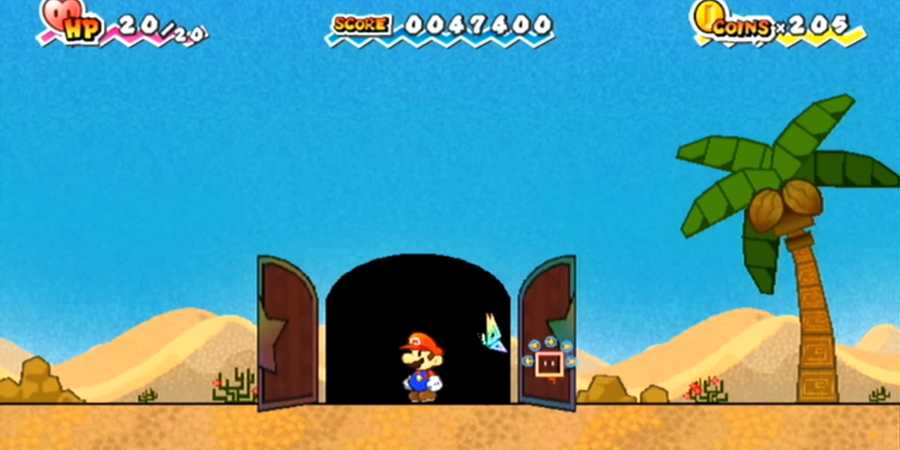
At first, this weird Nintendo game feels like it is a classic side-scrolling platformer — delightful, light-hearted, and full of humor typical of the Mario universe. Enemies are kicked, punched, and jumped on as is typical in any game in the series.
Then, it throws in a twist: there is a dimension-changing gameplay mechanic that allows players to switch between 2D and 3D space, which does not only change the graphics, but also the nature of the puzzles, exploration, and progression. All of a sudden, there are secrets happening behind the walls and an additional level within levels. And what is more, the game is even heavily RPG-focused and story-oriented — all of which makes it even more than just a light Mario spin-off. It turns into a genre hybrid that actually comes as a surprise.
4 Brutal Legend
From Hack-and-Slash to Heavy Metal RTS


Brutal Legend
- Released
- October 13, 2009

WHERE TO PLAY

Brutal legend attracts gamers with the metal style, the comedy of Jack Black, and dynamic hack-and-slash action. Players start out slaying demons with swords or axes and blowing up amps in an over-the-top rock and roll Armageddon.
Then comes the bang, and it becomes a strategy game in real-time. Players find themselves in charge of units, in charge of defending stages, and giving tactical commands in the middle of battles. It was a twist that sent fans into two layers, but definitely altered the whole flow of the game. It was surprising, but it brought an element of depth and craziness that made it as epic as a stadium show finale.
5 The Messenger
A Retro Platformer that Jumps Through Time and Genre


The Messenger
- Released
- August 30, 2018
WHERE TO PLAY
- Developer(s)
- Sabotage
- Publisher(s)
- Devolver Digital
- Genre(s)
- Platformer
- OpenCritic Rating
- Mighty

The game itself is introduced as a classic 8-bit ninja action platformer, and it is played as a compact and nostalgic experience. Players slash demons, avoid projectiles and sprint through pieces of levels like any side-scroller hack and slash.
Halfway through, the game changes — visually and mechanically — into 16-bit Metroidvania. The levels become non-linear, and the game opens up new areas in the levels, and backtracking is vital with new abilities in hand. The genre switch is so smooth and meta that it makes the game a sarcastic self-reflection on retro gaming in general, which makes it both interesting to play and devious fun at the same time.
6 Baba Is You
Where Words Rewrite Reality, Puzzle Rules are the Puzzle


Baba Is You
- Released
- March 13, 2019

WHERE TO PLAY


- Developer(s)
- Hempuli
- Publisher(s)
- Hempuli
- Genre(s)
- Puzzle
- OpenCritic Rating
- Mighty

Chances are that after the first look, Baba Is You is going to look like a simplistic block-pushing puzzle game with the bare bones of graphics and admittedly simplistic-looking mechanics. Yet the genius is in its rule structure, which players can change directly.

37 Games With The Saddest Storylines, Ranked
Games have, over the decades, evolved to place greater emphasis on their narratives, and here are some which deliver stunningly emotional stories.
As the game goes on, the players start controlling logic in-game by moving words like “Wall Is Stop” or “Baba Is You.” This would be a mechanic that rapidly develops, as it forces the players to reconnect the wires of their understanding of object identity, spatial constructs, and even the language per se. This transition transforms the game into less of a puzzle-solving task, and more of an experiment in reality itself.
7 Fable 3
When the Hero Becomes the Tyrant — Revolutionary to Ruler with Consequences


Fable 3
- Released
- October 26, 2010

WHERE TO PLAY
- Developer(s)
- Lionhead Studios
- Publisher(s)
- Microsoft Game Studios
- Genre(s)
- Action RPG
The prologue of Fable III is an old path most trace — players begin at the low starting point and rise to the head of a revolution, making alliances, giving virtuous oaths, and overthrowing an evil monarch to espouse a sense of justice.
When this power is obtained, then this shift in focus in the game is dramatic. Gamers now have to administer between morality and survival. Any choice, be it taxing the citizens or financing the defenses, is going to have long-term effects. The game that begins as an RPG on the theme of choice turns into the game of the ruler, a game of incompatible ideals and brutal realities.
8 Star Wars Jedi Knight 2: Jedi Outcast
Blaster to Saber: Reclaiming the Force


Star Wars Jedi Knight II: Jedi Outcast
- Released
- March 26, 2002
WHERE TO PLAY

The first part of Jedi Outcast places the protagonist in the role of a solid mercenary solely relying on the use of blasters, cover systems, and tactical shooting. There are no force powers, and lightsabers feel like a thing of the past.
Next is the twist of events: the restoration of Jedi powers. At that, the mechanics of the game take a full turn, setting up force-powered battles, fancy jumping, and dynamic lightsaber fights. This change not only makes players more powerful; it changes how combat and level design work going forward throughout the game.
9 Nier: Automata
Shifting Genres as a Narrative Weapon


NieR: Automata
- Released
- March 7, 2017

WHERE TO PLAY
- Developer(s)
- Platinum Games
- Publisher(s)
- Square Enix
- Genre(s)
- Action RPG
- OpenCritic Rating
- Mighty
On the surface, the game Nier: Automata looks like any other sleek, fast-paced action RPG in the post-apocalyptic landscape ruled by androids and machines. Cool fighting, hypnotizing music, and philosophical undertones make the game an experience of war and identity crisis.
While most similar games eventually settle into a core gameplay loop, Automata is continuously evolving by switching between hack-and-slash action game, bullet hell shooter, 2D platformer, and text-based interaction, all throughout the same playthrough. It does not give players a chance to relax and always changes in form and plot. It is a rather exceptional instance when the mechanical changes cannot be described merely in terms of gimmicks but rather as repetitions of more profound themes of the story, and that is exactly what makes this game so exciting to play.

9 Indie Games With Unique Mechanics That Deserve A Sequel
These indie gems aren’t just games—they’re blueprints for innovative mechanics, each one begging for a sequel to explore its full potential.