


Summary
- Sega's horror games range from grindhouse chaos to psychological horror, offering diverse and disturbing experiences.
- House of the Dead: Overkill delivers a self-aware, gore-soaked, yet entertaining rail shooter experience.
- Rise of Nightmares uses motion controls to create an immersive, unsettling, and ambitious horror gameplay.
Sega might be best known for blue hedgehogs and arcade racers, but when it dips into horror, it doesn't hold back. Over the years, Sega has backed some of the most deeply unsettling, creatively twisted, and technically ambitious horror games to ever haunt a screen.
From grindhouse shooters soaked in irony and gore to slow-burn psychological thrillers that make breathing feel optional, Sega’s horror catalog is as diverse as it is disturbing. Some of these games go straight for the jugular with blood-soaked chaos, while others creep into the player's head and stay there for years.
Horror games that are published and/or developed by Sega will be considered for this list.
7 The House of the Dead: Overkill
A Bloody Love Letter to Grindhouse Cinema

The House of the Dead: Overkill


- Released
- February 10, 2009
- ESRB
- M For Mature 17+ // Blood and Gore, Intense Violence, Partial Nudity, Sexual Themes, Strong Language
- Developer(s)
- Headstrong Games
- Publisher(s)
- Sega
- Platform(s)
- Nintendo Wii, PC, PlayStation 3
- Genre(s)
- Rail Shooter

This one doesn’t even pretend to be subtle. The House of the Dead: Overkill leans so hard into B-movie territory that it bursts through the fourth wall with a shotgun in one hand and a bucket of gore in the other. Styled like a lost exploitation flick from the '70s, it stars Agent G and Detective Isaac Washington as they blast through waves of mutants, all while hurling profanity that would make a sailor blush.
The story is ridiculous, self-aware, and constantly escalating—from creepy carnivals to mutant-infested swamps, every level feels like a parody of a horror subgenre. And it works, because the game knows exactly what it is. There’s a level of intentional trashiness here that feels crafted rather than careless. Even the screen grain effect and intentionally bad film cuts are part of the experience.
But beneath the sleaze and chaos, it’s still one of the most entertaining rail shooters ever made. The shooting feels tight, the pacing never lets up, and the sheer variety of monsters is impressive. It’s also one of the few horror games that manages to be genuinely funny without deflating the tension. Plus, the boss fights are as grotesque as they are creative, including a fleshy, overgrown fetus that somehow manages to be both hilarious and horrifying. This is grindhouse horror with a controller, and it absolutely owns it.
6 Rise of Nightmares
When Motion Controls Were Genuinely Scary

Rise of Nightmares

- Released
- September 6, 2011


WHERE TO PLAY


There’s something inherently off about full-body motion controls in horror games—and Rise of Nightmares proved it. Released for the Kinect in 2011, this was one of the few horror titles built specifically around motion-based gameplay. And while it didn’t always work perfectly, there’s no denying how weirdly immersive (and uncomfortably physical) the experience was.
Set in a deranged Eastern European mansion/laboratory, the story follows an American tourist trying to rescue his kidnapped wife while being hunted by cybernetic undead created by a mad scientist with a metal jaw. It’s ridiculous, but the game leans into that pulp horror vibe with chainsaw-wielding monsters, spike traps, and grotesque enemy designs that wouldn’t look out of place in a Clive Barker fever dream.

7 Best Horror Games That Play On Your Fear Of The Dark
These horror games make sure players know the dark is not their friend.
But it’s the motion controls that defined the experience. Players had to physically swing their arms to attack, kick to push enemies back, and even mime actions like turning a valve or opening a creaky door. It often led to frustration, but it also created a rare sense of bodily tension—there’s something deeply unsettling about being forced to physically perform the actions that horror games usually just ask for with a button press. It was flawed, no doubt, but ambitious in a way that’s hard not to respect.
5 The House of the Dead 2
Classic Arcade Terror That Still Hits Hard

The House of the Dead 2


- Released
- September 9, 1998
WHERE TO PLAY
- ESRB
- M // Animated Blood and Gore, Animated Violence
- Developer(s)
- Sega
- Publisher(s)
- Sega
- Platform(s)
- Arcade, Sega Dreamcast, PC, Wii
- Genre(s)
- Light Gun Shooter

Back when light guns were still a thing in living rooms and arcades, The House of the Dead 2 was king. Released in 1998, this sequel refined everything from the original and became one of the most iconic horror shooters of its time. Players once again step into the shoes of AMS agents as they try to contain a biotechnological outbreak in Venice, of all places.
What makes this one stand out even today is how fast it throws players into the chaos. The game wastes no time unleashing hordes of undead, grotesque bio-experiments, and end-of-level bosses that feel like they were designed by someone with a deep fear of skinless things. And despite the game’s age, its pacing, branching paths, and co-op design make it surprisingly replayable.
The voice acting has become legendary in its own right, not for quality, but for how gloriously bad it is. Lines like “Suffer like G did?” Have become meme material, but they only add to the charm. There’s something about blasting zombies to MIDI guitars while listening to bizarre one-liners that makes the whole thing feel timeless. It’s campy, chaotic, and absolutely unforgettable.
4 Condemned 2: Bloodshot
A Nightmare That Feels Too Real

Condemned 2: Bloodshot
- Released
- March 11, 2008

WHERE TO PLAY

- ESRB
- M // Blood and Gore, Intense Violence, Strong Language, Use of Drugs and Alcohol
- Developer(s)
- Monolith
- Publisher(s)
- SEGA
- Platform(s)
- PlayStation 3, Xbox 360
- Genre(s)
- Survival Horror, Shooter

Where Criminal Origins was grim, Condemned 2: Bloodshot is unhinged. It takes the bleak world of the first game and turns everything up to 11, then snaps the dial off. Ethan Thomas returns, now disgraced, broken, and spiraling. The descent into madness is no longer subtext—it’s the whole journey.
The melee combat system got a serious upgrade here, making every fight feel like a barroom brawl in hell. Blocking, countering, and disarming are more refined, and the range of available weapons has expanded from pipes to rebar, bricks, and even dismembered body parts. But the new combat doesn’t come at the expense of the horror. If anything, the surreal elements are even more pronounced. Shapeshifting hallucinations, corrupted versions of Ethan’s own memories, and nightmarish environments blur the line between psychological and supernatural.
The Lodge, in particular, stands out as one of the most disturbing levels—a seemingly innocuous resort that turns into a Lynchian fever dream, complete with flesh-covered walls and nonsensical architecture. While some fans were divided on the game’s more action-heavy approach, there's no denying how deeply Bloodshot commits to its vision. It’s uncomfortable, unpredictable, and drenched in dread from start to finish.
3 The House of the Dead
Where It All Started, And Somehow Still Scary

The House of the Dead
- Released
- September 13, 1996


WHERE TO PLAY


The original House of the Dead was Sega’s declaration that horror had a place in arcades—and it came with blood, bile, and a body count that’d make Romero proud. Released in 1996, it introduced players to the now-iconic AMS agents, the undead outbreak, and the twisted experiments of Dr. Curien, who apparently never got the memo about ethical science.
The game’s chunky visuals, grotesque enemy design, and relentless pacing made it a favorite for anyone who wanted a quick dose of horror and adrenaline. And while it’s rough around the edges by today’s standards, it nailed the fundamentals: punchy gunplay, branching paths, and boss fights that felt suitably grotesque.

7 Best House Of The Dead Games, Ranked
The House of the Dead franchise has released a wide variety of entertaining and underwhelming entries. These are the best HotD games, ranked.
One of the most fascinating things about it is how much of its DNA influenced later games, not just in the House of the Dead series, but in horror rail shooters in general. Its use of environmental storytelling, like collapsing staircases and rooms filling with enemies based on missed shots, added just enough interactivity to make each run feel slightly different. And while it’s often remembered for its camp, this game laid the foundation for horror arcade gaming—and it still hits just as hard, plastic gun or not.
2 Condemned: Criminal Origins
A First-Person Punch to the Gut

Condemned: Criminal Origins
- Released
- November 22, 2005
WHERE TO PLAY
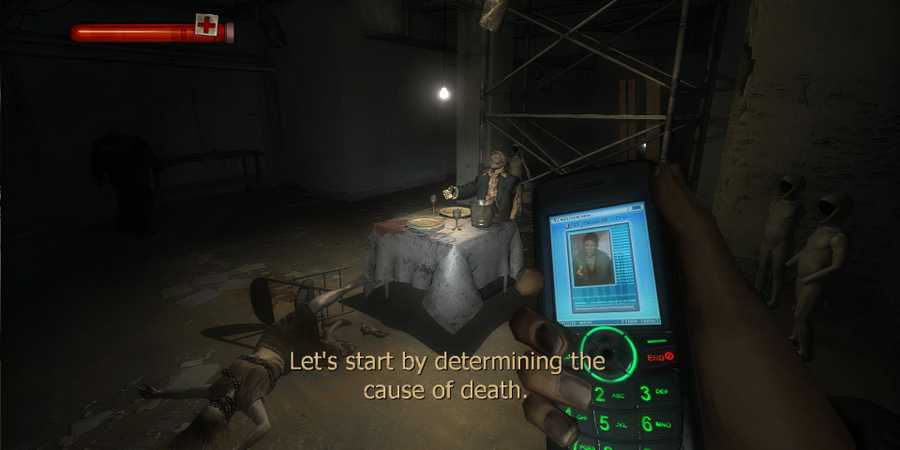
The opening hours of Condemned: Criminal Origins feel like a bad dream. Not a supernatural one—but the kind where players are trapped in a place that feels too real, being chased by people who shouldn’t be acting the way they are. Set in a decaying American city gripped by unexplained violence, players step into the shoes of FBI agent Ethan Thomas as he investigates serial murders and slowly loses his grip on what's real.
There’s no safe distance in this game. Combat is up close, brutal, and ugly. Guns are rare and unreliable. Instead, most of the fighting involves rusted pipes, planks with nails, and whatever else can be ripped from the environment. Each swing feels desperate. Every block feels like survival. And enemies don’t behave like videogame enemies—they lurk in shadows, feign retreats, and ambush from blind corners.
But it’s not just the combat that gets under the skin. It’s the decay. The game sends players through rotting tenements, abandoned malls, and flooded subway stations—each place more claustrophobic and hostile than the last. And just when it seems like things couldn’t get worse, Condemned starts flirting with psychological horror. Hallucinations, unreliable memories, and deeply disturbing imagery begin to creep in, making players question whether Ethan is chasing the killer or becoming him.
1 Alien: Isolation
It Wasn't Just the Alien—It Was the Waiting

Alien: Isolation
- Released
- October 7, 2014
WHERE TO PLAY

Few games understand fear like Alien: Isolation. It’s not about surviving waves of enemies or spraying bullets into the dark. It’s about hiding, listening, and hoping that the thing lurking just outside the door doesn’t sniff players out. Set fifteen years after Ridley Scott’s original film, players take control of Amanda Ripley, daughter of Ellen Ripley, as she arrives at Sevastopol Station looking for answers and instead finds a station in total chaos.
The Xenomorph in this game isn’t just an enemy. It’s a system—an unpredictable, self-directed menace that responds dynamically to player behavior. It remembers, it hunts, and it punishes overconfidence. Players who try the old locker trick too often will soon find themselves yanked out by the jaws of something that isn’t fooled twice. The A.I. Is revolutionary in its ability to adapt, which means the fear never fades with repetition.
Beyond the monster, the station itself is terrifying in its authenticity. The CRT monitors, flickering lights, analog beeps, and retro-futurist tech feel like they were lifted straight from 1979. Every hiss of steam, every rattling vent—it's all a setup for a jumpscare that might never come, which somehow makes it worse. Sound design here isn't just good, it’s essential. Even the motion tracker, Amanda’s lifeline, becomes a double-edged sword thanks to its loud beeping. This is survival horror distilled to its purest form: patience, paranoia, and pulse-pounding dread.

10 Horror Games To Play If You Loved Alien: Isolation
If you enjoyed what Alien: Isolation brought to the table, then give these games a shot.