


Summary
- Call of Duty's willingness to take risks and evolve with the gaming industry has allowed it to endure for 20 years, offering new experiences and game-changing gimmicks.
- The series also caters to its older players through homages, reappearances of iconic maps and weapons, and full projects centered around nostalgia, keeping old fans hooked while trying to attract new ones.
- Despite complaints about yearly releases, the practice ensures that Call of Duty remains relevant, consistently sells well, and dominates the FPS market with its consistency and ability to generate hype.
On October 29, 2003, the world was introduced to Call of Duty. Taking the form of a World War 2 shooter, this initial entry in the franchise was, like several other games in the series, a critical darling. Praised for everything from its action-packed campaign to its visuals, as well as an ambitious campaign that highlighted each member of The Allies, there was plenty to love about the game. However, while concepts like a campaign offering multiple perspectives and a leader figure named Captain Price stuck around, many other features from the original Call of Duty did not. While it may seem odd to see concepts from a Game of the Year-winning title left in the past, it is Call of Duty’s willingness to shake things up that has allowed it to endure.
If players return to the original Call of Duty on its 20th anniversary, or the updated version dubbed Call of Duty Classic, they may be surprised by how different the first game in the series was. While it still offered satisfying first-person shooting, a lack of over-the-top setpieces and the use of a proper health system where players have to gather medpacks will make for quite the shock. Add on the use of saving and loading as opposed to the modern checkpoint system, objectives being marked on a compass, and the strange sight of a World War 2 game developed by Infinity Ward, and fans will likely be stunned to see how Activision’s flagship IP has evolved. Had it not done so, though, it would likely not be the household name it is today.

Five Years Later, It’s Clear That Call of Duty: Black Ops 4 Was Underappreciated
While it had a few glaring flaws, Call of Duty: Black Ops 4 did a lot right and served as a perfect middle ground between classic and modern CoD.
The Keys to Call of Duty’s 20-Year-Long Success

Contrary to Popular Belief, Call of Duty is Willing to Take Risks
While there are parts of the original Call of Duty that continue to be felt in the series’ campaigns to this day, like its clever use of AI soldiers to add immersion, newer Call of Duty games still look startlingly different from the title that started it all. However, that is ultimately a good thing. In several ways, Call of Duty has taken risks, and in doing so has managed to evolve with the gaming industry while keeping fans on their toes.
Call of Duty’s golden era, which ranged from Call of Duty 4 to Black Ops 2, would not have been possible had the series not risked it all with Modern Warfare. With Call of Duty known only for its enjoyable World War 2 experiences up until 2007, Modern Warfare was an ambitious concept, yet it turned out to be another award-winning step forward for the series. However, instead of staying comfortable with World War 2 and modern games, the series continued to test out new eras. Some settings were majorly successful, like the Cold War and near future, while others like the distant future proved largely unpopular due to mechanics like advanced movement. Still, the Call of Duty spanning hundreds of years and highlighting wars both real and fictional was a boon. The games felt different from each other, as weapons, killstreaks, maps, and overall aesthetics shifted to match whichever era was being focused on.
Call of Duty’s risks did not stop with covering different settings, either. On a small scale, there were major campaign deaths that took away beloved characters, but on a large scale, the series gambled on concepts that many would have laughed at on paper. The biggest success in this area is undoubtedly Call of Duty Zombies, a mode that now has its own dedicated fan base that obsesses over its lore and craves its gameplay. While not everything is a success, as there have been numerous one-off multiplayer modes that do not catch on and divisive co-op attempts like Call of Duty: Ghosts’ Extinction, each Call of Duty game offers at least one new mode or game-changing gimmick.
Call of Duty: World at War’s Death Cards, Call of Duty: WW2’s Headquarters hub area, Call of Duty: Advanced Warfare’s customizable streaks, Call of Duty: Black Ops 3’s Cyber Cores - the list of unique experiments goes on and on. In addition to all of this risk-taking, Call of Duty has always been willing to embrace video game trends so it does not get left behind. Crossovers have grown in popularity over the last decade, and have steadily become more common since Call of Duty: Ghosts first embraced the idea. When loot boxes were big, Call of Duty had supply drops, and when battle passes became the ideal live service style, CoD started to be built around them. And perhaps most notable of all, when the battle royale genre took off, Blackout was released, with Warzone taking the world by storm soon after thanks to its free-to-play approach.
Call of Duty has taken risks, and in doing so has managed to evolve with the gaming industry while keeping fans on their toes.

Call of Duty Zombies' Forgotten Campaign Mode Explained
While Call of Duty Zombies fans regularly ask for a proper campaign experience, Treyarch actually experimented with the concept once before.

Call of Duty Doesn’t Forget Its Older Players
While nostalgia can certainly be taken too far, and many have argued that Call of Duty: Modern Warfare 3’s launch map lineup being entirely composed of remakes is an example of that, it is an important concept to keep in mind. As Call of Duty shifted to and from futuristic settings, or switched to a tactical gameplay style like the rebooted Modern Warfare series, it could have been easy to abandon the things that players love. Instead, Call of Duty has constantly catered to a fan base that has stuck by it for 20 years.
This focus on nostalgia can be seen across the board in each of Call of Duty’s three pillars. For campaigns, the Call of Duty series has been quick to reference its brightest moments, be it through the original Modern Warfare 3 showing a different angle on MW2’s No Russian mission or the Numbers haunting Alex Mason in his other campaign appearances. Additionally, all the Black Ops and Modern Warfare campaigns feature figures like Frank Woods and Task Force 141, even when new characters become the focus. For Zombies, characters like Samantha Maxis and the original map Nacht Der Toten continue to appear, transcending timelines so that connections to the original storyline remain. And for multiplayer, timeless maps like Nuketown and Shipment have been remade again and again, getting visual reworks to suit whatever setting a game has.
Outside of tributes to older titles, reappearances of iconic weapons, and features like the Prestige Shop, Call of Duty has built entire projects around nostalgia. The upcoming Modern Warfare 3 bringing back Makarov as a villain and the launch maps from 2009's Modern Warfare 2 make it an example of this, but it is hardly the only one. 2016’s Call of Duty: Modern Warfare Remastered gave the hugely influential game a fresh coat of paint, while MW2’s beloved campaign received a separate remaster a few years later. Black Ops 3’s Zombies Chronicles is one of the most successful DLCs in gaming, as it offered eight faithful remakes of maps from World at War, Black Ops, and Black Ops 2. While it is true that the series has shifted constantly to incorporate successful business practices and test the waters on new features, it has been careful to provide just enough nostalgia-heavy content to keep old fans hooked.
Call of Duty has constantly catered to a fan base that has stuck by it for 20 years.
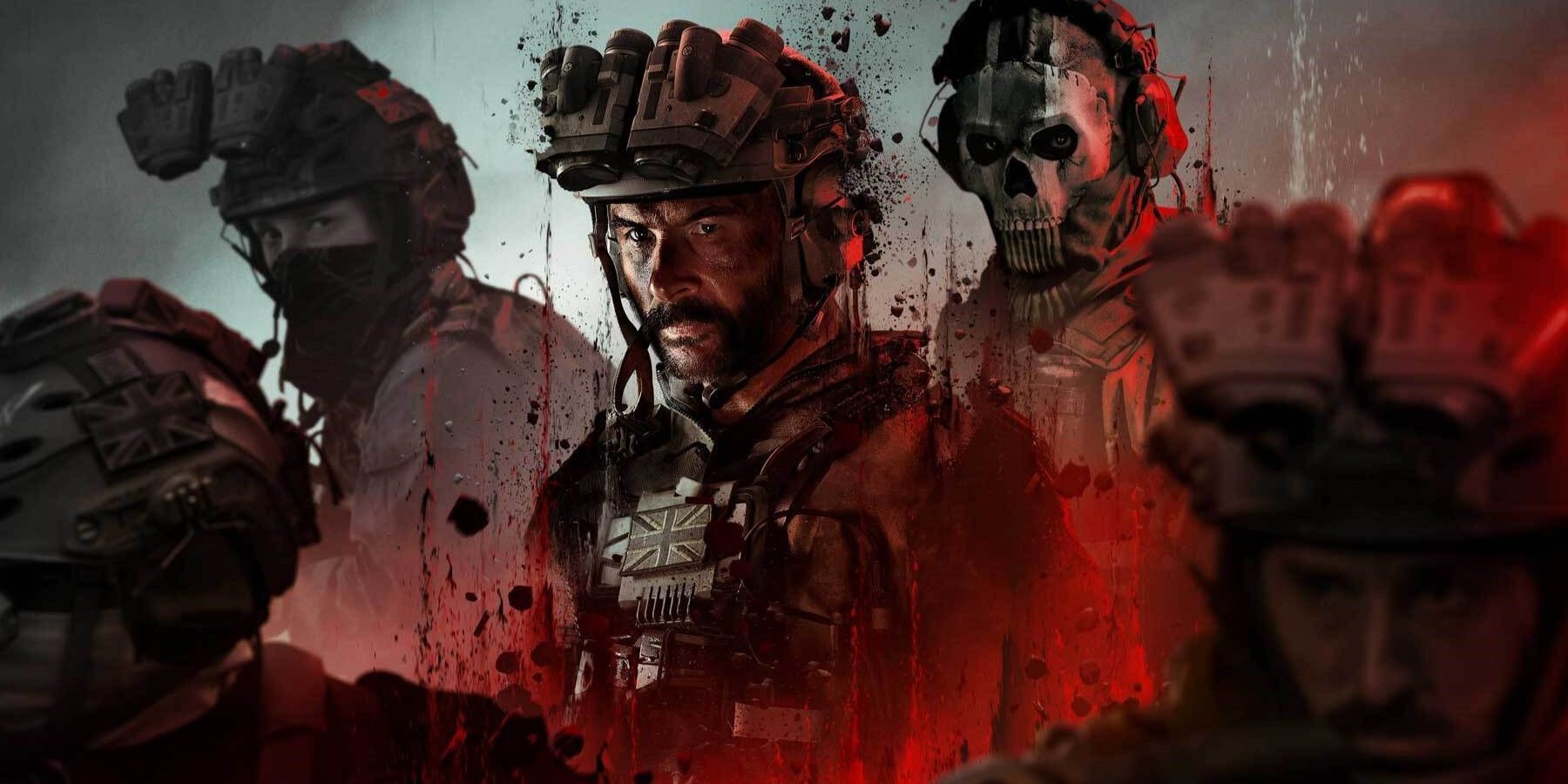
Why Call of Duty’s Divisive Yearly Releases Matter
Today, Call of Duty fans will often be seen asking for an end to the yearly release cycle, as there are many valid points to be made about the practice being detrimental to the newer releases. After all, there have been multiple times now where several studios had to come together to get a game out the door in time, as well as games like Black Ops Cold War that released with less content and a lack of polish. However, for Activision the pros of this approach undoubtedly outweigh the cons, as though it would be nice if each Call of Duty game was supported for longer and had more time in development, yearly releases mean that the series is always relevant.
Not only were yearly releases in place back when Call of Duty was dropping hit after hit from 2007-2012, but Call of Duty’s sales numbers continue to impress. For all the complaints fans have about the newer entries, they are still selling, with Call of Duty: Modern Warfare 2’s dazzling sales only being the latest evidence that the yearly release schedule still works. Yearly premium games provide content to feed into the all-important Call of Duty: Warzone, but even more crucial is that they ensure Call of Duty is always a name being spoken by gamers. As soon as one title begins to feel a bit old, a reveal event for a new game takes place, and the hype begins all over again. Every single year, fans can expect a decent-at-worst Call of Duty game to release sometime in October or December, which essentially allows the series to keep the FPS market cornered. No other shooter can match Call of Duty’s consistency, and when coupled with a willingness to try new things while still paying homage to old content, the series continues to be unstoppable.
-
Checkbox: control the expandable behavior of the extra infoImage
 Display card main info widgetDisplay card main info widget end
 -
Checkbox: control the expandable behavior of the extra infoRating block community and brand ratings Image

Call of Duty (2003)
Display card main info widgetDisplay card main info widget end Display card media widget start Display card media widget end- Genre(s)
- FPS
Call of Duty delivers the gritty realism and cinematic intensity of World War II's epic battlefield moments like never before - through the eyes of citizen soldiers and unsung heroes from an alliance of countries who together helped shape the course of modern history.
Play through the chaos of battle as part of a well-trained squad, that lays down covering fire and pulls its wounded to safety. In addition to authentic squad movements and tactics, each soldier's distinct personality and training comes out on the battlefield. No one soldier or nation single-handedly won the war.
For the first time, Call of Duty captures the war from multiple perspectives, through the eyes of American, British and Russian soldiers. Battle through 24 missions spanning 4 interconnected historical campaigns. Take on mission objectives ranging from sabotage and all-out assault to stealth, vehicle combat and rescue. Authentic weapons, locations, vehicles and sounds of war all contribute to the realism, immersing you in the most intense World War II experience yet.- Genre(s)
- FPS
