


Summary
- Capcom Fighting Collection 2 includes classic titles like Capcom Vs. SNK and Power Stone, offering diverse and fun gameplay options.
- Capcom Fighting Evolution emerged from a failed project, contributing to Street Fighter 4's inception.
- Power Stone games stand out for their unique 3D fighting mechanics, perfect for both skilled players and newcomers.
The first Capcom Fighting Collection became a surprise hit, giving players a fresh way to play all the Darkstalkers games alongside cult classics like Warzard and Cyberbots. Then hell froze over when the Marvel Vs Capcom Fighting Collection came out and became the best way to play the original Marvel games on modern machines (Fightcade notwithstanding).

6 Best Capcom Vs SNK Games
The Capcom vs. SNK games offer some great fighting games, thought with plenty of misses, it's important to celebrate the best games in the series.
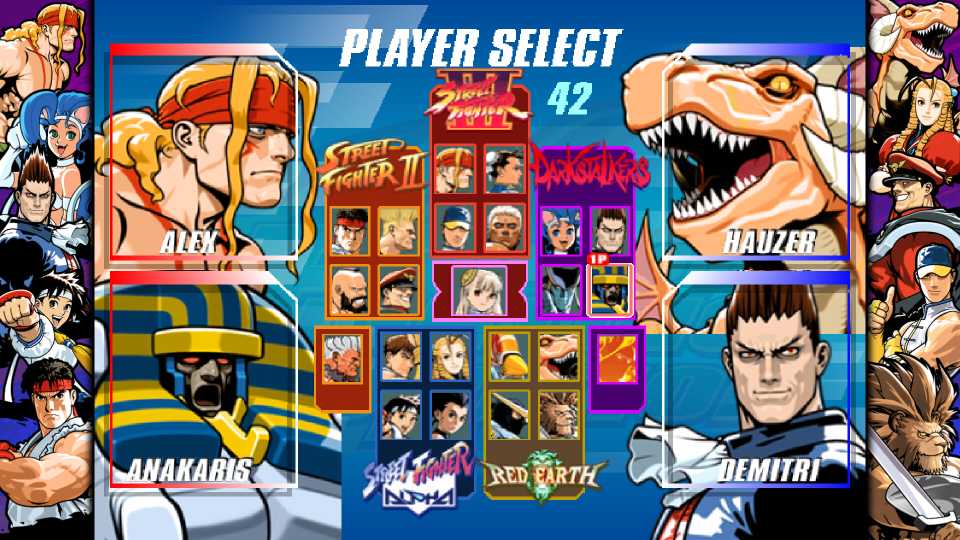
Now, Capcom has seen fit to make Capcom Fighting Collection 2, letting players get their hands on more of their classic fighting games, and it's got some pretty big names of its own. As some might've guessed from Terry and Mai turning up in Street Fighter 6, and Ken and Chun-Li in Fatal Fury: City of the Wolves, the two worked out a deal to add both Capcom Vs. SNK games to the collection, but it contains more classic titles that deserve attention too.
8 Capcom Fighting Evolution
It Certainly Looked Like Capcom Was Fighting Evolution Here

Capcom Fighting Evolution
- Released
- October 8, 2004

WHERE TO PLAY

- Platform(s)
- PlayStation 2, Xbox (Original), PlayStation 3

The story behind Capcom Fighting Evolution is more interesting than the game itself. Unable to make a Capcom Vs SNK 3 due to SNK’s bankruptcy (they got better), Capcom started work on Capcom Fighting All-Stars, a ‘Capcom Vs Capcom’ game in 3D made by ex-SNK devs. But a combination of bad local tests and behind-the-scenes issues led to it being canceled , leaving behind only a few old trailers, gameplay footage, and screenshots to prove it was ever around in the first place.
To salvage what was left of the project, Capcom had Yoshinori Ono head up a small team to make a 2D fighter out of whatever they could cobble together from other games. The result looks cheap, and while it plays okay, it's weaker than the sum of its parts, including the then-decade-old Darkstalkers. Though without it, Ono might not have gotten the urge to get Capcom to fund Street Fighter 4's production, so at least it has its place in fighting game history.
7 Plasma Sword: Nightmare Of Bilstein
Bilstein's Nightmare Can Be A Player's Dream

Plasma Sword: Nightmare of Bilstein

- Released
- March 1, 1998
- ESRB
- everyone e10+
- Developer(s)
- Capcom
- Publisher(s)
- Capcom
- Genre(s)
- Fighting, Action
- Platform(s)
- Sega Dreamcast
Project Justice isn’t the only sequel to appear without its predecessor. Capcom skipped over Star Gladiator to go straight to Plasma Sword: Nightmare of Bilstein. Like PJ, its only home port was on the Dreamcast, which went to its grave a year or so after the game's release. So, the CFC2 will likely be the first time many players will give it a go.
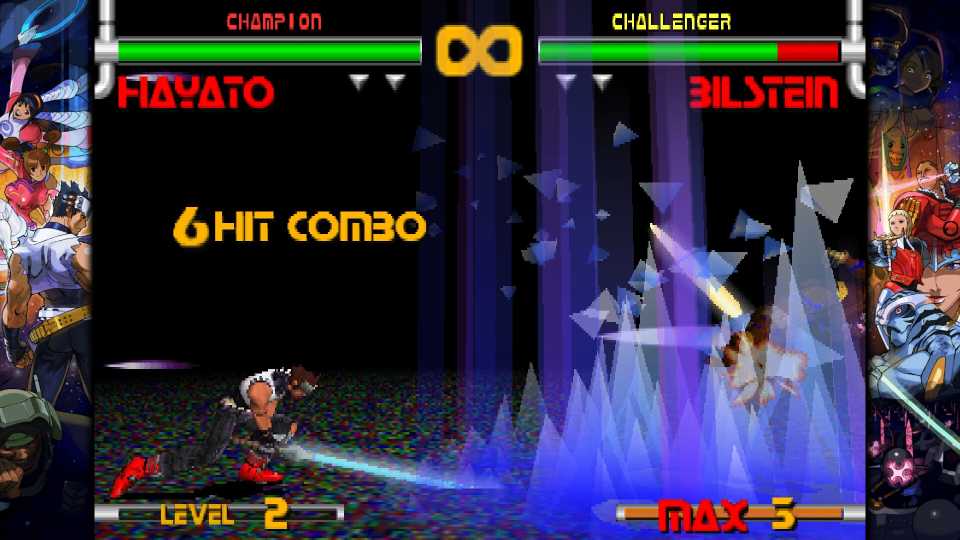
Plasma Sword is essentially a sci-fi take on SoulCalibur without ring-outs, as players can roam all around a stage and hack at each other with set combos. Unlike SC at the time, the game gave its cast flashy super moves, and the ability to trap zoners and keep away fighters with the Plasma Field to keep the heat on them. It's not exactly a hidden gem, but it was an inventive fighter worth a look or two.
6 Street Fighter Alpha 3 Upper
More Of A Sidestep Than An Upper
- Developer: Capcom
- Platforms: Arcade, Dreamcast, Game Boy Advance, PS2 (in the Alpha Anthology), PSP (as SFA3 MAX)
- Release: July 1999
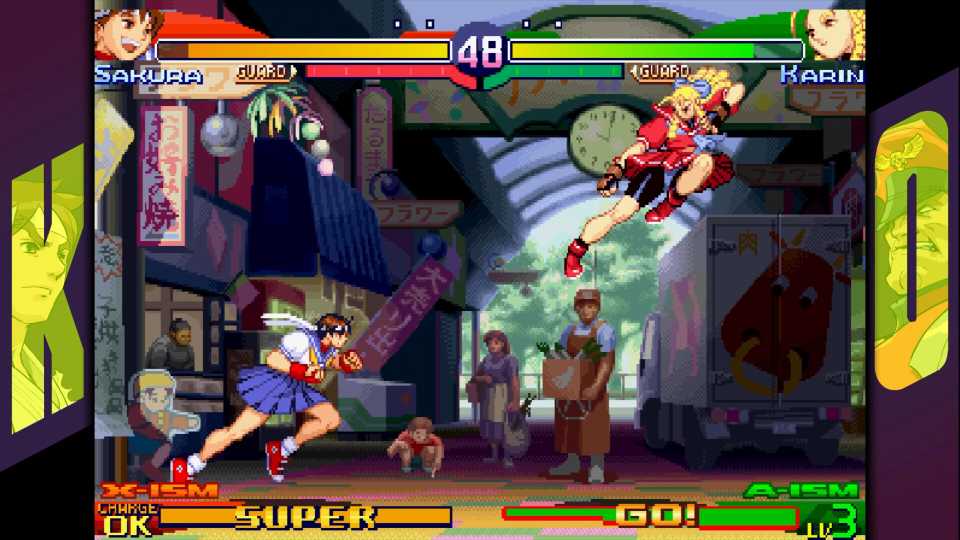
Street Fighter Alpha 3 became the most popular game in the Alpha series, thanks to its vast roster and expanded gameplay. Which is why it was re-released on nearly every machine in the late 90s/early 2000s, often with even more extras, until the original arcade game felt barebones by comparison. It already had nearly everyone from Street Fighter 2, but it still locked Balrog (of all characters) behind a secret code!

Street Fighter: 8 Weakest Characters In The Series, Ranked
The Street Fighter franchise is full of powerful characters. These individuals, however, fail to measure up.
So, if anyone felt burned by the Street Fighter 30th Anniversary Collection only having the arcade version of SFA3 on it, Street Fighter Alpha 3 Upper brings back console-exclusives like Guile, Dee Jay, Fei Long, and Evil Ryu, and it makes the secret characters selectable via a simple toggle in the options. It also nerfed V-Ism and crouch-canceling, which were overpowered in the arcade game but might put off purists who got used to the advanced techniques it let them use.
5 Capcom Vs SNK: Millennium Fight 2000 PRO
A Tentative Step In Capcom & SNK's Unlikely Partnership

Capcom vs. SNK: Millennium Fight 2000


- Released
- November 8, 2000
- ESRB
- Teen // Animated Violence
- Developer(s)
- Capcom Production Studio 1
- Publisher(s)
- Capcom, Virgin Interactive
- Franchise
- Street Fighter, King of Fighters
- Genre(s)
- Fighting
- Platform(s)
- Arcade, Sega Dreamcast, PlayStation (Original)
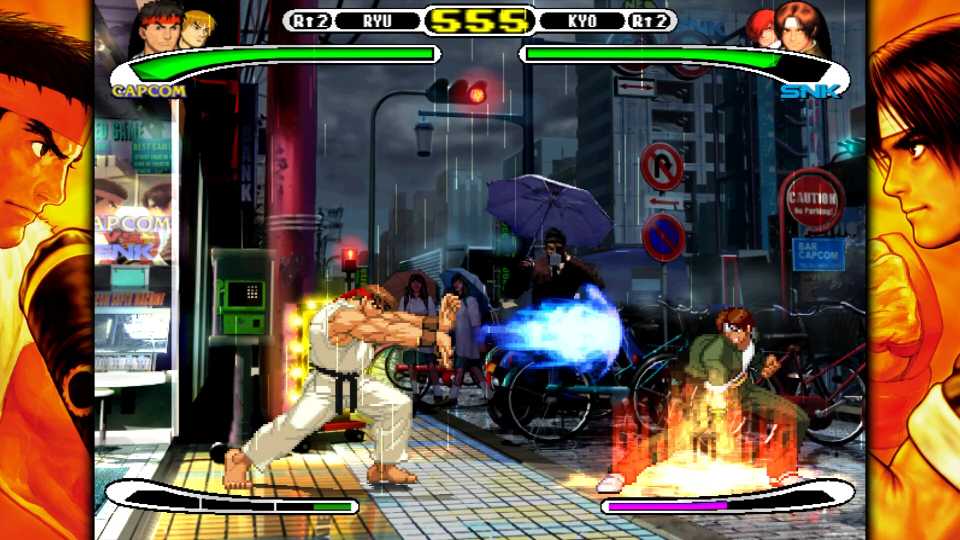
For many, this is one of the two games that made the CFC2 a must-buy. The original Capcom Vs SNK was where it all started — where Street Fighter’s Ryu could fight Fatal Fury’s Terry while Rival Schools’ Edge and Gan and Art of Fighting's Takuma watched from the background of his collapsing mid-construction dojo. Yet, it’s since been overshadowed by its sequel because it still offered room for improvement.
Its stages are arguably better, with more atmospheric designs, but it only offers two grooves, one of which (Capcom Groove) is any good. Then, its Ratio system limited its team selection as each character had a fixed value. They could have a team of four Ratio 1 characters, one Ratio 4 character, or any mix in between, which means if players wanted to put Sakura (R1) and Benimaru (R1) with Akuma (R4), they'd be out of luck.
4 Power Stone
Party Fun For Players Of All Skill Levels

Power Stone
- Released
- February 13, 1999
WHERE TO PLAY
- Developer(s)
- Capcom
- Genre(s)
- Fighting
- Platform(s)
- PlayStation Portable, Sega Dreamcast

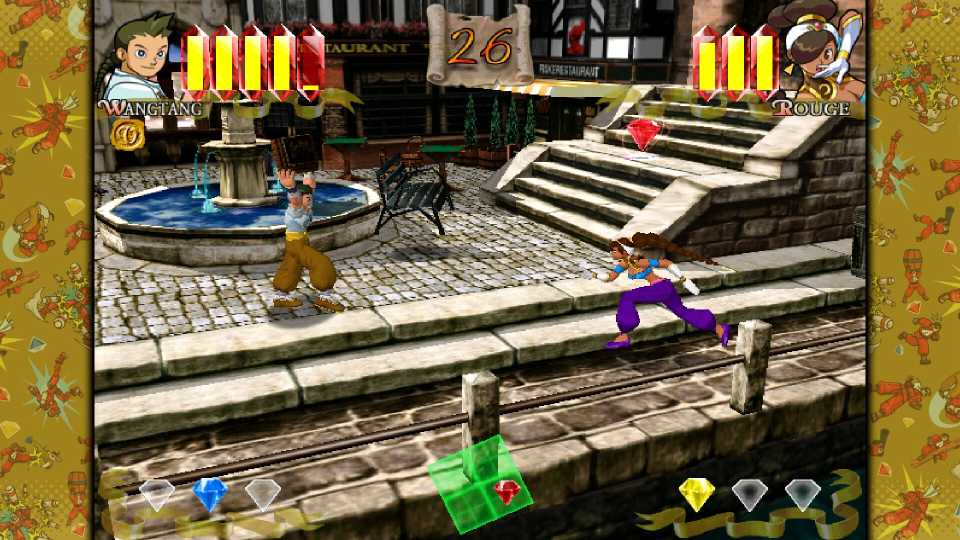
While many players went gaga over the CvS games getting re-released in this collection, others are more excited about the Power Stone games. They were fun, 3D roaming brawlers where up to four players could run around a stage, smashing each other in search of Power Stones. If one player got all three, they’d turn into their Power Change form and blitz their opponents with their special moves.
It’s almost like a 3D take on platform fighters like Super Smash Bros and is just as simple to pick up and play. Players only need to mix punches and kicks, or press a combo of the Punch, Kick, and Jump buttons to pull off moves. No quarter-circles or the like involved. That said, the first game is more combat-focused than the sequel, so if their favorite part about Smash Bros are the items and wacky stages, players may prefer the sequel.
3 Power Stone 2
More Power, More Fun

Power Stone 2

- Released
- April 27, 2000
WHERE TO PLAY
- Developer(s)
- Capcom
- Genre(s)
- Fighting, Action
- Platform(s)
- PSP, Sega Dreamcast

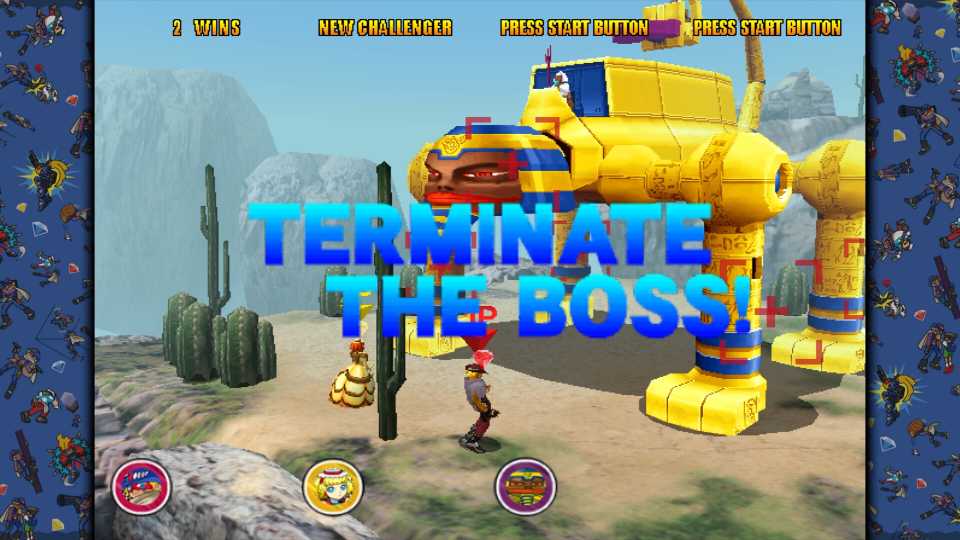
If Power Stone feels like it’s stuck in ‘For Glory’ mode, Power Stone 2 switches things to ‘For Fun,’ as it offers the same four-way brawling fun. Only now, it's got more items to throw around and more stage gimmicks to work with — like leaping off a crashing plane to fight each other in midair, or coming back from the brink by finding a health potion, then attacking opponents with a hammer item or hidden traps.

The 10 Rarest Dreamcast Games (& How Much They're Worth)
Plenty of collectors are still trying to complete their Sega Dreamcast collections, but the rarest games might be too expensive for their own good.
Both games really clicked with Dreamcast owners back in the day, but they failed to bring in Smash Bros-type money for either Capcom or Sega. Beyond this release, their arcade originals, and a PSP collection, neither game got to reach a wider audience. Until the CFC2, anyway, where they might finally get the attention they deserve as fun and funky platform fighters.
2 Project Justice
Turning Fights Into An Extra-Curricular Activity
- Developer: Capcom
- Platforms: Arcade, Dreamcast
- Release: December 2000
It’s not certain why Project Justice got in over Rival Schools. Maybe it’s because it’s got better graphics, or it was another cult classic that needed freeing from Dreamcast jail. Or it could be how it made its three-player gameplay work. RS represented its schools with three-person teams, but players could only pick two of them: one as their main and the other as their assist. It's handy enough, but not as exciting in comparison.
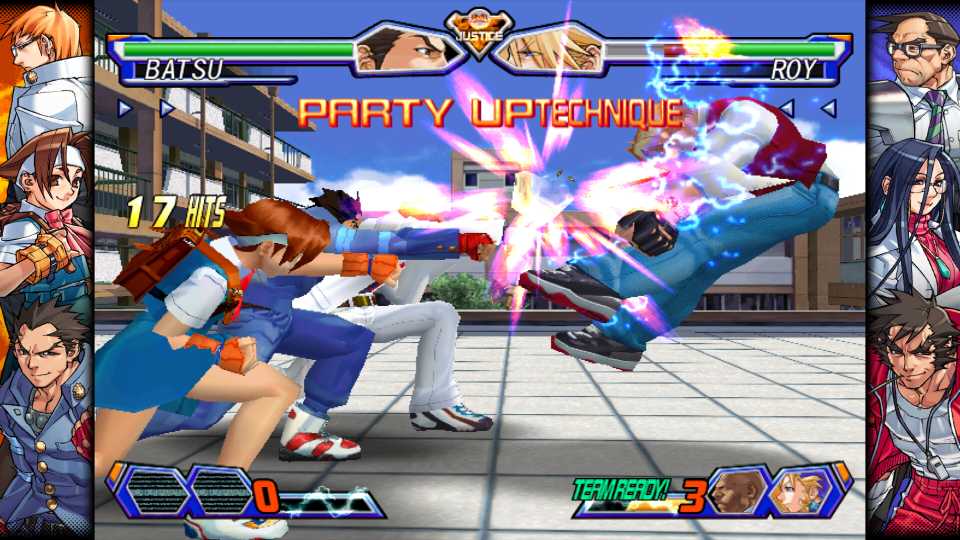
In PJ, they can use both of their partners as assists, where one can provide a timely Team-Up attack or health/meter perk, and the other can keep their opponents from stopping their Team-Up with a timely attack (or stop their opponent's Team-Up attack if they can stop their assists). However, if they have max Vigor, they can pull off a Party-Up move where all three characters pummel their opponent with one giant super combo. It’s an intricate team fighter that offers plenty for players to work with.
1 Capcom Vs SNK 2: Mark Of The Millennium 2001
Millionaire-Level Fighting

Capcom vs. SNK 2

- Released
- August 3, 2001

WHERE TO PLAY

- Developer(s)
- Capcom
- Franchise
- SNK vs. Capcom
- Genre(s)
- Fighting
- Platform(s)
- Sega Dreamcast, GameCube, PS2, Xbox (Original)

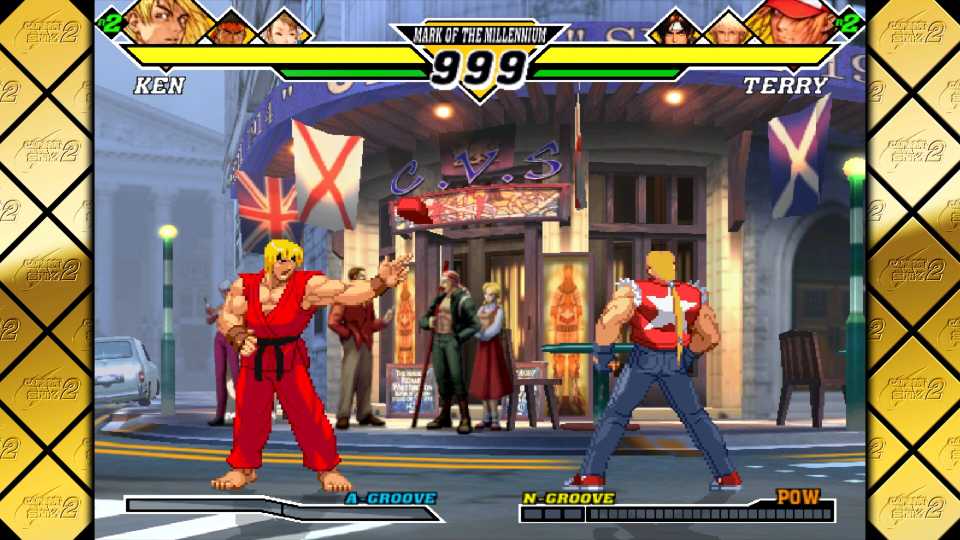
This list could’ve ranked Capcom Vs SNK 2 lower, as it’s a 2D game that reuses most of its assets, and its team mechanics are limited to setting their fight order King of Fighters style, as opposed to PJ’s big multi-person team attacks or the tag action in the Marvel games. Yet its gameplay is broader than its predecessor, as it lets players set their own Ratios for their favorite characters, instead of having to jigsaw them together like in CvS1.
It also gave them six grooves to work with, from K-Groove’s Samurai Shodown-like Rage Gauge to the SFA3-inspired custom combos of A-Groove. With a larger roster of fan favorites and multiple bosses to work with, it’s no wonder it’s the first game players of all stripes will be going for. Just be sure to go to its settings and set it to Standard mode first, as EO mode gets rid of some of its advanced tactics like roll canceling. That might not mean much to newer players, but it'll make a world of difference if they really get into the game.

Capcom Fighting Collection 2


- Released
- May 16, 2025




WHERE TO PLAY





- Developer(s)
- Capcom
- Multiplayer
- Online Multiplayer, Local Multiplayer
- Cross-Platform Play
- No
- Prequel(s)
- Capcom Fighting Collection
- Number of Players
- 1-2 players
- PC Release Date
- May 16, 2025
- Xbox Series X|S Release Date
- May 16, 2025
- PS5 Release Date
- May 16, 2025
- Nintendo Switch Release Date
- May 16, 2025
- Genre(s)
- Fighting
- Platform(s)
- PlayStation 4, Xbox One, Nintendo Switch, PC