


Summary
- Civ 7 focuses on cultures evolving over time with 33% same, 33% improved, and 33% new content.
- New features include Age Transitions, Legacy Paths, Crisis System, and unique Civ Units.
- The game offers a stylized diorama approach, strategic decisions, and improved military operations.
Civilization 7 looks to take the franchise to a new age by emphasizing, above all else, how cultures emerge over time. The tried-and-true grand strategy formula remains, but the key changes this time around are more than enough to justify it as Civilization 7 instead of "Civ 6.5." Indeed, Firaxis Games has a key approach known as the 33% rule when it comes to Civ sequels: 33% remains the same, 33% of the content is upgraded and improved, and 33% of the content is brand new. Between the improvements and brand new content, everything about the game feels top-notch.
The Best War Games recently visited Firaxis Games in Baltimore, Maryland, playing around three hours of Civilization 7. During this time, we were able to get near the end of the Antiquity Age, check out most of its new features, and otherwise enjoy our time growing our cities, attacking other civilizations, and engaging in various levels of diplomacy as well. While there's still quite some time until its February 11 release date and there were some rough edges for Firaxis to buff out, we walked away impressed and hungry for more. We would've genuinely played all day if Firaxis let us, which speaks volumes in its own right.

The 31 Best Mods For Civilization 6
Civilization 6 has tons of different mods players can try out. Fans of the series will love the changes that these exceptional mods bring.
Civ 7 New Features and Improvements at a Glance
- Civilizations and leaders are chosen independently of one another. For example, someone could be Benjamin Franklin with Egypt as their starting Civilization.
- There are Three Ages: Antiquity, Exploration, and Modern. Each age features unique content, Civilizations, and gameplay systems.
- Crisis System - A Crisis begins at the end of every Age and brings about its demise.
- Age Transitions (from Antiquity to Exploration, Exploration to Modern) sees players retain certain bonuses and see their Civilization evolve and change by selecting a brand new one. For example, depending on choices made in Antiquity, someone could be Egypt in Antiquity and Mongolia in Exploration. This system represents how cultures emerge.
- The Legacy Paths (Science, Cultural, Military, Economic) provide goalposts to ensure someone can achieve the associated Victory Condition by the end of Civ 7. Advisors will provide recommendations and issue warnings in relation to each Legacy Path.
- Cities start off as Towns with no production yield; it all goes to gold. They can be upgraded into Cities later and can be given a specific Focus.
- There are no builders; cities and towns grow organically.
- Cities have urban and rural districts.
- The Diplomacy feature uses Influence to perform various actions with other Civilizations and independent peoples.
- Commanders are a new Civ Unit that boosts other units, can "pack" units into armies, and move them collectively across the playing field.
- Every resource has a unique gameplay benefit, while Empire resources affect your entire civ.
- There are navigable rivers.
- Ageless means certain units or buildings can be built at any time.
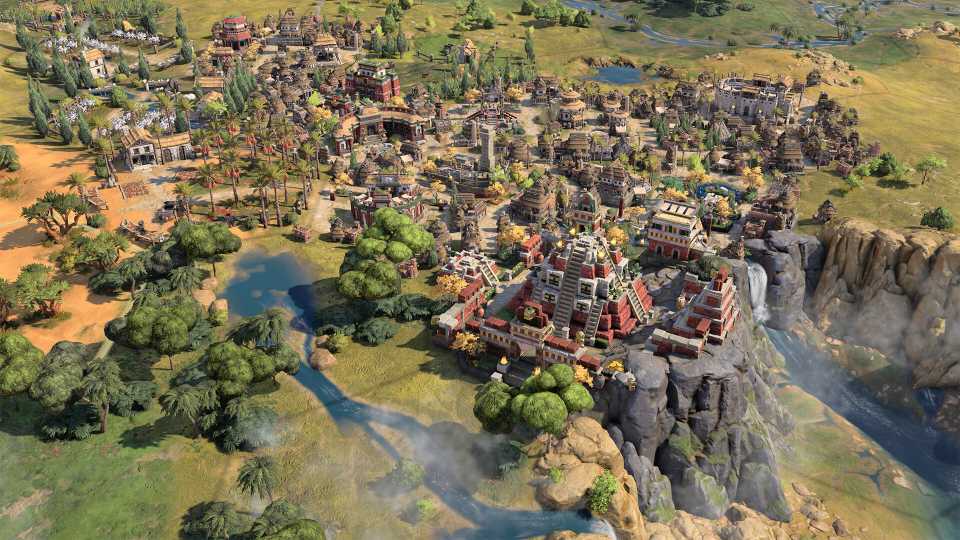
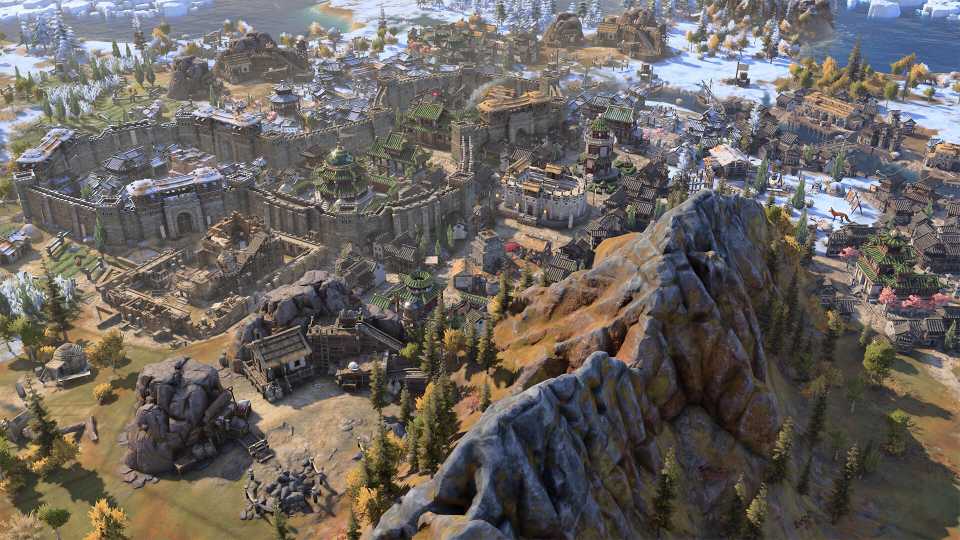
New Civ 7 Screenshots
Playing Civilization 7
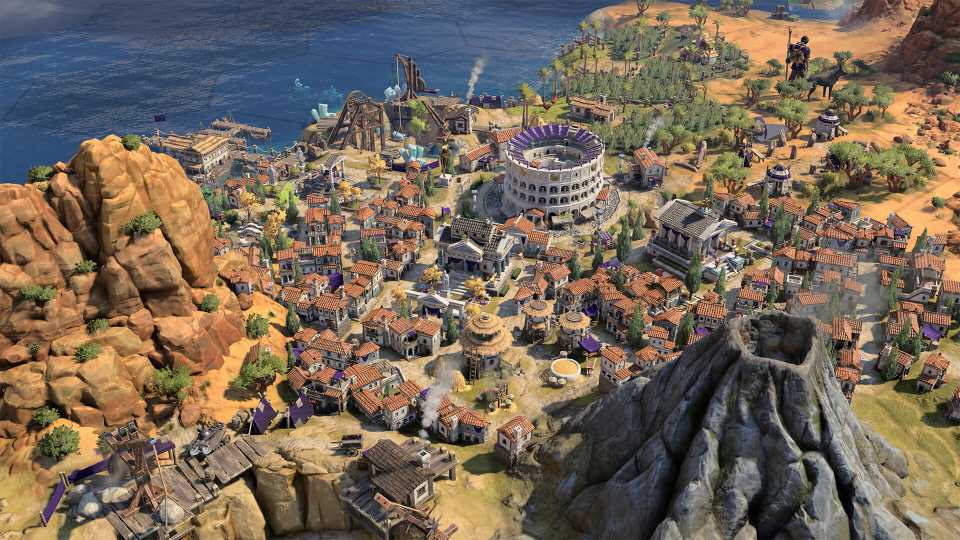
To keep things simple, we went with the recommended combination of Egypt as a civilization and Hatshepsut as our leader. Once we loaded into the game, there were a couple of interesting things that immediately caught our attention. First, graphically, its stylized diorama approach is truly impressive. It also pairs well with undiscovered locations, which are shrouded by hexagons sporting the Civilization 7 logo. The game also guides players through their checklist of things to do, which is a nice touch to ensure nothing is overlooked and forgotten. It doesn't inform players of every single change or what they should do, but it's a nice reminder to produce things in a city, that certain research elements are done, and that units can move or act.
Hatshepsut Bonuses
- +1 Culture for every imported Resource
- +15% production to constructing Buildings and Wonders in Cities adjacent to Navigable Rivers
Egypt Bonuses
- +1 Production on Navigable Rivers
- +30% Production towards constructing the Pyramids
- Unique Unit: Medjay - Egyptian Unique Infantry Unit. Has no maintenance. +3 Combat Strength in friendly territory,double when stationed in a Settlement you own.
- Unique Unit: Tjaty - A Great Person with one charge. Can only be trained in Cities with a Necropolis, and the specific Tjaty received is random. Each Tjaty can only be received once. Cost increases per Tjaty trained.
- Unique Building: Mastaba - +3 Culture. +1 Gold Adjacency for Desert Terrain and Wonders. Egyptian Unique Culture Building. Ageless.
- Unique Building: Mortuary Temple - +4 Gold. +1 Happiness Adjacency for Navigable Rivers and Wonders. Egpyitna Unique Gold Building. Ageless.
After we founded our capital, we sent out scouts to begin uncovering the map, producing Medjay to form armies, and investing in developing technology. The technology game felt very familiar to Civilization 6, but it felt like a "if it's not broken, don't fix it" moment. We were also able to begin investing in Civics that help buff and define our people as a Civilization. The rest of the turns played out as one would expect from a Civilization game. We kept investing in our city, kept producing various units and exploring, and we eventually met independent states and other Civilizations. Using Diplomacy, we eventually became Suzerain of an independent city, and we began investing in our legacy paths.

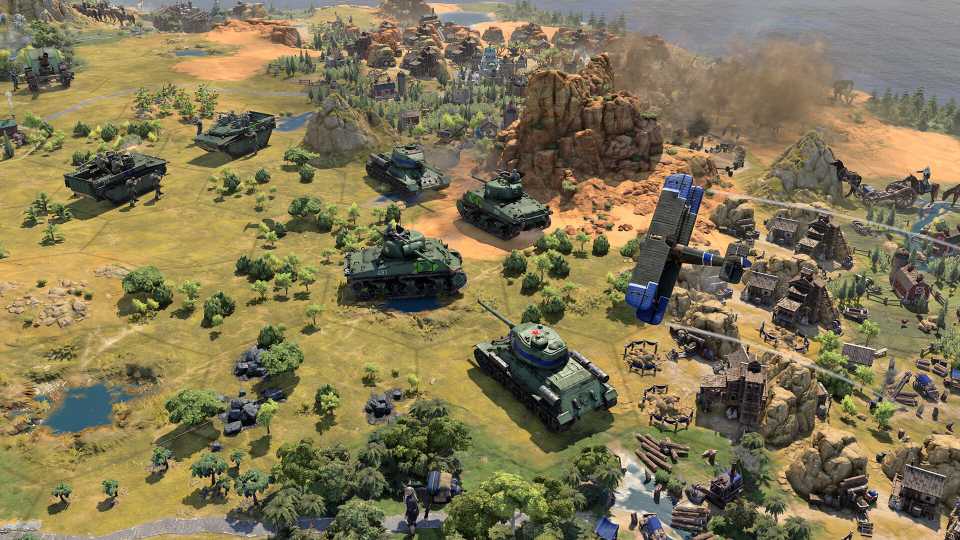
We decided to focus on the Military Legacy Path, which at first tasked us with producing an army and rallying them under a Commander. This is a big QoL improvement when it comes to moving units across the field because a Commander can "pack" them in and all move as one unit. The Commander cannot attack, but it can buff nearby units and the more battles won with them in the vicinity, the faster they level up for more buffs. We eventually founded a Town, let it produce gold for us for a while, specialized it, and then turned it into a City for 350 gold. Everything needed to establish players in a world map are top-notch, with everything feeling crisper than Civilization 6.
There are also a few random elements to a Civilization 7 turn that we enjoyed. Occasionally, natural disasters akin to Civ 6 will strike, which is not that surprising, but there are also story elements and choices for players to make - aside from all the grand strategy elements. For example, we were informed during one turn that our men had grown sick, and we were able to decide how to treat them. It was a choice between two options, neither of which sounded like the best medicine, but we went with our gut and everything turned out fine...this time. These little elements are going to do a lot to add to the life of Civilization 7, really endearing players to their map and Civs. After all, we played for nearly three hours and still didn't finish the first Age.

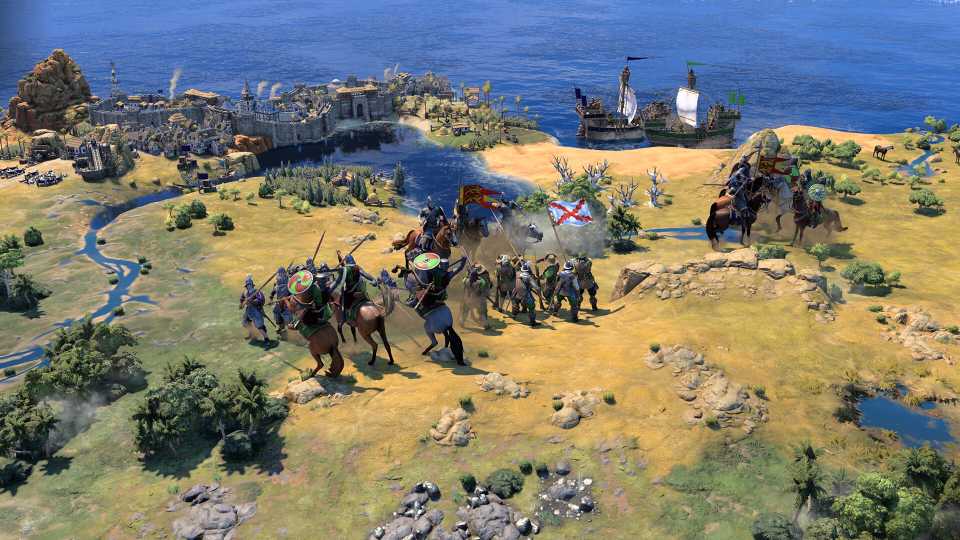
We wanted to see how military operations could work, so we found ourselves in an alliance with the Roman Empire's Julius Caesar as we went to war with Ashoka. Because it was a Surprise War, we were heavily penalized. One of our Military Legacy Path objectives was to capture a city, so we got two decently leveled commanders, built armies of Medjay and Archers, and attacked Ashoka's main city. It was a resounding loss, sending our commanders into retreat as everyone else died at their feet. Once enough time passed, we tried forging a truce with Ashoka, but that didn't work out exactly. However, not long after, it seems Julius was able to wipe out Ashoka, and we received a city from his defeat. It seems like we just lucked into that one, but still, it was a lot of fun. With better planning, expansion, and unit strategies, it seems simple enough to wage war and take out enemy Civilizations. We went in haphazardly, paid the price, but also still got a reward.
Not long after that, our crises began to come online. It results in a pop-up similar to the Civics screen, but we were forced to choose from a selection of debuffs. We went with unruly commanders, which penalized happiness, and then later on we had to pick a second element of that crisis. There were still stops along the way in the Crisis timeline, and we wish we could have seen how this plays out more. The end result, we know, is the Age Transition, but we didn't get quite that far of course.
Overall, Civilization 7 feels like a targeted upgrade. It knows what it wants to do—be a model of how civilizations grow and change over time—and it implements smart features to push that to the fore. Meanwhile, its depth is more than enough to satisfy the most hardcore fans, while there are some nice quality-of-life touch-ups for those who may find themselves overwhelmed by the various systems at play. It remains to be seen how it ultimately performs, but it seems for Civilization, 7 is a lucky number.
Civilization 7 releases on February 11 for PC, PS4, PS5, Switch, Xbox One, and Xbox Series X. The Best War Games was provided travel and lodging for the purposes of this preview.






-
 OpenCritic Reviews
- Top Critic Avg: 79 /100 Critics Rec: 77%
- Released
- February 11, 2025
- ESRB
- Everyone 10+ // Alcohol and Tobacco Reference, Mild Language, Mild Violence, Suggestive Themes
- Developer(s)
- Firaxis Games
- Publisher(s)
- 2K




WHERE TO PLAY






The award-winning strategy game franchise returns with a revolutionary new chapter. Sid Meier's Civilization® VII empowers you to build the greatest empire the world has ever known!
In Civilization VII, your strategic decisions shape the unique cultural lineage of your evolving empire. Rule as one of many legendary leaders from throughout history and steer the course of your story by choosing a new civilization to represent your empire in each Age of human advancement.
Construct cities and architectural wonders to expand your territory, improve your civilization with technological breakthroughs, and conquer or cooperate with rival civilizations as you explore the far reaches of the unknown world. Pursue prosperity in an immersive solo experience or play with others in online multiplayer.
Whether you choose to follow a path rooted in history or reimagine possibilities to chart your own way forward, build something you believe in and create a legacy that echoes through the Ages in Civilization VII.
- Multiplayer
- Online Multiplayer
- Franchise
- Sid Meier's Civilization
- Platform(s)
- PlayStation 5, PlayStation 4, Xbox Series X, Xbox Series S, Xbox One, Nintendo Switch 2, Nintendo Switch, PC
- Genre(s)
- Grand Strategy, Turn-Based Strategy, 4X
