


Summary
- Developers often make cameo appearances in video games, acting as an additional signature to their work.
- The cameos are often Easter Eggs that require effort to reach, like facing Shigeki Morimoto in Pokemon.
- Notable developers who made appearances in games include Shigeki Morimoto, Dan Forden, Hideo Kojima, and John Romero.
Creators making appearances in their own art is a fairly common practice across various media. A frequent method of achieving this without derailing the work itself is a simple cameo. These brief appearances, when made by creators, act as a sort of additional signature to their work.

10 Best Musician Cameos In Video Games
Video games are no stranger to celebrity cameos. These famous music stars have lent their likenesses in a few surprising places.
In video games, which are an interactive medium by nature, these cameos often serve as direct nods to the audience. The exact form the cameo will take is often determined by the constraints of the game. It is usually sectioned off into a smaller portion of the game that takes some level of effort to reach, serving as an Easter Egg. These developers made surprise cameo appearances in their respective games, giving players (and likely themselves) a laugh in the process.
5 Shigeki Morimoto - Pokemon
Identified Mononymously As "Morimoto", This Trainer Appears In Multiple Generations Of The Pokemon Series

Pokemon Black and White

- Released
- March 6, 2011

WHERE TO PLAY

- ESRB
- E For Everyone // Comic Mischief, Mild Cartoon Violence
- Genre(s)
- JRPG

Shigeki Morimoto is a programmer who has credits across the Pokemon series. He was also a character designer, having created a few of the earlier Pokemon designs in the series, most notably his apparent favorite, Mew. Eventually, he even began appearing in the games themselves. He first debuted as a trainer in the fifth generation of the series; the player could face him in Pokemon Black and White as well as their sequels. Morimoto's sprites are shared with generic trainers in the game, with his first one being the male veteran sprite. However, Morimoto's trainer class is always "GAME FREAK", referencing his developer status more explicitly. Appropriately, he is often located in a section of the games identified as the GAME FREAK headquarters.
His most recent appearance was in Brilliant Diamond and Shining Pearl, a game in which he is not actually credited, using a male swimmer sprite. In most iterations, Morimoto tends to use a full Pokemon team, a relative rarity for trainers who are less significant to the games. Morimoto is not the only developer to be a trainer in the games, either. In Ultra Sun and Ultra Moon, game designer Kazumasa Iwao teams up alongside him to do a Multi Battle. Additionally, Koji Nishino, the designer whose mannerisms are said to have influenced the creation of Snorlax (and he identifies himself as such), was also a developer the player could face in Black 2 and White 2. Developers frequently cameo in Pokemon games, typically in designated developer rooms across the entire series, though they are not always trainers the player can face.
4 Dan Forden - Mortal Kombat
Forden's Likeness Is Associated With The "Toasty!" Sound Effect That Plays Alongside It

Mortal Kombat II
- Released
- November, 1993
WHERE TO PLAY
- ESRB
- m
- Genre(s)
- Fighting
With its frequent usage of meta humor, Mortal Kombat is a series known to frequently nod to its developers in various ways. The series co-creator, Ed Boon, voiced a handful of the male characters in earlier games. A notable soundbite from him is the infamous "GET OVER HERE!" Associated with Scorpion's spear attack, which Boon tends to reprise even when Scorpion is voiced by someone else.

Mortal Kombat 2 'New Era' Character Wish List
These characters were sorely missed in Mortal Kombat 1 and could be great additions to the new continuity whenever Mortal Kombat 2 rolls around.
Yet one developer whose face is more directly associated with the earlier work is composer and sound designer Dan Forden. Said to originate from an inside joke between Forden and his coworkers, the "Toasty!" Soundbite has evolved to become an iconic meme in pop culture. The most notable variations feature Forden's likeness as he exclaims "Toasty!" In a falsetto voice. This debuted in Mortal Kombat 2, when a character unleashed an especially painful uppercut.
The exact circumstances that trigger the "Toasty!" Soundbite have differed across games since its inception, but it is a common Easter Egg that always gets an appreciative nod from fans. Variations, such as "Frosty!" And "Crispy!," have also appeared in various games, but have not caught on to the level of their predecessor. Although Forden's sound work is essential to the series, his infamous soundbite remains arguably his biggest legacy.
3 Hideo Kojima - Metal Gear Solid
Kojima Did VO And Provided Motion Capture For Himself In The Metal Gear Solid Series

Metal Gear Solid 5: Ground Zeroes
- Released
- March 18, 2014



WHERE TO PLAY




- ESRB
- M For Mature 17+ Due To Blood and Gore, Intense Violence, Sexual Violence, Strong Language
- Genre(s)
- Stealth
Japanese game developer Hideo Kojima needs little introduction. As one of the most celebrated industry creatives on the internet, his work on the Metal Gear series is considered seminal to the stealth genre of video games. Peers inside and outside the video game industry cite him as an influence, and he maintains a widespread level of affection and acclaim even after becoming an independent developer.
With the consistent level of fanfare surrounding him, it comes as little surprise that he would make appearances in the Metal Gear series, specifically appearing in three Metal Gear Solid games as a recruitable character often identified as "Hideo." He first appears in Peace Walker, discovered within a truck that an MSF soldier described as containing "God." In his appearances, Hideo is often characterized as an essential member of the Intel Team.
Hideo's next appearance in the series was Ground Zeroes in a Side Op, where he appears as a vital intel agent, requiring extraction from a military prison camp in Cuba. His final appearance in the series was in The Phantom Pain, which was released the same year he departed from Konami. He is held hostage in Kabul, where he is cuffed inside the room where Kazuhira Miller was previously held in a similar manner. After being rescued, Hideo rejoins the Diamond Dogs. Due to Kojima parting ways with Konami and wanting The Phantom Pain to be the last Metal Gear installment, this will likely be his final appearance in the series.
2 John Romero - Doom 2
Removing Clipping From Doom 2 Is The Only Way To Access This Infamous Sprite

Doom 2
- Released
- October 10, 1994

WHERE TO PLAY


- ESRB
- M For Mature 17+ // Blood and Gore, Violence
- Genre(s)
- FPS
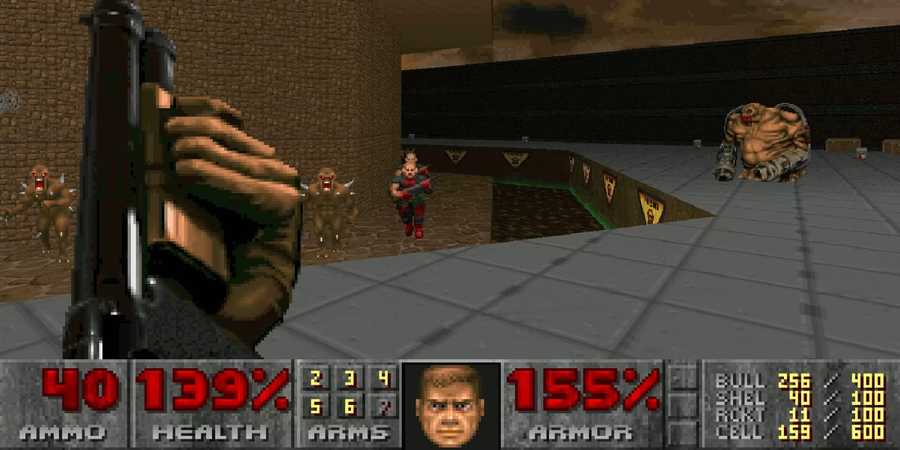
Alfonso John Romero co-founded id Software, helping produce games considered essential to the first-person shooter genre. He was involved in the design of classic games such as Doom, Wolfenstein 3D, and Quake, as well as the programming of the former two.
Another game he helped program and design was Doom 2, in which he also had a particularly strange cameo. Romero's severed (and apparently still sentient) head is lodged within the game's final boss, the Icon of Sin. This demonic being spouts apparent gibberish upon awakening, but carries within it a strange secret. Romero's severed head is hidden behind the Icon, and can even react when shot, serving as an effective target sprite.

7 Best John Romero Games
John Romero has left an undeniable mark on gaming history, and while he's stepped back from the dev side of things, these games continue his legacy.
Romero claims this sprite was added as a result of trolling by the artists who designed the level, Adrian Carmack and Kevin Cloud. It could not be accessed through conventional means either, and required deactivating clipping to be seen firsthand by players. Upon discovering it, Romero recorded the awakening dialogue, with it being a pitch-shifted and reversed recording of him saying "To win the game, you must kill me, John Romero." As a sort of response to discovering the sprite. Romero's Head has since become an infamous joke among Doom fans.
1 The Dream Team - Chrono Trigger
Avatars Representing Many Of The Developers Are Present In One Ending Of Chrono Trigger

Chrono Trigger
- Released
- March 11, 1995

WHERE TO PLAY

- ESRB
- T for Teen: Fantasy Violence, Mild Blood
- Genre(s)
- RPG
Chrono Trigger was notable in part for the collective of established talents involved in its development. The hardest ending of the game, requiring the near-immediate defeat of Lavos, eventually leads the player to the End of Time. Here, players will find a series of monsters representing the developers, along with portals to other locations in the game where other developer avatars are present. Some can even be battled.
After every avatar in the various development rooms has been interacted with, Keizo Kokubo opens the final room, allowing the player to access the "Dream Team." Here, avatars representing Akira Toriyama, Nobuo Uematsu, Yuji Horii, Kazuhiko Aoki, and Hironobu Sakaguchi are all present. The player is effectively made a member of the Dream Team for their accomplishment, and the credits are fast-forwarded to "suit [their] style."

The 5 Best & 5 Worst Celebrity Cameos In Video Games
Celebrity game cameos can be amazing or they can be awful. These are 5 of the best cameos in game history, along with the 5 worst.