


Eight years since Digimon Story's last entry, Digimon Story: Cyber Sleuth, the iconic creature-collecting franchise is finally back in top form. While the more recent Digimon Survive played out like a visual novel, Digimon Story: Time Stranger is, for the most part, an action-oriented turn-based RPG where fine-tuned party composition and intricate stat systems take the front seat of the experience. There's still a strong narrative component, of course—the game boasts plenty of flashy cutscenes and a compelling mystery—but it mostly serves as a vehicle to deliver crunchy, strategic gameplay.
At PAX West in Seattle, Washington, I met up with the Bandai Namco team to play several hours of Digimon Story: Time Stranger across two save files: the first brought me through the game's opening hour, and the second save skipped ahead a bit to demonstrate the mid-game experience. As expected of a creature collecting JRPG, the game's opening is heavy on exposition and tutorialization, and was mostly an on-rails affair. Meanwhile, the mid-game portion saw many of its systems open up, including Digivolution, the personality system, the Agent Skill tree, and—say this ten times fast—Dedigivolution.
Digimon Story: Time Stranger’s RPG Mechanics Are a Highlight
Digimon Story: Time Stranger is a straight-up creature collector RPG where players gather a vast assortment of digital monsters, assemble them into a party, and pit them against their own kind in turn-based battles. While the only character customization is a choice of name and gender at the start, the game's RPG systems, on the other hand, are astonishingly flexible. Each Digimon has typical RPG stats such as attack, defense, and elemental resistances, but these stats are all affected by a separate personality system. Upon creation, Digimon begin with a personality that can then be shifted through dialogue and other means, and this affects their stat spread and—more importantly—their Digivolution path.
Like other popular creature collectors, Digimon's monsters can evolve into new forms. Unlike its contemporaries, however, Digimon don't follow a linear evolutionary path. Instead, a Digimon can Digivolve into any number of possibilities depending on its stat spread. Since the personality system is intrinsically linked to the Digimon's stat spread, it's useful to nurture a Digimon's personality toward a desired evolution. That's the min-max approach, of course, but the game seems to be forgiving enough that players can wing it with their Digimon's personalities, taking whatever Digivolution options present themselves. It reminds me of Shin Megami Tensei 5's Demon Fusion system, in that min-maxers can target specific creatures with foreknowledge of desirable combinations, or more casual players can simply capture and fuse whatever they find. Digimon can even Dedigivolve, regressing to their original forms to pursue other paths and encouraging experimentation.
Separate from the Digimon themselves, players also have access to another impactful progression system: Agent Skills. Chosen from a handful of skill trees, Agent Skills enhance various aspects of gameplay and help players hone in on their playstyle and priorities. While it's satisfying to evolve and level up my party of Digimon, it's great that there's an overarching progression system that makes me feel more powerful, as well.
Digimon Story: Time Stranger Is Packed With Player-Friendly Features
Beyond its impressive RPG depth, Digimon Story: Time Stranger stands out thanks to a bevy of player-friendly quality-of-life features. For example, combat animations can be sped up to five times, there's an auto-battle option for low-stakes fights, and after standing still for a few seconds, players rapidly regenerate their party's health and SP. Additionally, players have access to a handy Preemptive Strike ability on the field: when approaching a Digimon in the wild, players can strike it with their equipped Digimon's basic attack before the fight begins. Particularly in the early game, this leads to simply one-shotting Digimon in the field without having to transition to a full turn-based battle screen. This is a welcome feature that cuts down time spent on trivial fights, and it's a quality-of-life boost that's compounded by the lack of pesky random encounters. Following the time-saving trend, players also have access to Digirides: rideable Digimon that significantly shorten overworld treks.
Digimon Story: Time Stranger boasts an astounding potential for party compositions.
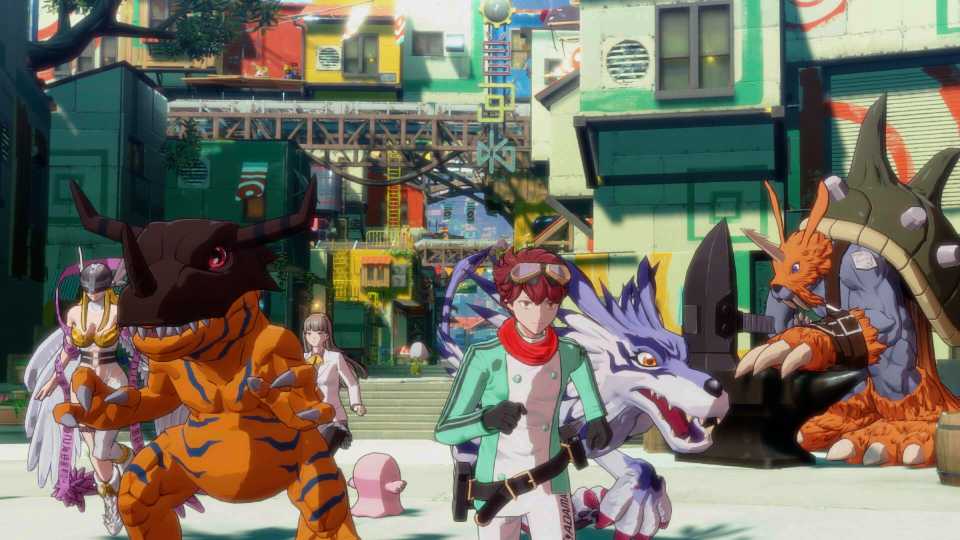
With over 450 Digimon to collect, Digimon Story: Time Stranger boasts an astounding potential for party compositions. Highly aggressive parties built around opening with a devastating alpha strike, DoT-focused parties that debuff and whither away opponents, or balanced parties with a tank, damage dealer, and supporting Digimon are all potential makeups. It'll be important to have a variety of Digimon on hand, since the game's rock-paper-scissors elemental system ensures that one party can't effectively tackle every encounter. To elaborate, Digimon are divided into three types: Virus, Vaccine, and Data, which are separate from elemental skill effects such as fire or lightning, and Digimon also have varying resistances to these.
Digimon Story: Time Stranger's Gameplay Is Addicting
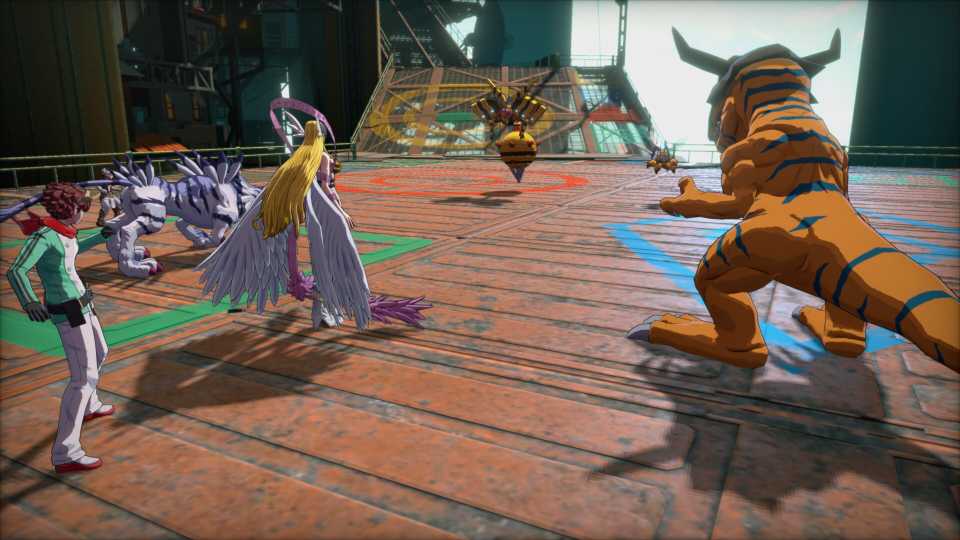
Once in combat, Digimon Story: Time Stranger is a familiar turn-based RPG: Digimon take turns based on their speed stat and draw from their resource pool to execute various offensive or defensive abilities. To keep things interesting, Digimon Story: Time Stranger features timed follow-up attacks after critical strikes, rewarding a timely button press with some extra damage. It's certainly not as active as Clair Obscur: Expedition 33's occasionally dizzying input sequences, but these follow-up attacks bring a touch more engagement to the traditional turn-based combat. These combat encounters ranged from abysmally easy early game one-shots to tense and lengthy boss fights that amply tested my party composition and skill usage.
The game is difficult to set down—I was fully invested in expanding my collection and refining my party, looking forward to each encounter where I might discover a new Digimon. For collectors and completionists, as well as fans of party-based combat, Digimon Story: Time Stranger is teeming with content and certainly scratches the optimization itch. It feels like a middleground between Pokemon and Shin Megami Tensei: more complex systems than the former, but not as unforgiving as the latter—while still making its own meaningful contributions to the genre.




- Released
- October 3, 2025
- ESRB
- Teen / Fantasy Violence, Mild Language, Suggestive Themes, Use of Alcohol
- Developer(s)
- Media.Vision
- Publisher(s)
- Bandai Namco Entertainment










WHERE TO PLAY



- Genre(s)
- JRPG, RPG, Creature Collector

The Best War Games was provided travel and lodging for the purposes of this preview.