


Elden Ring Nightreign excels on several fronts, but class distinction and combat may be its strongest suits. Nightreign's slew of unique Nightfarers facilitates dozens of hours of varied, engaging gameplay, as there's plenty of room for experimentation and progression along each character vector. Naturally, Elden Ring Nightreign's combat is still built around the soulslike framework, but it has enough differences to feel exciting and novel.
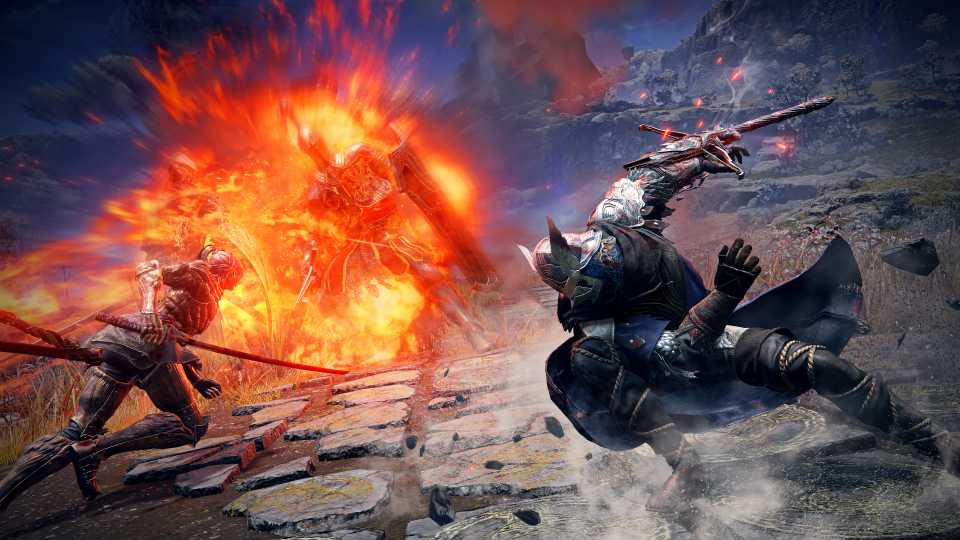
One of the most experimental Nightfarers is Recluse, a magic-focused character who takes control of the elements for maximum devastation. Deceptively powerful, swift, and versatile, Recluse slings spells at enemies from afar, Hoovering up affinity residues to replenish FP and charge special attacks. Indeed, she is surprisingly fun to play as, and her combat design makes a strong case for more inventive magic systems in future FromSoftware games, like the long-rumored Spellbound. Sadly, news about Spellbound has died down, leading many to believe that the rumors lack credence, or that the project was otherwise scrapped or delayed. But regardless of whether Spellbound exists, Recluse is a great jumping-off point for deeper, more engaging magic within FromSoft's signature combat design.

Why Fans of God of War Ragnarok's Valhalla DLC Should Check Out Elden Ring Nightreign
Elden Ring Nightreign is an easy purchase for Elden Ring fans, but it might be suited to God of War Ragnarok Valhalla players as well.
How Elden Ring Nightreign Elevates Magic Use With Recluse
Recluse Addresses Many Shortcomings of FromSoftware's Magic Systems
While the actual act of casting spells is mostly the same with Recluse as it is in Elden Ring's base game, her passive ability and character skill do a lot to change the moment-to-moment gameplay. The aforementioned affinity residues, for instance, remedy the ever-present frustration of running out of FP: it can be difficult to play as a mage in Elden Ring or Dark Souls without constantly topping up FP with a flask, which can be a dull and oppressively finite practice. By consuming affinity residues, Recluse players are able to circumvent this restriction in an active and engaging way. Instead of just giving players unlimited FP, Nightreign's inclusion of affinity residues encourages aggression and quick-thinking, making the overall combat loop both more accessible and deeper.
Then there's Recluse's Magic Cocktail character skill: upon consuming three affinity residues, Recluse can unleash a special ability, but this ability will be different depending on which residues are consumed. For instance, three magic residues will summon magic wisps that deal damage, while three holy residues boost defenses. Mixing and matching different residues can lead to unexpected effects, which is fitting considering the intense focus characteristic of FromSoftware's magic users: by learning which affinity residue combos are best for a given situation, Nightreign players may feel like they are engaging in the same rigorous intellectual labor as Recluse herself. In other words, the unassuming depth of the Magic Cocktail skill further deepens Recluse's combat sandbox.
How a Magic-Focused FromSoftware Game Could Learn from Recluse's Mechanics
If FromSoftware ever does end up taking a crack at a magic-centric RPG down the road, then Recluse feels like the obvious intermediary, a stopgap between the traditional soulslike combat of Elden Ring and the magic-heavy gameplay of this theoretical future title. Such a game wouldn't need to—and arguably shouldn't—copy Recluse's combat design verbatim, but encouraging players to be similarly thoughtful and strategic would have obvious benefits. After all, mages are supposed to be intelligent and cunning, so their gameplay should be more complex than simply spamming an attack button and chugging FP flasks.
Managing FP, mana, or whatever other term FromSoft would use in a future title, while also ensuring a good blend of quick-thinking and long-term planning, could be crucial pillars of a future FromSoftware magic game. The foundation for these pillars has already been set with Elden Ring Nightreign's Recluse; hopefully, FromSoftware continues to build them in a future title.


Elden Ring Nightreign



-
 OpenCritic Reviews
- Top Critic Avg: 80 /100 Critics Rec: 78%
- Released
- May 30, 2025
- Developer(s)
- From Software
- Publisher(s)
- Bandai Namco Entertainment, From Software









WHERE TO PLAY


"ELDEN RING NIGHTREIGN is a standalone adventure within the ELDEN RING universe, crafted to offer players a new gaming experience by reimagining the game’s core design.
Join forces with other players to take on the creeping night and the dangers within featuring 3-player co-op.
Take command of uniquely skilled heroes, each possessing their own abilities and distinct flair.
While individually formidable, their skills create powerful synergies when they unite as a team.
Overcome a relentless environmental threat that sweeps through a land that changes between each game session and defeat the magnificent boss of that night!"
- Multiplayer
- Online Co-Op
- Number of Players
- 1-3
- Steam Deck Compatibility
- Unknown
- PC Release Date
- May 30, 2025
- Xbox Series X|S Release Date
- May 30, 2025
- PS5 Release Date
- May 30, 2025
- Genre(s)
- Action RPG, Soulslike, Roguelite
- Platform(s)
- PlayStation 5, PlayStation 4, Xbox Series X, Xbox Series S, Xbox One, PC
