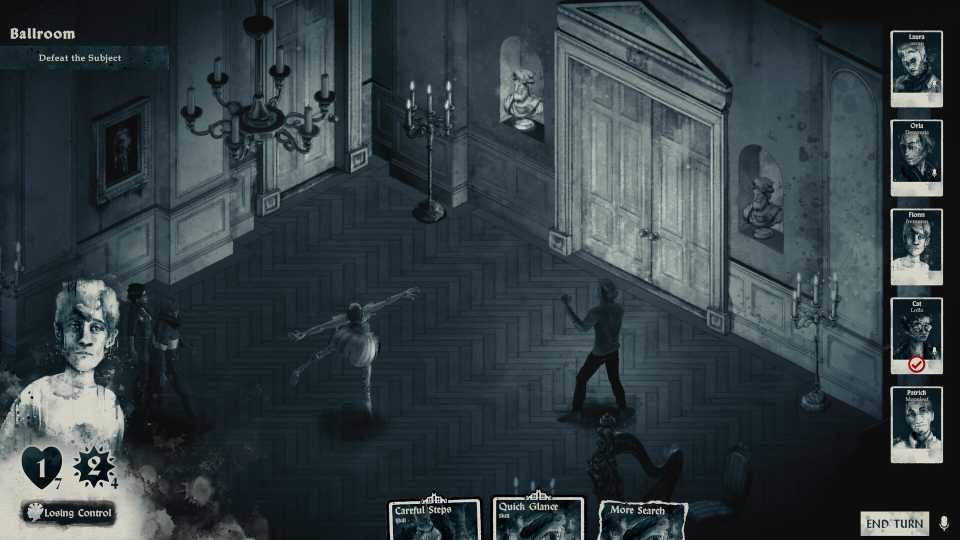
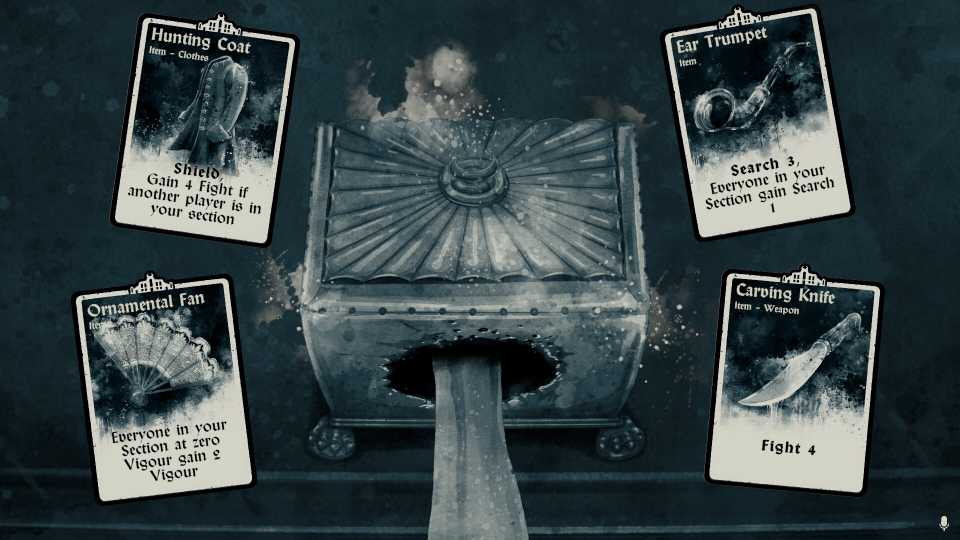
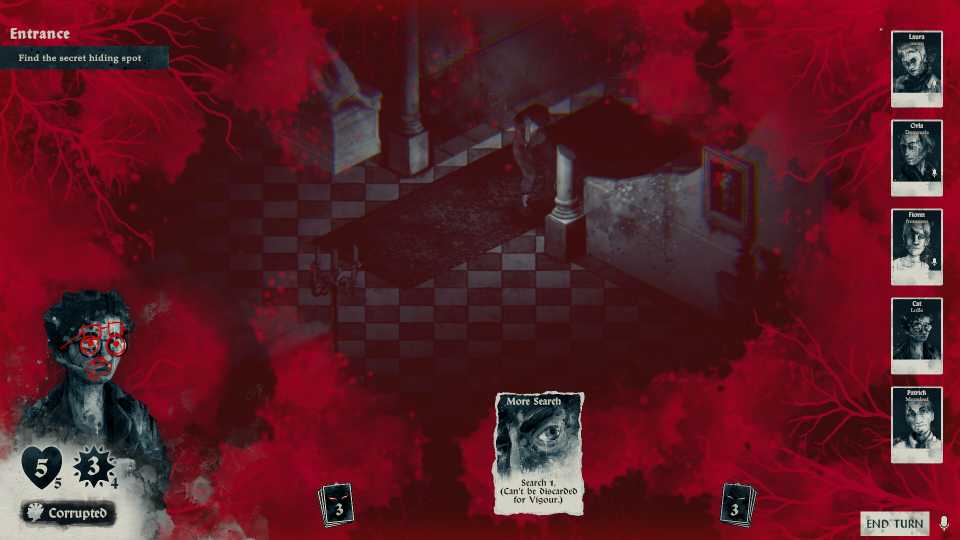
Eyes of Hellfire is an upcoming social horror game from indie studio Gambrinous Games, whose previous titles include Cardpocalypse and Guild of Dungeoneering. Published by Blumhouse Games, the game challenges players to solve puzzles together and unravel the mystery of the haunted lodge, which draws inspiration from the infamous Hellfire Club near Dublin.
The Best War Games caught up with Gambrinous' lead writer and narrative designer Len Cunningham, and the voice of the host, actor Liam Cunningham, to discuss Eyes of Hellfire in more detail. They spoke about some of the inspiration behind the game as well as what they feel are its most unique qualities. This interview has been edited for clarity and brevity.

Horror Games That Use Players' Microphones
Using the player's microphone in gameplay is an excellent way to increase immersion and tension in horror games. Here's which titles did it the best.
Eyes of Hellfire is Steeped in Irish Mythology

The Best War Games: Can you talk about some of the mythology behind Eyes of Hellfire?
Len: As you know, it's a Gothic Horror multiplayer game, and a big inspiration for this is the original, infamous Hellfire Club based out of Dublin. This was a gentleman's club set up in the 1700s, and it was known for all the usual stuff you'd associate with the secret society: debauchery, hedonism, crime, and drinking—lots of drinking! There were plenty of eerie stories around devil worship, demonic summonings, and ritualistic sacrifice. If you grew up in Dublin on the playground, that was when you first started hearing rumors about the Hellfire club. It was always based around the real ruins.
There's a real ruined hunting lodge up in the Dublin mountains that kind of hangs above the city. Everyone had stories about it. Stuff about disappearing kids that went up there and were never heard of again. There's a fiery mast that's sometimes seen from the distance up there. It's just kind of always had an eerie presence.
Liam: I think a lot of it had to do with mothers and fathers trying to stop their kids disappearing for weekends and drinking and whatever. 'Don't go up there- there are ghosts!' That sort of thing.
The Best War Games: Liam, the host, seems to be a sort of mysterious figure watching over events. How did you approach bringing that character to life?
Liam: I've probably got to be very biased here with good reasons. I'm very fussy about stuff that I do, and I hope I tried to make that reflect in my career—that I tried to make interesting choices. I probably turn down 19 out of 20 jobs that I'm offered. I don't do things just because there's blood involved; I'll put it that way. The writing was excellent on this. The character was really good. When I asked if we could get some sort of dry humor into the script, it was agreed. The Host seems to be enjoying himself just a little too much. He's not just this horrible specter in the background, he's actually an enjoyable part of the events. I wanted him to be that guy that you kind of love to hate.
I don't do very many games. I'm in Squadron 42 which I did in 2014, but 11 years later, it still hasn't come out. I'm pretty fussy about these things. I'm not in the games world an awful lot, and I would like to do more, but the idea of being able to participate with your friends in a horror movie? I mean, that's not a thing that I've come across very often. It's great when you're in a cinema with your friends in a row of seats, and you'll have that feeling of everybody getting scared together. So it's the idea of participating in a game like this with friends. I think that the hook on that is really clever. I really like that because there's a certain strategy involved in it. There's lateral thinking.
Len: We use proximity chat. The idea of moving down a corridor and slowly hearing someone's echoing voice that gets more distant over time is just spooky. You're talking to your friends, and suddenly you don't hear them anymore. Dad and I were actually playing it last night. At one point, I actually heard him scream when he couldn't hear me anymore. It was great!
Liam: Also, it is gorgeous. There's a whole Gothic aspect to it. I think it's a really good-looking game. I'm very glad I was involved in my own tiny way with it.
Len: Yeah, that's our art director, Fred Mangan. He did absolutely incredible work, making this opulent, evocative kind of environment. It's really beautiful. There's a big mystery at the center of it, with a narrative. There's lore, and a lot of it is calling back to real Irish folklore, mythology. It's real, with local legends and local stories. There's a lot of that kind of background and family stories that were involved in the creation of this.
Liam: There's hardly a castle in Ireland that doesn't have at least a dozen ghosts in it. So there's a history of paganism and horror. We have iconic monsters like Carmilla by Sheridan Le Fanu, Dorian Gray etc. There's a huge wealth of Gothic horror in Irish literature and the history of our media in general.

The Best War Games: Liam, what would you say is unique about the way that video games can tell stories compared to a TV or movie?
Liam: Well, on TV and movies, you're a voyeur, pressing a remote control, you sit back and you're passive. Of course, there's room for all these things. People ask if you prefer TV or cinema, and now you can say games. They're all mediums. There's magnificent TV, brilliant movies and magnificent games. But the USP with the games is that the game doesn't exist unless you participate, unless you're part of the action. Your emotional investment and the frights that you get when it's you on the buttons is probably, dare I say it, even more rewarding than being on TV or in a movie. That's the USP for games. It is most definitely a unique selling point, because it does what TV and cinema do, but then goes a step further. You're not passive, you're not consuming it. You're a participant.
Len: When I was kind of starting out, I also studied film as well. Dad used to always say to me, "story is king." It's just another way of telling stories, and another kind of story that you can tell entirely within that very special medium.
Liam: No matter what's thrown at me first, I'm not looking at how interesting the part is, or if it is a big part. It's more like, 'What would people think if they saw this? Would I enjoy it if I saw it?' That's what is important in my mind. The mathematics, for me, are very simple. If I think people will enjoy it, that's the main thing. Me actually enjoying making it is secondary. There've been many times I've made something I'm really proud of, but it was an absolute pain in the *ss to make. But you make the investment because you think the end product will pay off.
To be honest, this was a joy to make, and to be a little part of this has been most enjoyable. One of the best things about voice acting is you're going to play a character, but you don't have to put on make-up, costumes etc. It's a wonderful thing that you can play something so different without having to actually dress up.
The Best War Games: In terms of the Host himself, was the character written with Liam Cunningham in mind?
Len: This is sort of a funny thing. Originally, when we pitched around ideas for the full concept, as it were, with my creative director, Colm Larkin, we were kind of thinking that the idea might be that the lodge itself is some kind of malevolent entity. That being said, I'm such a character person. So when I had the chance to write something up, I had to give it a proper go. I didn't write it explicitly for Dad though. It's funny because I didn't write explicitly with him in mind to do it, but as soon as I'd written it, I sat back and went, 'Right now, we need a performance.' The second I thought of Liam for it, I could not get it out of my head. I really hoped he would like it, and thankfully he did! Because it was just perfect for him.
When I was younger, he went above and beyond. I had a birthday party where he essentially ran a murder mystery tabletop game for me and a big crowd of my friends. He played the game master, and dressed up and did voice and everything. He was very theatrical and really impressive. So I did think a little bit of that.
Liam: Horror is near and dear to my heart. When I was very young, my family didn't have much money. There was a family wedding, but my uncle couldn't afford to bring all the kids, the nephews etc. So afterward, we set up a party for all the children that couldn't come to the wedding. They had barely a shilling between them, as they say. My uncle put up a bedsheet, and he had an eight-millimeter projector. We watched Frankenstein versus the Wolf Man. I think it's the first time I'd actually physically seen a projector doing this magic light thing. It was brilliant.
I think it put the hook in me, but also, I've done plenty of horror. I did the third movie in the Mummy series. I did Dog Soldiers, where I actually transformed into a werewolf. I've done a vampire movie, The Last Vampire. It was the first manga that was made into live action. I recently did The Last Voyage of the Demeter, which is literally back to the book Dracula. So to do a haunted house like this... It feels like I've closed the circle, which is kind of cool.

The 86 Best Free-to-Play Horror Games on Steam (2025)
Those looking for the ultimate cheap thrill have come to the right place. Here's a look at some of the very best free-to-play horror games on Steam.
How Curses and Hidden Objectives Work in Eyes of Hellfire

The Best War Games: Len, can you talk us through a little bit about how the curses and the hidden objectives evolved during development?
Len: When we started to make this, we knew we wanted to do something cooperative, because one of the actual reasons that the game came about originally was that a few of us were looking for a game to play at Halloween with our friends. We wanted something spooky, like proper spooky, but not terrifyingly horrible, and something that we can play that's maybe not reflex-based, because there's a lot of that stuff. We thought maybe something that we could take time with, absorbing the atmosphere etc.
When we looked, there just wasn't much of that out there to be honest. So we realized a while later that this would be a great idea. Maybe we should apply this idea to the Hellfire Club, and that kind of stuff came together. When we were originally working on the idea, even though we knew we wanted something cooperative so we could all play together, we also wanted to sow a little bit of doubt and mystery in there at the same time as well. It's not an explicit betrayal game—not something like Among Us—where one person is hunting everyone and you're trying to find the person doing that.
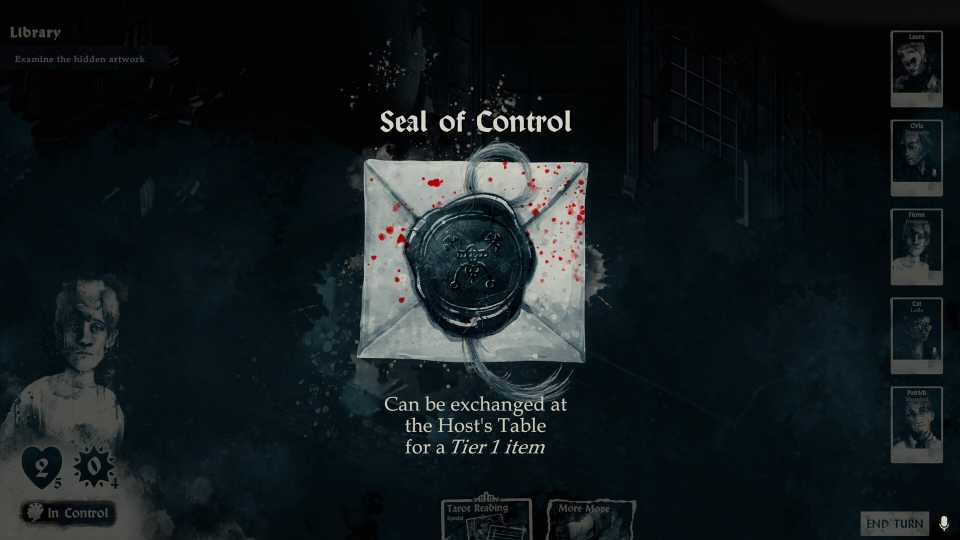
We wanted to create a sense of light distrust. Like, 'Are you helping me?' Or 'What exactly are you doing?' That's when the Host comes in occasionally, and maybe he might make you an offer that would be very difficult for you to refuse if you are after your own selfish objectives. That was sort of the vibe we wanted to have going into this. At the same time, we have this kind of escape room vibe to the whole thing, too. You're trying to work together, cooperate and figure out what's going on, picking up a bit of the story along the way, a little bit of the mystery, and at the same time occasionally working on your own selfish objective.
The Best War Games: How did you find that balance between the puzzle and horror elements?
Len: We found that it marries weirdly well to be honest. We did want to be careful when it came to story and narrative, to make sure that people weren't stopping in the middle of gameplay to watch a really long cutscene etc. We've been very careful about how we go about balancing that. When it comes to puzzles, we find that they're actually excellent for horror. If you're trying to plug something in, for example, and in the meantime, you see something slowly moving towards you from the other end of the room, it creates a massive amount of tension. Then, with proximity chat, sometimes in order to complete a puzzle, you may have to split up into different spaces, and so probably can't hear each other in other rooms. I think it can really support that goal of creating that eerie, Gothic kind of atmosphere of dread and tension at times.
The Best War Games: What would you say you're most excited for players to experience when they're playing this with their friends?
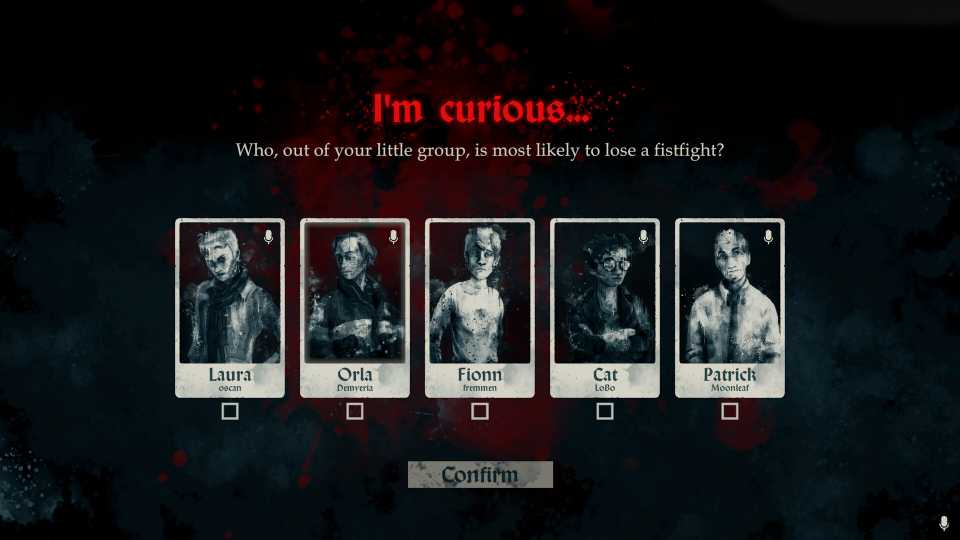
Len: Well, there are so many things. There are some interesting 'votes' in the game where players actually vote on things like which of their friend group is more likely to do X, for example, which could cause some tension between the group. We have this mechanic in the game called Eyes of Hellfire, where one player secretly has the Eyes of Hellfire and must try to guess another player's private objective—he curse they're trying to figure out. They'll need to ask questions like, 'Is that person stealing a lot because they're covering up for their real curse, or are they just trying to steal a bunch because that's what they're required to do?' It should stimulate a sense of paranoia. I'm very excited to see that. There are also times when you might see something in the lodge that isn't there, and that's all I'm going to say about that. I'm very interested in seeing the players' experience.

The Best War Games: Early Access is a great opportunity for games in their very early stages. What can players expect in terms of how the content evolves over the next 12 months?
Len: We have a lot of really exciting things planned post Early Access launch. One reason we're doing Early Access, though, is to gather player feedback and suggestions and responses. This will allow us to work that into the game. That's a major part of the development of our games in the past as well. We do a lot of play testing and get a lot of feedback from players, because at the end of the day, it's kind of what matters most. Are players enjoying this? Is this fun? Early Access is a really great opportunity to be able to gather player feedback and make some interesting changes. The game is launching with one complete scenario that you can play through, and it's replayable. You will have to go through it again in order to experience the entire mystery and see everything that that scenario has to offer. You can't complete it all in just one playthrough. It's launching with that, and then in the future, we're looking at some more ideas.
Liam: That's another difference between movies, TV, and games. I mean, they do it with movies specifically where they have test audiences, but in that world, it's seen as letting the audience decide what the end of the movie is. Whereas with games, finding out what players would like, where they see initial ideas going, etc., and getting their feedback about pretty much every aspect of the game, is a perfect idea.
The Best War Games: Do you see this type of social horror game becoming a larger trend in the horror genre?
Len: We've seen it a little bit with games like Phasmophobia and perhaps less so horror, but more things like Lethal Company, which I think leans somewhere between horror and comedy. I'm really happy to see it. I think it's been a really long time since I thought that was going to become more of a thing. People are looking for more ways to be social, more ways to see each other over distance and time, as well. I think it's a really lovely thing.
I personally can say I've enjoyed playing the games that I've mentioned before, with my friends as well recently, and especially in the era of difficult schedules in life, the way things fall now. I also think horror in particular is such a rich genre. It has such dedicated, committed people. I've seen experimental horror, action horror, comedy horror. It's all in film, in games, in literature. There are all kinds of ways that people have approached this. I just love to see more good things. I can't wait to see what more comes out of this gameplay genre.
Liam: From my point of view, I figured out quite early on that gaming is not something you just do alone. For example, Len's brother. I have never heard him laugh as much when he's playing something like Rocket League with his friends. He plays Battlefield and I have to run in and close the windows because he's on with his friends screaming. I think the neighbors think we're killing him or murdering him. The social aspect of it is magnificent. It's crazy. It's just a wonderful thing.
[END]


- Developer(s)
- Gambrinous
- Publisher(s)
- Blumhouse Games
- Multiplayer
- Online Co-Op
- Number of Players
- 2-5 players (online)
- Steam Deck Compatibility
- Unknown