


Summary
- FF8 revolutionized character realism & gameplay mechanics ahead of its time.
- FF12 introduced the Gambit system for AI scripting in battles, influencing future RPGs.
- FF5 nailed job switching system, impacting later FFs, RPGs like Bravely Default.
The Final Fantasy series is no stranger to change. While innovation has been foundational to the story of video games, few other series besides Final Fantasy could claim to have grown or set standards quite like they have. Some Final Fantasy games felt like they were moving with the times, but others were distinctly ahead of their time.

8 Final Fantasy Games With The Best Gameplay, Ranked
When measuring gameplay alone, these Final Fantasy games stand out among the rest even when stripped from their story and graphics.
It's too easy to use "ahead of its time" generally to mean "innovative" or "excellent." However, whether it was an original idea, borrowed, or received well by critics and gamers at the time, these Final Fantasy games championed a feature that would not catch on until years later.
Final Fantasy 8
Shooting For Realism And Reinventing Almost Every Mechanic

Final Fantasy 8
- Released
- February 11, 1999



WHERE TO PLAY







- ESRB
- T for Teen: Mild Language, Suggestive Themes, Violence
- Genre(s)
- JRPG

Final Fantasy 7 blew audiences away with its transition into the third dimension, cinematic mastery, and mature themes, but many wondered why the character models in-game couldn't more closely resemble those seen in its full-motion video sequences. When Final Fantasy 8 arrived, RPG fans were astounded to see that their comments were on-point, with every visible character rendered realistically (something that would become a standard for almost every RPG and non-RPG video game to come).
Final Fantasy 8 didn't just innovate on presentation, but it reinvented many systems thought to be fundamental to the format. Each character was a blank slate to customize from top to bottom, beyond their limit breaks. Gold (or Gil) came from a staggered salary rather than monsters. Although the junction system was imperfectly executed, it eliminated the need for grinding, as character stat growth was tied instead to equipable items (or spells), and in one of Final Fantasy's most controversial design decisions, it used global enemy level scaling.
Final Fantasy 12
Scriptable Party Members

Final Fantasy 12
- Released
- October 31, 2006

WHERE TO PLAY

- ESRB
- T For Teen due to Alcohol Reference, Fantasy Violence, Mild Language, Partial Nudity, Suggestive Themes
- Genre(s)
- JRPG
Final Fantasy 12 introduced the Gambit System, a programmable AI scripting tool that let players define how their party members acted in battle using "if-then" logic (for example, "if at low health, then use a healing spell"). This allowed for a level of party micromanagement automation that felt revolutionary, and offered a level of tactical depth that foreshadowed the AI-scripting systems now common in party-based and strategy RPGs.

5 Best Final Fantasy Games That Get Better As You Play, Ranked
The Final Fantasy franchise has produced some of the most incredible games ever, and many of them are experiences that improve as the title goes on.
Twelve is an underrated Final Fantasy game in many ways, but this feature is one of its most underrated mechanics. Gambits can become a little too granular for some, and the system left many feeling as though the game was playing itself, as even the active character had their Gambits control their actions. However, its adoption from games like Pillars of Eternity and Dragon Age shows that there was great merit to the mechanic, even if its refinement was off.
Final Fantasy 5
Switching Jobs On The Fly

Final Fantasy 5




-
 OpenCritic Reviews
- Top Critic Avg: 85 /100 Critics Rec: 95%
- Released
- December 6, 1992
- ESRB
- T For Teen due to Mild Fantasy Violence, Partial Nudity
- Developer(s)
- Square Enix
- Publisher(s)
- Square Enix
WHERE TO PLAY
- Genre(s)
- JRPG
Although the terms "class" and "job" are typically used synonymously to describe a character's role (usually in battle), job denotes a more casual fixture. Final Fantasy 3 introduced the concept of moving from one to another, although generally, the job transfers were more like promotions. Final Fantasy 5 perfected the idea, allowing characters to swap between an up-close and personal fighter and spell-slinging black mage.
A character's base stats might influence their best fit, but characters have to gain experience in each job to get better at them. This innovation went away until later games unearthed it, such as Final Fantasy Tactics, 10-2, and 13. Job switching later influenced other RPGs like Bravely Default, Dragon's Dogma 2, and Blue Dragon.
Final Fantasy 7
Full Motion Video Revolution And A Pro-Environmentalism Message

Final Fantasy 7
- Released
- January 31, 1997
WHERE TO PLAY
- ESRB
- T for Teen: Blood, Fantasy Violence, Language, Mild Suggestive Themes
- Genre(s)
- RPG
It is an understatement to say that Final Fantasy 7 was a game-changer in video game culture. Its extensive use of full-motion video (FMV) cutscenes helped sell the PlayStation and signaled a shift toward cinematic storytelling. Besides being visually gorgeous (for the time), they were integrated with gameplay and narrative beats, something few titles attempted in that era.

Every Final Fantasy Game Cloud Strife Is Playable In
These are the games in which Final Fantasy's Cloud Strife appears as a fully playable character.
FF7 was also ahead of the curve thematically. Its story tackled the dangers of corporate greed, ecological disaster, and terrorism with a seriousness rarely attempted in blockbuster games. Those environmental themes are more relevant than ever and echoed in countless games (and beyond) that followed.
Final Fantasy 10
A Return To Turn-Based Combat And Fully-Articulate Characters

Final Fantasy 10
- Released
- December 17, 2001
WHERE TO PLAY
- ESRB
- T for Teen: Mild Blood, Mild Suggestive Themes, Violence
- Genre(s)
- JRPG
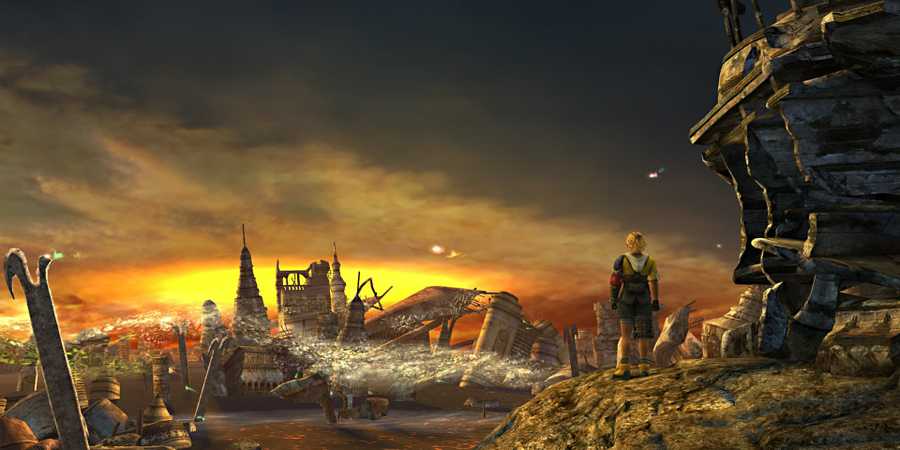
Final Fantasy 10 introduced the Conditional Turn-Based Battle (CTB) system, letting players see turn order in advance and manipulate it, a design choice that would later influence titles like Trails in the Sky and Shin Megami Tensei: Digital Devil Saga and signalled well before its arrival a welcomed renaissance of modern turn-based games. It demonstrated how a turn-based RPG could feel not only tactical but fluid, fast-paced, and satisfyingly responsive.
Even more revolutionary was the full voice acting. FF10 was the first in the series to feature it extensively, helping bring characters to life in ways text boxes couldn’t. Combined with expressive facial animations and dramatic cinematography, it paved the way for modern cinematic RPG storytelling.
Final Fantasy 4
Adding Adrenaline To Battle Menu Navigation With ATB

Final Fantasy 4
- Released
- July 19, 1991
WHERE TO PLAY
- ESRB
- e
- Genre(s)
- JRPG

While today's technology allows game developers to produce games with fast-paced, complex gameplay and sublimely rendered graphics, that was not the case in the late 80s and early 90s. Turn-based RPGs were the genre with which Square was able to tell the stories it wanted to deliver with the same level of detail that the tabletop RPG games that inspired them had originally contained. Final Fantasy 4 introduced the Active Time Battle (ATB) system, a blend of real-time urgency and traditional turn-based combat.

Final Fantasy: 8 Best Parties In The Games, Ranked
Not all party setups in Final Fantasy games are created equal; here are some of the best ones that players can make use of throughout the series.
With ATB, characters have individual timers that fill based on their speed stats, demanding that players act quickly rather than waiting passively. Final Fantasy games would stick with menus in battles until FF16, but the move toward action-oriented play prompted many JRPGs and tactical-based games like Chrono Trigger and Grandia to adopt a similar mechanic (for good or for bad) and arguably led the way to the action-RPG hybrid.
Final Fantasy 11
Going Online With A Console

Final Fantasy XI
- Released
- October 28, 2003

WHERE TO PLAY
- ESRB
- T For Teen Due To Animated Blood, Violence
- Genre(s)
- MMORPG

The golden age of MMOs may not be in the past, but from the early 2000s to mid-2010s, it seemed as though just about every other game studio was catering to everyone with an internet connection. While there were MMOs before Final Fantasy 11, none had even considered building one on a game console.
Now, online play on consoles and even cross-platform play is commonplace in games like Fortnite, Diablo 4, and FF14. However, Final Fantasy 11 pioneered the idea and did so with the bare-bones online infrastructure that the PlayStation 2 could provide.

8 Final Fantasy Games That Exceeded Expectations
The Final Fantasy series is one of the most prestigious in gaming. With a high bar, these entries managed to surpass fan expectations.