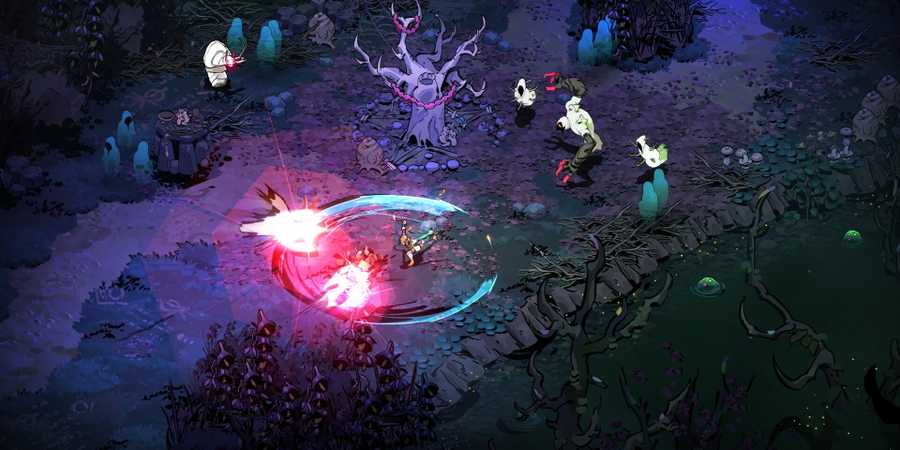
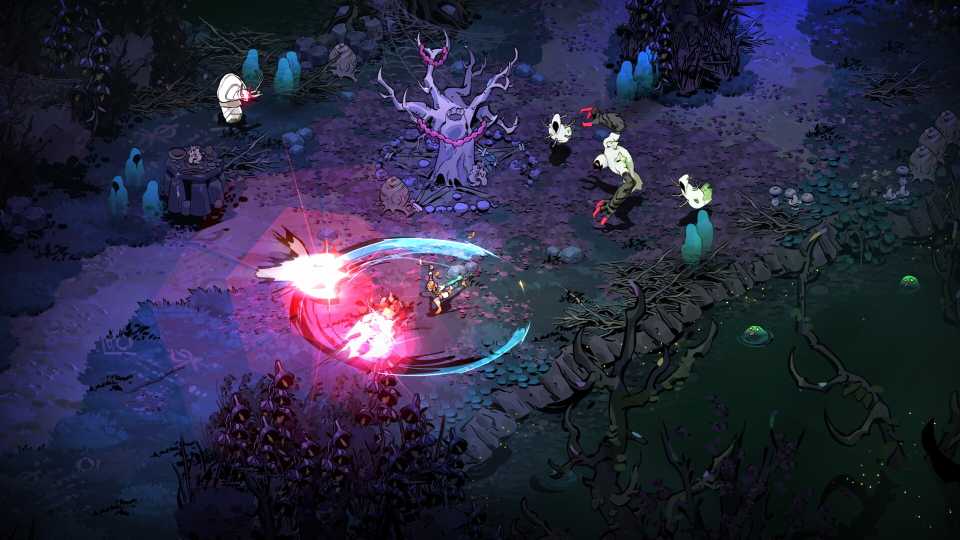
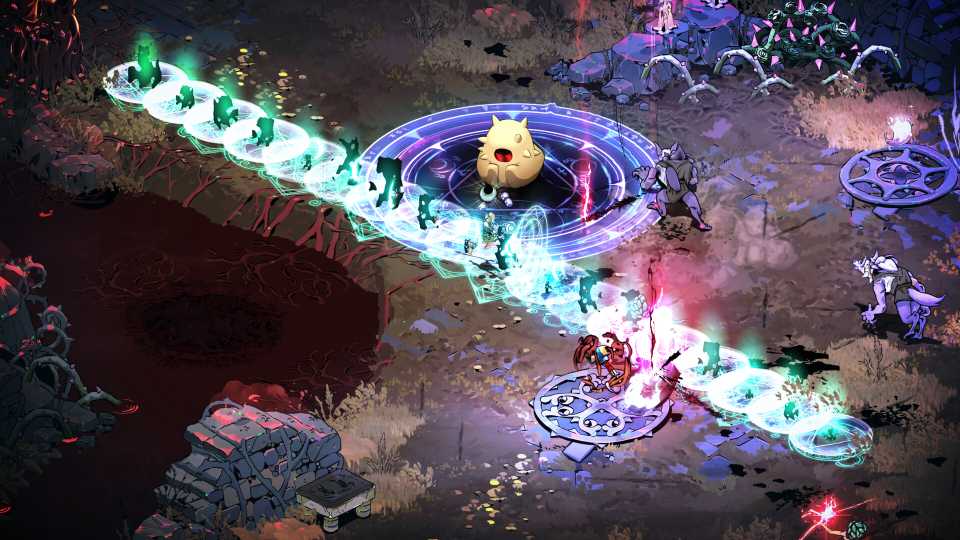
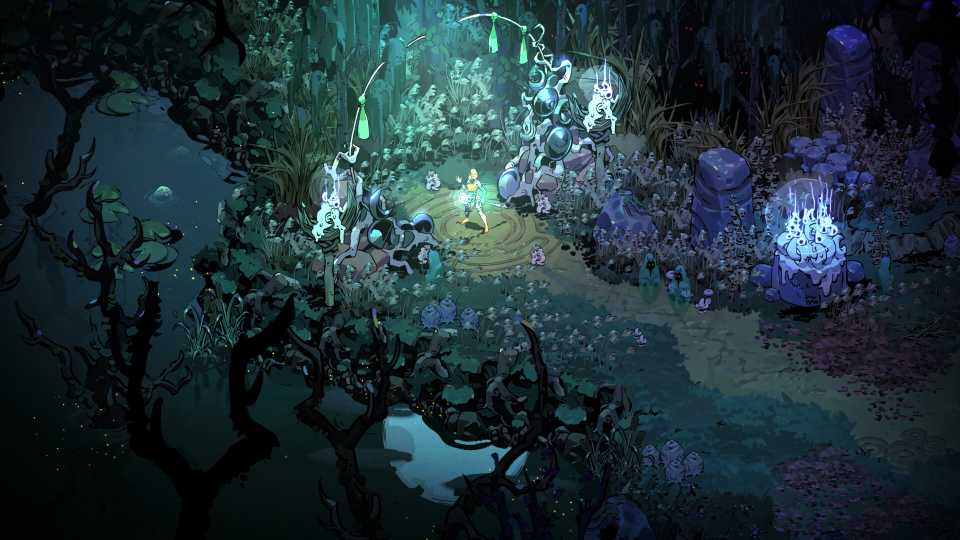
Like its predecessor, Hades 2 doesn't confine itself to Greek mythology when taking inspiration for its weapon designs. Just like Zagreus' Infernal Arms, each of Melinoë's Nocturnal Arms has a "hidden aspect" that she can unlock, each of which references a powerful mythological figure originating outside the Greek canon.
Players might recognize the names of some hidden aspects, while others might be unknown to them. Even if some names sound familiar, players might not know the stories behind them. Since the characters in the game are from Greek myth, they don't know much about the figures for whom the hidden aspects are named, leading curious players to search for that knowledge themselves. It's the perfect opportunity to learn more about mythologies from around the world and across history.

Clever Details You Might Have Missed In Hades 2
Supergiant has once again proved their mastery when it comes to detail in their games about Greek mythology.
Descura, The Witch's Staff: Aspect of Anubis
The Egyptian Guide To The Afterlife

Anubis will be a familiar name to players who have an affinity for Egyptian mythology. The jackal-headed god presides over funeral rites and the souls of the dead, and protects tombs from those who would defile them. In the myth of Osiris, which tells the story of the god-king's murder by his brother Set, Anubis assisted Isis with Osiris' embalming. Afterward, Anubis was gifted Osiris' organs and protected Osiris' body from Set's attempts to destroy it, thus making him the patron of embalming and guardian of the dead.
Anubis is also responsible for the Weighing of the Heart, one of the most important steps in one's judgment after death. A departed soul's heart is weighed against the white feather of Ma'at, the goddess of truth, order, and morality. Those who pass the test are allowed to enter the afterlife, while those who do not are consumed by Ammit, the "devourer of the dead."
In Hades 2, the waking phrase for this aspect is spoken by Circe: "I see you guarding graves of mortals passed into the black beyond." This reflects Anubis' role as a guardian of the dead and of tombs. Circe also mentions a dream in which a jackal-headed figure appeared to her, referencing how Anubis is often depicted in Egyptian art.
Lim & Oros, The Sister Blades: Aspect of the Morrigan
The Irish Goddess of War and Fate

The Morrigan is one of the most prominent figures in Celtic mythology, most often associated with the foretelling of war, death, and battle. Often taking the form of a crow, she inspires bravery in her warriors, strikes fear into the hearts of their enemies, and presides over the outcome of battles.

Hades 2: All Romanceable Characters
The original Hades had such intriguing, unique romances. Hades 2 continues this tradition with its own twist on love for Melinoe.
The Morrigan is the wife of the Dagda, the chief deity in Irish myth, and appears in several stories of Cú Chulainn, one of the most prominent heroes of Irish mythology. Cú Chulainn spurns her by rejecting her love and her aid in battle, a slight for which she hinders him in combat. Yet, he is still able to injure her in all the forms she takes. Later, the Morrigan prophecies Cú Chulainn's death, washing his bloody armor as an omen that he is doomed to die in battle.
This aspect's waking phrase is given by Artemis: "I see your threefold shadow with the Phantom Queen." This title is one often associated with the Morrigan in mythology, and she is often seen as a goddess with three aspects. Artemis remarks that she shares this sense of triplicity with Hecate, pondering whether they may be one and the same.
Ygnium, The Umbral Flames: Aspect of Supay
An Andean Underworld Deity

Supay is found in several South American mythological traditions, but is most associated with the Inca people and other Andean cultures. He holds domain over the souls of the dead, the afterlife, and the cycle of life and death. Like Anubis or Charon, Supay is a psychopomp, guiding souls from the land of the living to the land of the dead.
Supay rules over Ukhu Pacha, a realm similar to the Underworld. However, Ukhu Pacha is associated not just with death, but with new life. Death and birth are a cycle, and Supay is the overseer of that cycle. Because the realm is located underground, Supay is also associated with ventures such as mining and farming, with his influence reaching into everyday life. He is often a fearsome figure, with the power to both give life and to take it away, commanding the spirits and demons that call Ukhu Pacha home.
This aspect's waking phrase, spoken by Moros, is: "I see your spirits glimmer as the metal underneath the earth." It references both the souls of the dead that Supay rules, and the materials of the earth that he holds dominion over.
Zorephet, The Moonstone Axe: Aspect of Nergal
The Mesopotamian God of Death

Nergal is another deity whom Hades 2 players might not have heard of. In the Mesopotamian civilization, which is among the oldest in recorded history, he was one of the rulers of the Underworld, along with his wife, Ereshkigal. He is linked to war and disease, and is the god of deaths that result from such disasters.
Nergal typically has a more violent nature, and is a source of disorder and strife. One myth details how he grew discontented with his state of placidity and made an effort to start wars and sow violent chaos in an effort to regain the respect of mortals. He began a reign of terror and attempted to destroy the cosmic order before his attending god, Ishum, brought a stop to his rampaging. Nergal is a deity that inspires fear, but also great respect due to the power he wields.
Zorephet's waking phrase is "spoken" by Charon, whom Melinoë can somehow understand: "I see you hoard the shattered corpses of your foes." It suits Nergal's nature as a bringer of death and destruction.
Revaal, The Argent Skull: Aspect of Hel
Goddess of the Norse Underworld

In Norse mythology, the name "Hel" refers to both the realm of the underworld itself, and the goddess who presides over it. There are several lands of the dead in the Norse tradition, but Hel is the most common place for the dead to end up. Despite the associations we have with the word today, the Norse Hel was a fairly mundane place. Souls were not punished or rewarded, but rather continued on much as they did in life.

Best Boons in Hades 2, Ranked
New and returning Gods in Hades 2 will offer Melinoë boons to help her accomplish her task – these are the best Boons for any build.
Hel herself was a fierce, foreboding figure. She is often depicted with a body that is half-alive, with the face of a lovely woman, and half-dead, with the face of a decaying corpse. Like the concept of death itself, she is not inherently cruel or kind, but simply an inevitability, ruling over the dead with unmoving indifference.
Medea is the one who speaks this aspect's waking phrase: "I see you gather countless dead in cold and dark domains." She remarks that this phrase came to her from a dream of a different Underworld, with a fierce queen. This resonates with the goddess Hel, as does the description of the dreary realm.
Xinth, The Black Coat: Aspect of Shiva
The Hindu God of Destruction

Shiva is a principal deity in Hinduism, and one of the religion's most important and widely-revered gods. Together with Brahma and Vishnu, he is part of the trinity that represents the forces of creation (Brahma), preservation (Vishnu), and destruction (Shiva).
Though he is known by the epithet "The Destroyer," there is much more to Shiva than that. The Shavaism tradition, one of the Hindu religion's four major sects, considers him the Supreme Being, the creator and the creation, the beginning and the end. Despite his fearsome title, he is also the originator of the practice of yoga, and a patron of meditation. He is associated with the arts and medicine just as much as he is with slaying demons.
The Aspect of Shiva's waking phrase comes from Selene: "I see you bring bliss and destruction in your outstretched arms." It references both the benevolent and fearsome traits of Shiva, as well as how he is often depicted with four arms.


-
 OpenCritic Reviews
- Top Critic Avg: 95 /100 Critics Rec: 98%
- Released
- September 25, 2025
- ESRB
- Teen / Alcohol Reference, Blood, Mild Language, Suggestive Themes, Violence
- Developer(s)
- Supergiant Games
- Publisher(s)
- Supergiant Games