


Roguelike games, especially those made in the mold of games like Diablo and Hades, are nigh-inescapable these days. The obvious culprits, like Teenage Mutant Ninja Turtles: Shattered Fate and Dynasty Warriors Abyss, are generally considered a good time, but not very inventive or earth-shattering. I bring this up not to disparage these titles, but to make an important point: Hell Clock is not one of these Hades clones—it's much more special, original, and evocative than that.
That's not to say that it's perfect—far from it, in fact. But it's certainly a vivid and bold gaming experience that I won't likely forget anytime soon. A lot of this is thanks to the Hell Clock's narrative: it's based on the War of Canudos, a conflict between the First Brazilian Republic and the Bahian settlement of Canudos, which was widely perceived as being monarchist and therefore opposed to the newly founded republic. This conflict culminated in a massacre, wherein thousands of noncombatants in Canudos lost their lives. It's against this sobering historical backdrop that Hell Clock makes its entrance, and it makes for quite a striking narrative.
You don't need to know much about the Canudos Massacre to understand Hell Clock's story, but some knowledge of the game's historical inspirations can elevate your enjoyment of it.
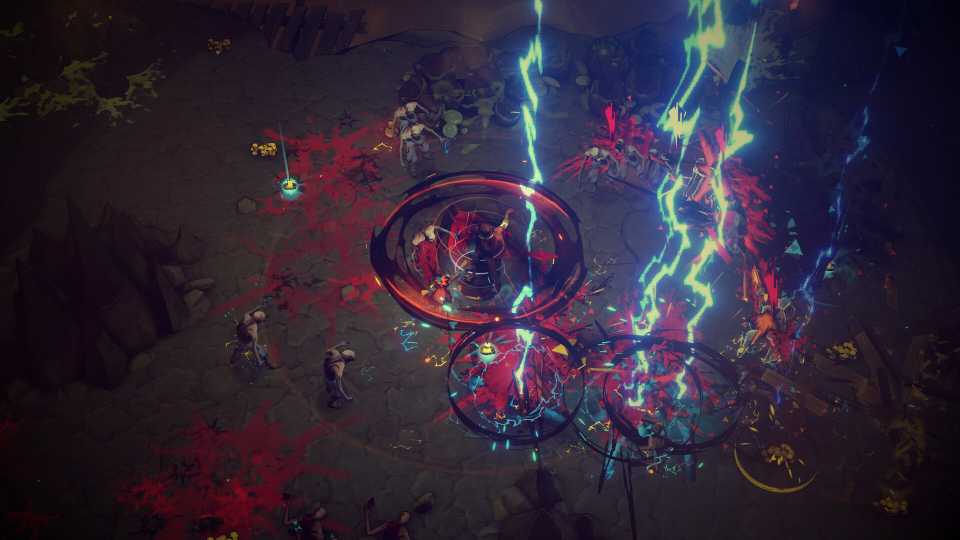
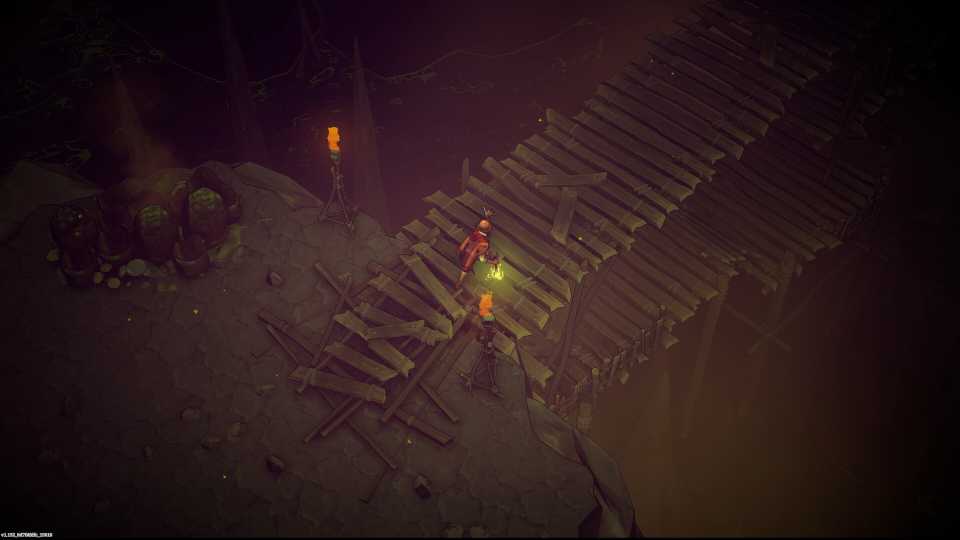
Developer Rogue Snail has taken this dark historical context and designed a fast-paced combat sandbox around it, one characterized by constant expansion and progression. Actual moment-to-moment gameplay takes something of a backseat to this all-important player progression, which makes sense for the genre, but also waters down the experience after so many hours: designing a build can often be more enjoyable than using it. This may not sound like a stirring endorsement of Hell Clock, but for those who love the build-crafting and leveling systems of a game like Diablo 4, Hell Clock is more than worth getting lost in.
Hell Clock's Build-Crafting and Progression Are Its Crown Jewels
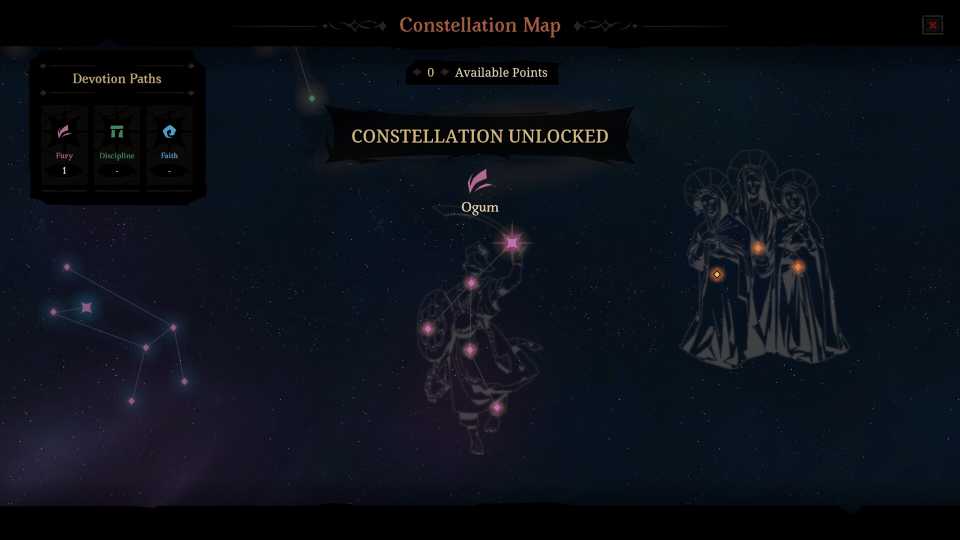
Although it is technically a roguelike, Hell Clock is a bit more like a traditional ARPG with a smattering of roguelike elements. Players will gain experience during each run, which will level them up and lead to a series of unlockable skills, but the real meat and potatoes of the RPG framework are found between runs, not during them.
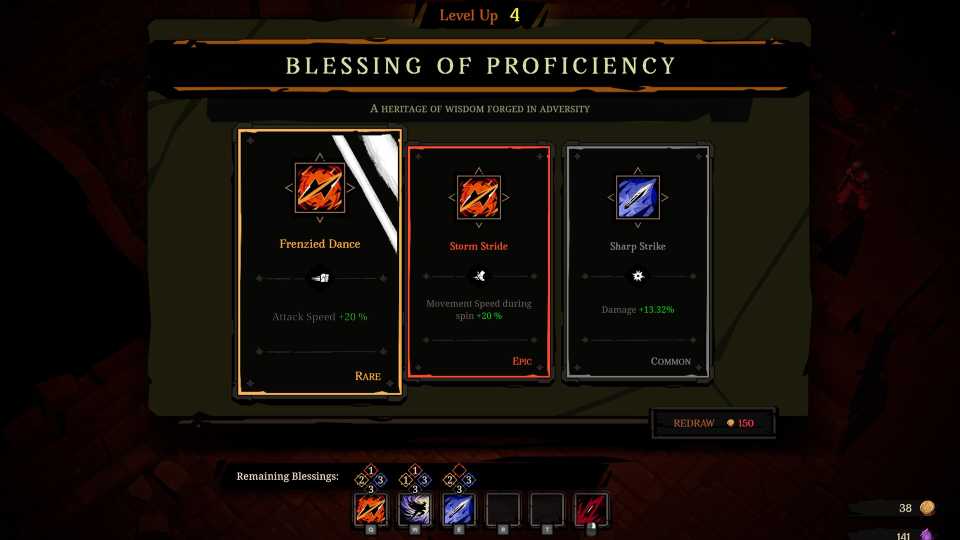
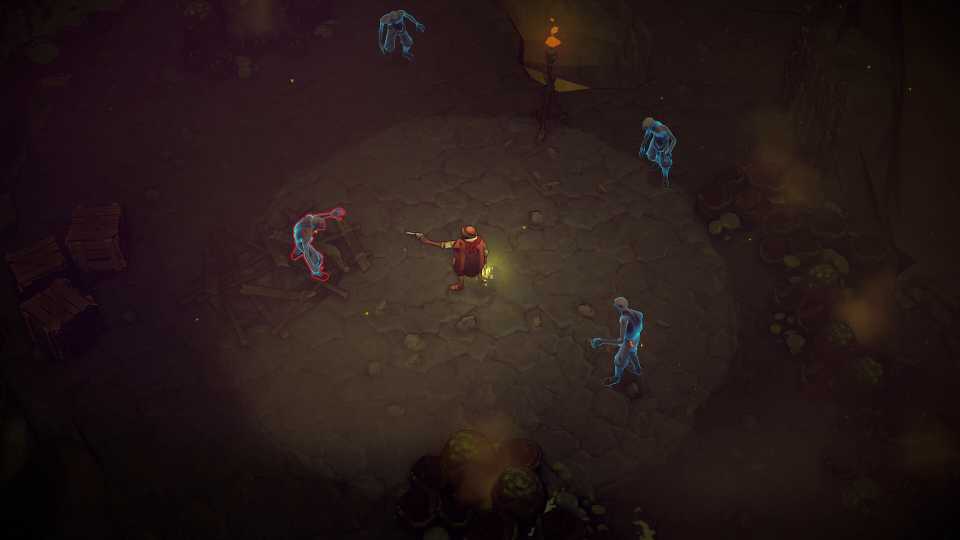
You assume the role of Pajeú, a man whose mentor has been killed by the Republic, and his soul trapped in the underworld. To save him, Pajeú must repeatedly descend into this demon-infested hellscape, which upholds a gameplay structure not dissimilar to the likes of Hades. But whereas Hades and many other roguelike RPGs empower players primarly through upgrades mid-run, Hell Clock is much more traditional in its approach, granting you a choice between three ability upgrades upon killing a certain number of enemies and leveling up. This facilitates short-term power creep, to be sure, but it pales in comparison to how you grow outside runs.
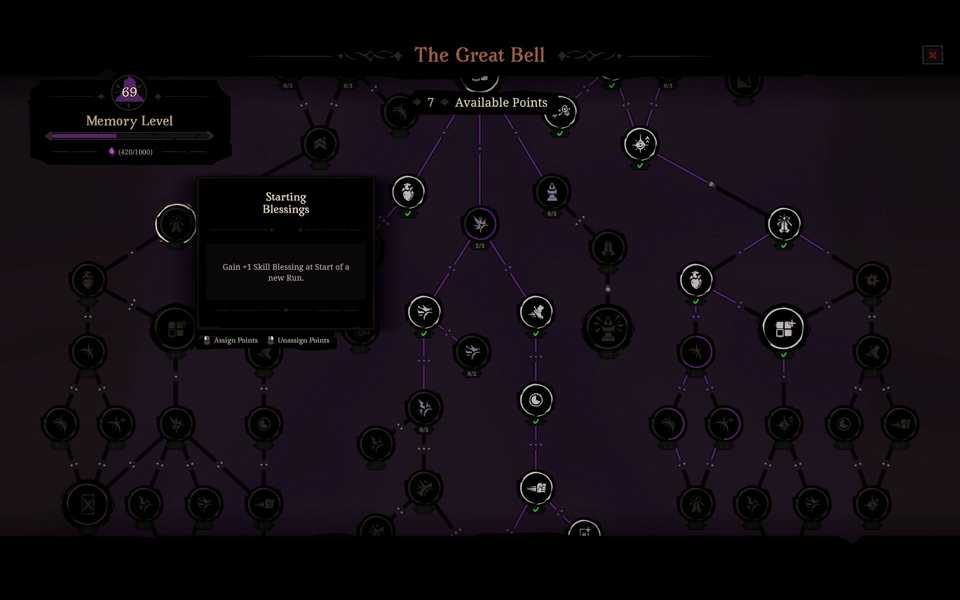
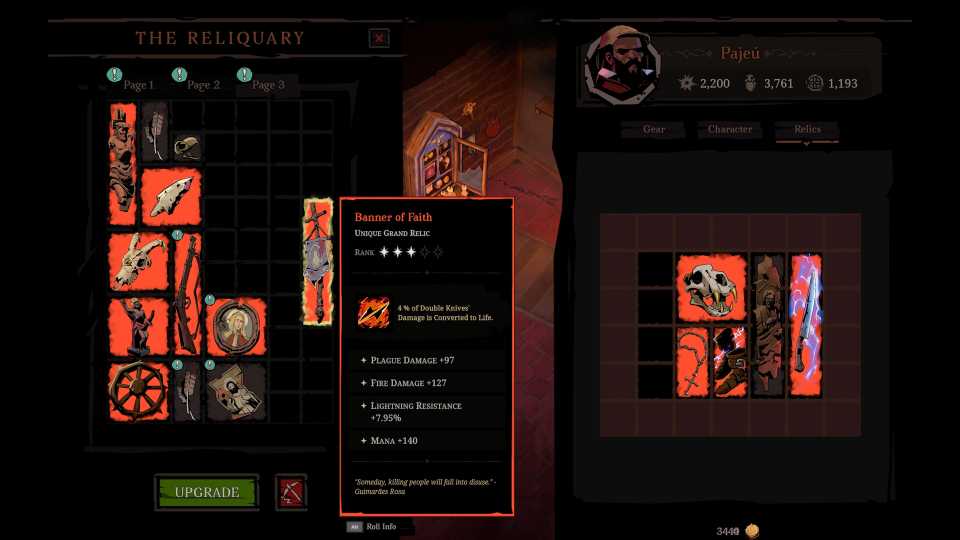
Back at your base, you can purchase various pieces of gear that provide static buffs, like a permanent increase in health or reduction in ability cooldown time; the shop that sells this gear is refreshed regularly, so there's almost always a valuable, long-term upgrade to be acquired. Then there are the abilities themselves, of which five can be active at any time, and each can be leveled up for additional power—this is the game at its most Diablo. You can invest in a traditional skill tree between runs, leading to considerable improvement across all vectors, and a series of relics can be equipped and upgraded for an assortment of distinct perks.
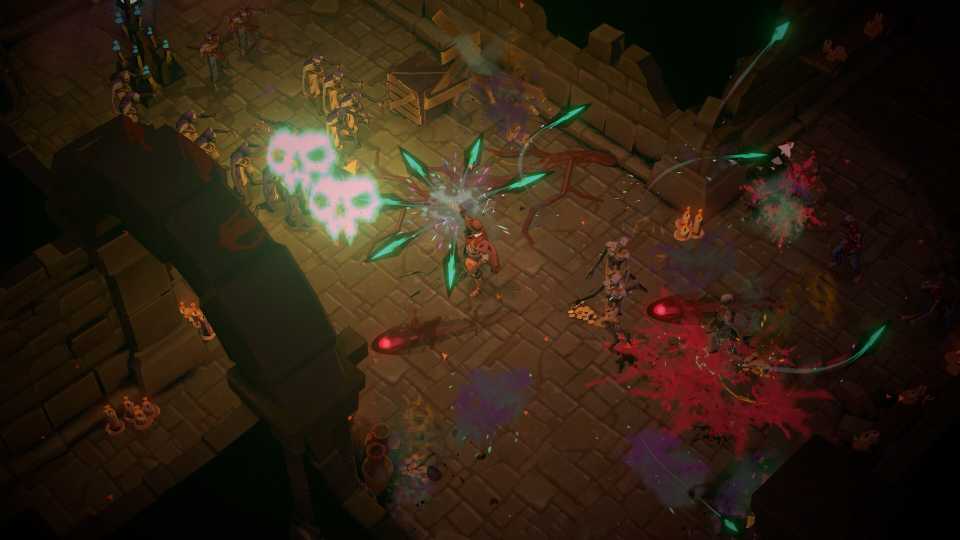
It sounds like quite a handful, but Hell Clock does a great job of easing you into its progression systems, lending the experience a sense of constant unfolding. Moreover, the freedom offered to players through these diverse build-crafting options means that the sky is virtually the limit for unique playstyles. For example, I once designed summons-focused build, purposely crafted around one summon ability. On its own, this ability isn't too powerful, but I supplemented it with a relic that boosts spell damage for every active summon, and another relic that made a different spell generate an additional summon per use.
Through this process, I felt like I was falling down a rabbit hole of unique, expressive build-crafting; I also felt like I was outsmarting the game, exploiting its mechanics to make myself more powerful. I favored this summons-focused build for about an hour or two, but this process of discovery and fruitful experimentation was repeated time and time again throughout my time with Hell Clock, to equally effective results. In other words, it's remarkably easy to create fun and clever builds, and this flexibility is easily Hell Clock's greatest strength on the gameplay front.
Hell Clock Seems Purpose-Built for a Very Specific Type of Gamer
If the build-crafting process highlighted above doesn't sound interesting to you, then you might not exactly love Hell Clock. The game's combat isn't bad by any means, but the fun of the combat sandbox comes from seeing your build play out in real time, and then augmenting it with the various buffs and upgrades you find during runs. If you ignore the build-crafting systems, then the combat will feel like little more than fervent clicking and potion-drinking. It's not like other roguelikes, where the moment-to-moment combat is already engaging enough, and the build-crafting options simply supplement it.
Upgrades found during runs are also not very exciting, typically offering little more than straightforward stat increases or buffs for specific skills. They are useful, yes, but not as interesting as the relics and skill tree abilities.
I have some other miscellaneous gripes with the game. For one thing, its item economy feels broken at times: for as good as some relics can be, most of them are inconsequential or only benefit one specific ability, and you will quickly accumulate innumerable duplicates, which makes the strong build-crafting system far more awkward and cumbersome than it needs to be. The game is also designed around the titular Hell Clock, a time-limit mechanic that applies to each run. When it reaches zero, you'll be forced to forfeit the run entirely. The clock is extended by a minute-and-a-half after every boss battle, and it can be upgraded through the skill tree, but it still always feels a little inelegant. I found myself upgrading the Hell Clock out of a sense of obligation rather than the love of experimentation, which drove all my other in-game decisions. When the Hell Clock runs out, it can often feel like a cheap and unfair loss, an artificial roadblock established to keep you from progressing too far, too soon.
You can disable the Hell Clock entirely, but this does little to alleviate the mechanic's problems: if the best way to engage with a mechanic is to remove it entirely, then one must wonder why such a mechanic is in the game in the first place.
Hell Clock has some blemishes but its core gameplay and narrative experience are compelling. The story of the Canudos people is heartbreaking and galvanizing, constantly encouraging the player to rain righteous vengeance upon their enemies. Thanks to the game's flexible combat sandbox, this process is as intellectually stimulating as it is emotionally invigorating, and will have players itching for one more run. For a roguelike, it's hard to offer higher praise than that.



- Released
- July 22, 2025
- Developer(s)
- Rogue Snail
- Publisher(s)
- Mad Mushroom
- Number of Players
- Single-player
- Steam Deck Compatibility
- Unknown




WHERE TO PLAY


- Excellent build-crafting systems
- A unique, historical story
- No-nonsense ARPG combat
- Moment-to-moment gameplay might feel bland to some players
- A problematic item economy
- The central Hell Clock feature is underbaked
Hell Clock releases for PC on July 22, 2025. The Best War Games was provided a Steam code for this review.