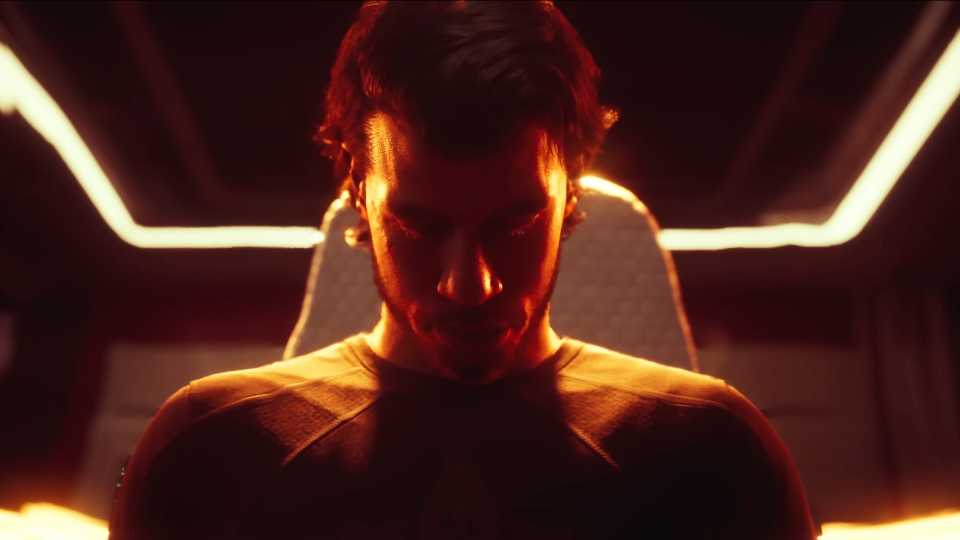
Many players excitedly waiting for the now-delayed Grand Theft Auto 6 are also highly anticipating MindsEye, an upcoming action-adventure game from developer Build a Rocket Boy. MindsEye's players take on the role of Jacob Diaz, an amnesiac who has the titular neural implant embedded within his brain. In the futuristic desert city of Redrock, Jacob Diaz must navigate political conflict, constant danger, and the secrets of his own past.
The Best War Games spoke to MindsEye director Leslie Benzies about the game's setting of Redrock City, its portrayal of the relationship between humanity and technology, its vehicle and drone gameplay, and more. Benzies, who previously worked on the Grand Theft Auto series, described MindsEye as an optimistic look at how humanity and technology could potentially coexist in a "near-future Americana" setting. He also discussed the inclusion of the Arcadia system, which lets players craft their own missions and levels, and Build a Rocket Boy's plans for the future. This transcript has been edited for clarity and brevity.
Redrock: A City Where Man And Technology Co-Exist
Q: One of the first things that stands out about MindsEye is the city of Redrock and how it blends desert wasteland with high-tech futurism. Can you talk about the process of designing this city?
A: Redrock is a near-future Americana that has hallmarks of the world we live in but with a slight twist to them. It’s a vision of the future with an original blend of futurism and sci-fi inspired by how heavily we are all influenced by the omnipresence of technology.
When building any kind of environment of this nature, there is always the desire to be true to reality and create a space that is believable and enjoyable but also emphasizes things that may wash over us when driving through these large city locations.
Within a game like MindsEye, it’s an opportunity to tell a story not just about the world we are constructing but the world we all inhabit and point out the things that perhaps we should question a bit more. Our inspirations for these aspects always come from the real world as opposed to other mediums, as I think that is the key to constructing a space that feels familiar and coherent but also vibrant and interesting.
Q: Why did you choose a desert setting for your central location?
A: Redrock’s right in the middle of the desert, which makes it an interesting place from the start. You’ve got this high-tech city surrounded by open, unpredictable terrain, and that contrast adds a lot visually to how the world feels to play in. It’s a place where AI, drones, implants, and automation run most of the systems. Big corporations are building the tech, the government’s trying to stay in control, and that friction is baked into the world.
From a gameplay point of view, the setup gives us a lot of range. The city gives you structure, vertical movement, and dense combat spaces. The desert opens everything up—more freedom, vehicles, aerial exploration. It’s the backdrop to the whole experience and for many of the upcoming gameplay drops.
Q: What real-world technologies, either existing or hypothetical, most inspired the technological advances seen in MindsEye?
A: We are interested in and intrigued by all forms of technology, and artificial intelligence is obviously at the forefront of our minds. Human beings have always invented tools that have assisted them in creating greatness. Every time there is a massive shift in technology, there is a fear that humans will be replaced. It happened with the calculator and the computer, and now it’s happening with AI.
With time being the most valuable commodity we have, we should embrace AI, which allows us to be more creative and to do more with our time—surely this is a good thing. There will never be a replacement for human ingenuity and creativity.
MindsEye Tells A Cinematic Story With Varied Gameplay
Q: Although he's the protagonist, Jacob Diaz is still so much of an enigma, with his fractured and missing memories. What was it like building a protagonist who remembers so little of who he is and what he's experienced?
A: That unravelling sense of reality runs through Jacob’s entire journey. He starts out haunted by a past he can’t fully remember, and as the story unfolds, he begins to piece it back together. Players uncover that past with him, so the emotional beats hit in real time.
We didn’t set out to mirror any specific film or game, but we’ve always been inspired by directors like J.J. Abrams, Ridley Scott, and Christopher Nolan, people who explore existential questions and aren’t afraid to push visual boundaries. With MindsEye, we aimed to capture that cinematic feel while keeping it grounded in emotion.
Some parts of Jacob’s story are told through subtle cues, performances, cinematics, single lines. His choices aren’t always clean, and his motivations aren’t always clear. That ambiguity makes him feel human. He’s not a hero; he’s someone trying to understand who he is and what’s been done to him.
Q: The latest MindsEye trailer showed off two potentially antagonistic characters, Silva and Vega. Is there anything you can tell us about these two and their role in the game?
A: We get a glimpse of its immersive influence – consumer robots carry out most manual tasks, and an algorithm connects all-seeing devices. The city itself is a living experiment in the existential potential of man and machine.
The volatile relationship between Silva and Vega – Big Tech and Government – is poised to impact the future of Redrock and its inhabitants, but mostly Jacob Diaz, MindsEye’s protagonist, as he searches for answers about his troubled past.
We meet intriguing characters, including Marco Silva, the eccentric tech genius and founder of Silva Industries, who wants to change the course of human evolution. We’re also introduced to Shiva Vega, Redrock’s power-hungry Mayor, whose blind ambition is to make Redrock the safest city in the world and to gain even greater control of its citizens.
Q: I’m excited about the driving element. It looks really fast and chaotic. What motivated your decision to make driving such a key element of the game?
A: We love racing games, and driving in MindsEye is designed to be both exhilarating and grounded. We've focused on delivering realistic vehicle physics and dynamic handling that respond to terrain and weather conditions. At the same time, we want players to feel the thrill of high-speed chases, with that same intensity you’d get from an action film. To get there, we’ve used subtle camera work that heightens the sense of speed and control, so every turn, every drift feels alive. There’s a wide range of vehicles tuned for different play styles, and we’ve woven driving into the narrative.
Q: What real-world vehicles inspired the ones seen in the game, such as the Silva Sedan?
A: We’ve got a variety of ground-based and aerial vehicles in MindsEye, and they play a crucial role in shaping gameplay. They aren’t just for transportation and combat; they’re central to storytelling and world-building, and they are really fun.
They’re not tied to specific real-world models, but you’ll see influences. We took inspiration from both classic and modern designs, then gave them a futuristic twist to fit the world we’re building.
That approach gives us more creative freedom. It means the vehicles feel grounded but still, like something you could see on the road, just not quite yet. And it helps reinforce the bigger themes of the game about how technology shapes the world around us, and how we move through it.
Q: Can you tell us more about the role the companion drone plays in the game, whether in combat or exploration?
A: The companion drone plays a crucial role in both combat and exploration. Integrated with Jacob’s MindsEye implant, it acts as a tactical extension of his body, able to fly ahead, access hard-to-reach areas, and provide real-time reconnaissance. In combat, it brings a strategic edge: stunning enemies, hacking enemy robots to turn them into allies, and evolving its abilities as the game progresses.
Whether you’re leaning into an aggressive play style or taking a more defensive approach, the drone adapts to support your tactics. It adds variety and depth to every mission, making gameplay feel more dynamic and layered without tipping the balance too far in the player’s favor. As the story unfolds, the drone becomes an increasingly essential part of Jacob’s journey.
Q: MindsEye deals with the role of technology in the human world and its potential dangers, and it’s coming out at a time when the dangers of tech like AI are really under scrutiny. Did any of the current discussion about technology’s dangers influence the narrative of MindsEye, and how was it incorporated?
A: While concepting MindsEye, our vision blended futurism and sci-fi, inspired by how heavily we are influenced by technology. We conceived ideas years ago, which at the time felt very future-forward, so it’s been interesting to watch in real time how those technological advancements are becoming an integral part of our culture, which just makes our story feel all the more relevant.
However, we wanted to address some of these topics with more levity than the traditional, dystopian interpretation of future tech because there are opportunities to have some fun with this. I believe we’ve successfully balanced a serious narrative and deep characters with an enjoyable exploration of what a possible future may resemble.
The Arcadia System And The Future Of MindsEye
Q: MindsEye will be launching with the Arcadia system, which helps players build missions and other content. Could you talk about the decision to include Arcadia and the process of developing it?
A: In this new era of entertainment, where streaming platforms, boom-and-bust games, and an on-demand culture dominate, we’re pushing things in a new direction, with an interface that simplifies how we consume not just games, but all forms of entertainment. Consumers are shifting away from 2D browsing to fully immersive 3D experiences. Put simply, we're shifting from passive interaction to active participation.
As with all new products, things evolve. Arcadia was originally envisioned as our creation platform, but as we continued to develop MindsEye and expand BARB’s ecosystem, it naturally evolved into something more focused, offering Play.MindsEye and Build.MindsEye. Play delivers cinematic, high-intensity gameplay with missions and maps that constantly evolve. Build gives players intuitive tools to create their own content—no technical skills required, just imagination and intent.
To fully realize our vision, we had to beta-test our creation system with a community of builders in real-time, starting with Everywhere while we were in stealth mode, developing MindsEye.
Q: MindsEye is your first major game release in 12 years. Obviously, you've been working on it for a few years now, but what has that process been like?
A: It’s been a long road, but a good one. Even with years of experience, you’re always learning, especially when you’re building something this big from the ground up. We’ve got an amazing team across every part of the game, including art, programming, writing, design, and what has made it work is trust. Just giving people the space to do what they do best and letting the ideas grow from there. That’s where the good stuff comes from.
Q: Many of your prior works have had a major cultural impact. What type of impact do you hope MindsEye has on the industry?
A: I don’t think about impact in a big, sweeping way. That’s something you only really see in hindsight. For us, the goal with MindsEye was to build something original, something that pushes a bit but still feels familiar and fun to play. If it inspires people to try new things or opens the door for different types of stories and experiences, that’s a win.
But really, it’s about giving players something they connect with, and hopefully something they’ll remember. And we are passionate about giving the power of game creation to players – we would love to see some amazing creations come from the community.
Q: What would you say fans of your prior works should expect from MindsEye and Build A Rocket Boy Games as a whole?
A: As an independent studio, we have the freedom to break ground in experimental new ways, and the challenge is balancing innovation with familiarity—too much "new" risks alienating fans, too much "same" feels stale. It’s about nailing what makes your game’s world feel alive and urgent. Streaming, social media, and on-demand binge culture have fractured attention spans, and consumer mind-share is a brutal battlefield for all IP.
At Build A Rocket Boy, our vision goes far beyond a single title. MindsEye is the first episode and central story around which ever-expanding interconnected episodes will span. We have concepts for a bold expansion of the franchise, which will introduce alternate realities while maintaining its core themes of hope, redemption, and the intrigue of civilizations past and future, drawing from the lore and multiverse concepts.
With MindsEye, we are introducing three experiences in one game that are seamless: MindsEye narrative story, Play.MindsEye, and Build.MindsEye. MindsEye is about consequence and connection—it’s cinematic, reactive, and meant to feel like a world you’re not just playing in, but able to create in it too.
[END]




-
 OpenCritic Reviews
- Top Critic Avg: 33 /100 Critics Rec: 6%
- Released
- June 10, 2025
- ESRB
- M For Mature 17+ // Blood, Sexual Themes, Strong Language, Violence
- Developer(s)
- Build A Rocket Boy
- Publisher(s)
- IO Interactive Partners A/S