


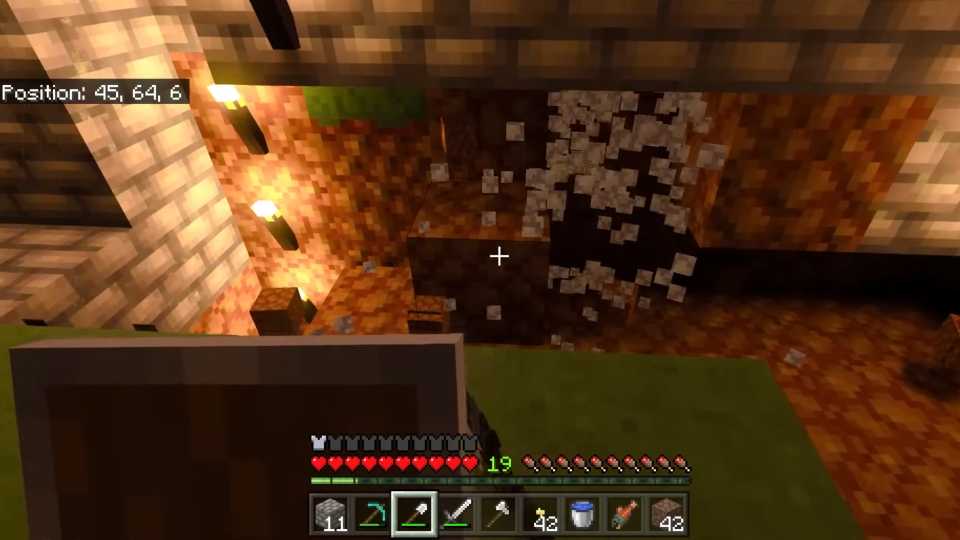
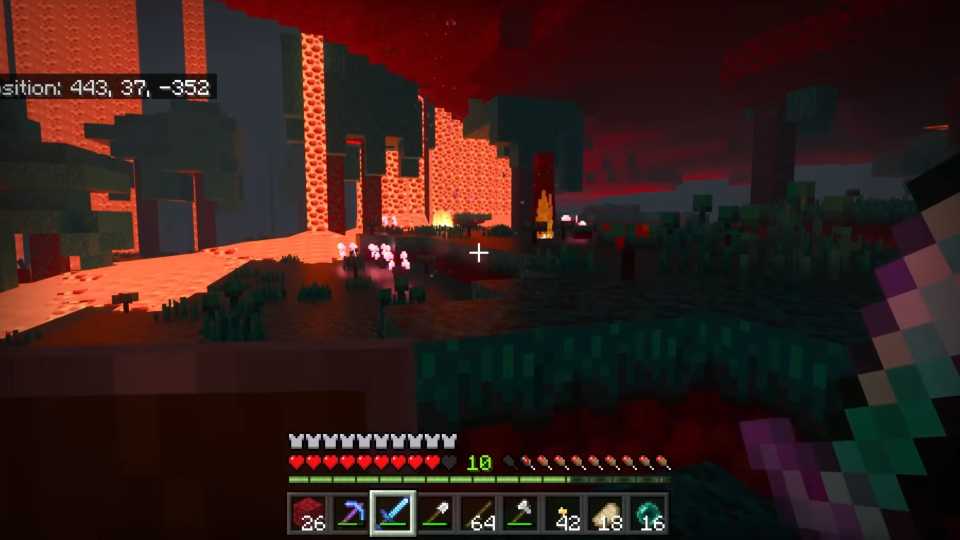
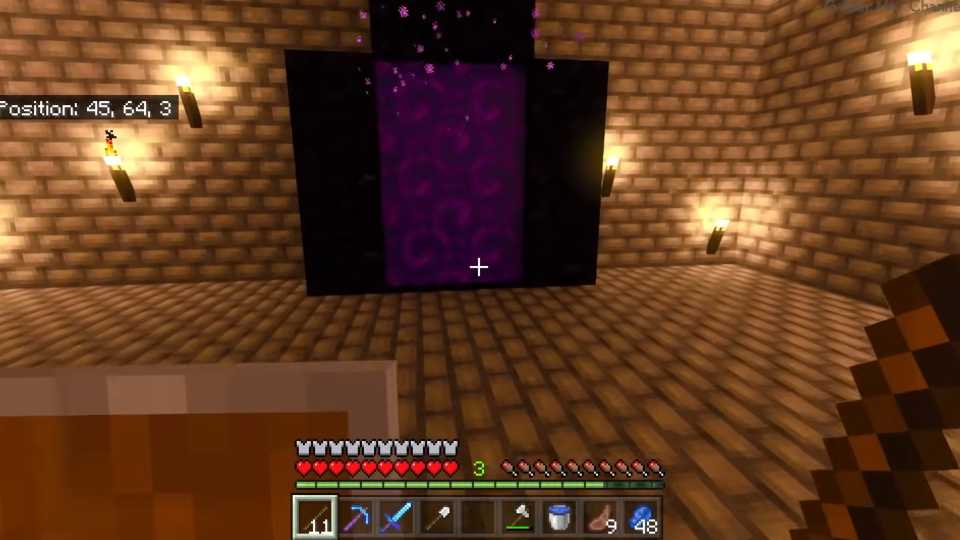
For over 15 years, the blocky world of Minecraft has delighted players of all ages worldwide and remained a global phenomenon. Books, comics, spin-offs, and the original Minecraft game itself have all kept players of all shapes and sizes entertained, culminating in the game’s upcoming theatrical debut with A Minecraft Movie. Minecraft has even helped teach young students in schools as a tool to educate kids in computer science, cyber safety, math, climate science, biodiversity, art, and more through Minecraft: Education Edition. This iteration of Minecraft has helped educate over 40,000 schools across 140 countries, but it shouldn’t be the only game used as a teaching tool in schools.

One Silly New Minecraft Mod Makes The Case For a New Form of DLC
A crafty Minecraft player has created a hilarious mod that could serve as a blueprint for a full-blown DLC inspired by their work.
The Return of The Oregon Trail to Schools
Since the dawn of video games in the 1950s, video games have been inexorably tied to school systems, with some of the earliest games produced, OXO and Tennis for Two, being made at the University of Cambridge and Associated Universities’ Brookhaven National Laboratory respectively. One of the most famous games to get its start in schools was 1971’s The Oregon Trail. Utilizing technology from Minnesota’s Carleton College, Don Rawitsch, Bill Heinemann, and Paul Dillenberger created the first form of The Oregon Trail game to teach eighth grade students about how 19th century pioneers lived on the Oregon Trail. From this simple origin, The Oregon Trail would go on to become one of the most popular educational games in the late 20th century.
However, the advent of more complex games, accessible consoles, and advanced computers in the 21st century have led The Oregon Trail to be replaced and forgotten in many school systems. However, The Oregon Trail has continued on and evolved beyond its pixelated, limited historical past. In 2021, Gameloft developed the latest version of The Oregon Trail for the Apple Arcade and later for PC and home consoles from 2022 to 2024. This version of The Oregon Trail retains the original’s core premise of forming a caravan to survive the travel west, but featuring expanded historical trivia, new locations, and more detailed environments, as well as an improved representation of Native Americans. Students could benefit from playing this version of The Oregon Trail to not just learn more about 19th century history but of gaming history as well.
Over the course of nearly 54 years, The Oregon Trail series of games has sold over 65 million copies worldwide and was inducted into the World Video Game Hall of Fame in 2016.
Portal and Other Puzzling Games in School
Schools often use puzzles to train and test young minds to determine their effectiveness in problem-solving beyond common math or language arts questions. In a way, this is one reason why Minecraft became so popular in school systems, as it could be used as a way to construct puzzles for students, just as it could be used to teach other subjects. One series that could be used to teach older students about problem-solving and game development is Portal. First released in 2007, the first-person puzzle-platformer Portal 1 follows an Aperture Science test subject named Chell as she’s forced to complete numerous tests involving portals by the unstable artificial intelligence GLaDOS. 2011’s Portal 2 expands upon Portal 1’s story, mechanics, and introduces a co-op mode.
The Portal duology could teach students to become better aware of their surroundings and improve their problem-solving abilities both alone and when working with others, in Portal 2’s case. Portal 1 and 2 weren’t the only games released in Portal’s timeline, however, as Valve released several spin-offs focusing on other functions of Aperture Laboratories and featuring alternate, thought-provoking gameplay. For instance, The Lab and Aperture Hand Lab are both virtual reality games centered around players completing various mini-games and tests. While VR may still be an emerging video game medium, it could still be used to teach students about how VR can be used to solve real-life problems and inspire the next generation of developers to continue experimenting with this form of simulation for gaming and beyond.
Teaching History Through Assassin’s Creed
For many history fanatics, Assassin’s Creed is one of the best series for players to experience some of humanity’s most famous historical eras, such as the Italian Renaissance, Ptolemaic Egypt, Colonization of the Americas, and more. However, Assassin’s Creed isn’t an exact adaptation of historical events, primarily due to the inclusion of the alien-like ancient Isu, powerful Pieces of Eden devices, and the literal inclusion of mythological creatures in historical events as seen in Assassin’s Creed Odyssey and Valhalla. Despite these historical inaccuracies, Assassin’s Creed has always strived to highlight historical locations, clothing, wildlife, and languages, culminating in the creation of the Discovery Tour mode in 2017’s Assassin’s Creed Origins.
In contrast to Minecraft’s constant blocky recreation of historical structures and other locations, Assassin’s Creed’s Discovery Tour mode allowed players to take part in several guided tours, curated by historians and professors, through near-perfect recreations of Ptolemaic Egypt, Peloponnesian War Greece, and Viking Age England and Norway. This combat-free mode not only allows players to learn more about ancient structures but also about these ancient civilizations’ philosophies, politics, religions, and other practices. Players simply walked and climbed around areas in this mode to freely explore long-gone time periods. They could also play as various fictional Assassin’s Creed characters or nonfictional historical figures in Discovery mode.
Assassin’s Creed Historical Education in Mirage, Shadows, and Beyond
While Discovery Mode didn’t return in Assassin’s Creed Mirage or Shadows, both games still offered historically invested players the opportunity to learn more about distant eras through databases called History of Baghdad and Cultural Discovery. Both of these databases contained encyclopedic entries on various aspects of Abbasid Caliphate Baghdad and Azuchi-Momoyama period Japan that were unlocked as players explored the games and progressed their stories. Discovery mode and the databases could help teach students lesser-known historical aspects of countries and societies from across the globe and inspire more students to become more invested in history than any textbook or film could. At the very least, teaching history through the more realistic depictions of Assassin’s Creed may retain students' attention more than Minecraft’s more cartoonish appearance.






-
 OpenCritic Reviews
- Top Critic Avg: 90 /100 Critics Rec: 84%



WHERE TO PLAY



- Genre(s)
- Sandbox, Survival
