


Nintendo has denied the claim that the company is working with the Japanese government to lobby against generative AI. Rumors of the anti-AI move seemed surprising, as so many other video game companies have leaned further into the technology in recent years. Now, though, Nintendo officials have stepped in to clear things up about their involvement in the supposed lobbying efforts.

Generative AI has proved to be a controversial technology in many industries, and gaming is no different. Aspyr recently removed Tomb Raider IV-VI Remastered's AI-generated content after the French voice actor for Lara Croft sued the company over allegedly using it to replicate her voice without her knowledge or permission. Blizzard and Microsoft have also faced backlash for their use of AI, especially as the latter has reportedly laid off hundreds of employees to replace them with AI.

Nintendo Responds to Mario Kart World AI Accusation
Nintendo addresses accusations from Mario Kart World fans that suggest developers used generative AI to create images in the game.
Nintendo Says Claims of Its Anti-AI Lobbying Are False
On October 5, the official Nintendo Corporate account tweeted that it "has not had any contact with the Japanese government" over AI or its use in gaming, despite "recent discussions" claiming the opposite. The key discussion in question stems from a now-deleted post from Japanese politician Asano Satoshi, which claimed Nintendo was "advancing lobbying efforts" with government officials and avoiding the use of generative AI in order to protect its IP. While the company is notoriously keen on copyright enforcement, as highlighted by Nintendo's ongoing Palworld lawsuit, it has now clarified that those actions don't involve pushing against AI on a legal level. Asano has since apologized for "not checking the facts properly" and promised to avoid similar situations in the future.
Nintendo's statement does say that it will continue to take action against copyright infringement regardless of whether generative AI is involved. IP complications are one of the main controversies surrounding AI-generated content, as many generative models train on copyrighted materials, but laws have, by and large, yet to catch up with the technology, so it's often unclear what counts as fair use and what constitutes infringement with AI. These legal debates aside, Nintendo has taken a fairly balanced approach to the technology so far. Nintendo of America's Doug Bowser has said Nintendo has no intention of replacing employees with AI, but that it is considering how to use AI to help the company.

Based on Bowser's earlier comments and other cases where Nintendo has denied using generative AI, it seems the company may not be quite as quick as others to embrace the technology, but it isn't outright taking a stance against it, either. Beyond Nintendo, AI has become remarkably common in gaming, despite its controversies. One study found that as many as one in five Steam games use generative AI to some extent.
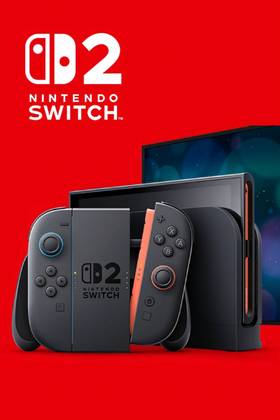
- Brand
- Nintendo
- Original Release Date
- June 5, 2025
- Original MSRP (USD)
- $449.99
- Operating System
- Proprietary
- Resolution
- 1080p (handheld) / 4K (docked)
- HDR Support
- Yes
- Storage
- 256GB internal / MicroSD
- Wi-Fi
- Yes
- Ports
- 2x USB Type-C / 3.5mm audio
- App Store
- Nintendo eShop