


Former Capcom developer Masakazu Sugimori voiced support for Nintendo's Game-Key Cards, dismissing fan claims that they exist solely due to greed. The comments add fresh fuel to a debate already stoked by Nintendo fans' game preservation fears and rising product prices, among other concerns.

Game-Key Cards are cartridge-shaped tokens that authorize a Switch 2 eShop download. They essentially act as a physical key for accessing a digital product, hence the name. First announced in April 2025, they are exclusively available as a distribution option for Switch 2 game publishers. The technology proved to be a contentious addition to Nintendo's gaming ecosystem, with fans criticizing it as inhibiting game preservation and arguing that its primary purpose is to allow publishers to cut costs even as they keep hiking product prices.

Nintendo Switch 2 Games May Be More Expensive
A new leak suggests that Nintendo is increasing the prices for games on the Switch 2, falling in line with a broader industry trend.
Nintendo Isn't Being Greedy With Game-Key Cards, Former Capcom Dev Argues
Former Capcom developer and longtime game composer Masakazu Sugimori has recently shared a contrarian perspective on the controversy surrounding Switch 2 Game-Key Cards and the media format itself. Taking to X, formerly Twitter, on September 9, he dismissed the suggestion that Nintendo launched Game-Key Cards due to greed, Automaton West reports. The industry veteran pointed to the Switch 2 maker's "insane" levels of cash reserves—which reached the equivalent of $13.72 billion in March 2025—as evidence that it has better things to do than figuring out ways for publishers to shave pennies off individual game distribution costs.

A Digital Game Copy Could Outlive Its Physical Counterpart—In Theory
While a cynical person might say Nintendo got as big as it did precisely because it isn't above things like Game-Key Cards, Sugimori shared a more developer-focused take on the tech. He expressed a belief that the technology is "largely aimed at protecting the gaming industry and the digital entertainment industry" as a whole. Reflecting on criticism that Nintendo's Game-Key Cards contribute to the loss of media, the composer countered that traditional physical formats aren't guaranteed to be longer-lasting either. "Physical things have a lifespan, and they eventually break," Sugimori explained. "Digital goods, on the other hand, don’t have a lifespan."

Although Sugimori's reasoning is rooted in facts, it does not tackle the full extent of public concerns about the controversial technology. From a preservationist's perspective, Game-Key Cards hurt efforts to conserve games by making mass-produced physical copies even more rare, while simultaneously disqualifying titles from certain cultural preservation programs. For instance, Japan's National Diet Library said in August 2025 that the nature of Game-Key Cards makes them ineligible for archiving as part of its government-funded preservation program.
Physical things have a lifespan, and they eventually break. Digital goods, on the other hand, don’t have a lifespan.
More broadly, some vocal consumers are criticizing publishers for cutting corners on the "physical" distribution front with things like Game-Key Cards, but without passing any of the resulting cost savings to consumers. Nintendo recently said that physical versions of first-party Switch 2 games will stick with traditional cartridges, suggesting the GKC format was primarily introduced to help third-party publishers.
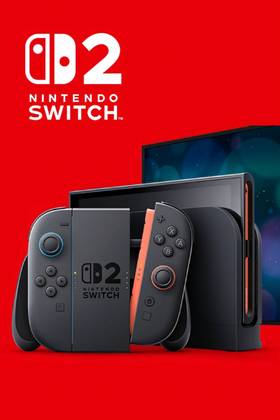
- Brand
- Nintendo
- Original Release Date
- June 5, 2025
- Original MSRP (USD)
- $449.99
- Operating System
- Proprietary
- Resolution
- 1080p (handheld) / 4K (docked)
- HDR Support
- Yes