


Summary
- The Ayleid Elves were a powerful and advanced race that once ruled Cyrodiil before humans and beastfolk overthrew them.
- Despite being mostly wiped out, occasional Ayleids have resurfaced throughout history, such as King Dynar and Umaril the Unfeathered.
- Ayleids worshipped Meridia, practiced necromancy, and enslaved humans, engaging in cruel mistreatment and torture.
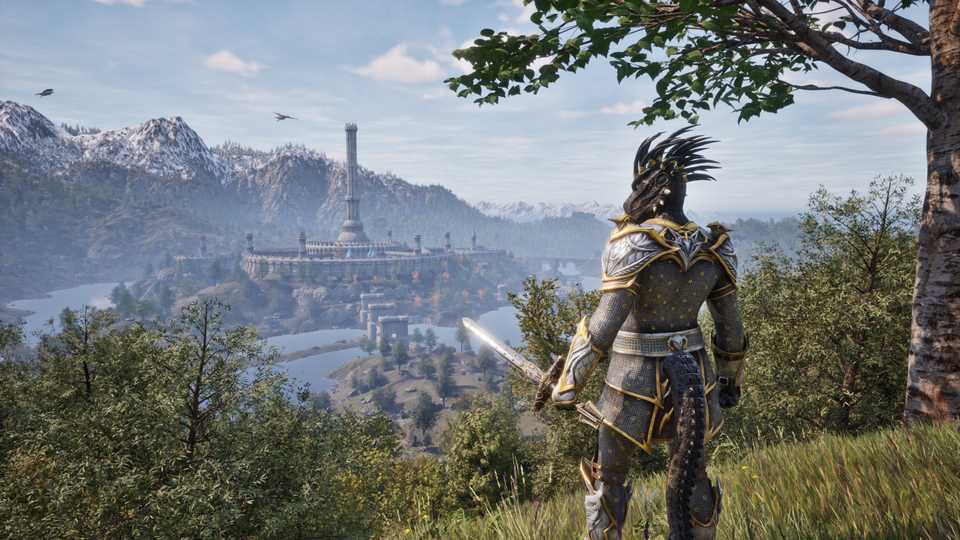
One of the most prominent sights in the game world of Oblivion Remastered is the many Ayleid ruins dotting Cyrodiil’s landscape. From a time long past, these ruins are the last remnants of an ancient race of Mer that was once dominant in the heartland, but vanished a long time ago. Since then, their cities have outlived them, prompting many to ask who they once were.
In Oblivion Remastered, the player will be asked to delve into an Ayleid ruin occasionally, or take an interest in one by a roadside, but otherwise, they go mostly unexplained. With only a few snippets of lore here, or an offhand mention there, it would be easy to dismiss the structures as simple old stones. But their history is much more interesting and more important than many players ever knew.

The History of the Imperial City From Oblivion Remastered
The Imperial City has a long history in the Elder Scrolls, going way back from the events of Oblivion Remastered’s main quest.
The Ayleid Elves Were Dominant Long Before the Events of Oblivion Remastered
A long, long time ago, the Sundering of Aldmeris brought doom to the mythical homeland of the elves, sending these peoples to Tamriel, where they settled in different regions, becoming the various races of elves seen today. In the Summerset Isles, the Altmer made their home, appearing similar to the ones in the modern-day Elder Scrolls setting. In Resdayne, the Chimer people migrated to a new home, settling alongside the Dwemer. Somewhere in between these two, the rest of the elven races carved out territory, but arguably the most powerful were the Ayleids, settling in the heartland of Cyrodiil.
Spreading out across the heartland and into parts of modern-day Morrowind, Black Marsh, Elsweyr, and Valenwood, the Ayleids established grand city-states. They built the White-Gold Tower long before men arrived, constructing it on an island they purchased from the bird-people of Cyrodiil in exchange for teaching them literacy. They established great wells to collect magicka seeping from the stars, one of which allegedly caught a drop of blood from the Heart of Lorkhan, crystallizing as the Amulet of Kings.
It was this stargazing aspect of their culture that seemed to define the Ayleids for a time. The Ayleids placed a great amount of importance on the stars, studying them, and making them central to their worship. They began to develop ways of harnessing the power that bled from them naturally in the previously mentioned wells, but also in crystals known as Welkynd Stones. These crystals could power the underground cities of the Ayleids, enabling them to build up an empire at a rapid pace, becoming the most powerful race of their kind.
The Ayleids Worshipped Meridia, but Also Other Daedra
As Ayleid religion developed, they turned their attention to more tangible ways of focusing their worship. Many Ayleids found common ground with Meridia, Daedric Prince of Life and Light, whose light was seen as a blessing upon the people. Many cities and monuments were built in her honor, with Meridia arguably forming the head of a loose pantheon of divinities that the race respected.
Meridia’s nature is very different from other Daedric Princes. Where most Princes have unknown origins, or are seen as creatures of pure chaos, Meridia is a Magna-Ge, a scion of the sun god Magnus, who fled to Aetherius during creation. When Magnus left Mundus, he tore a hole in the sky, creating the sun, allowing magicka to flow down from Aetherius, and his Magna-Ge followed him, creating the stars, the far smaller holes in the cosmic ceiling. The reason Meridia stayed behind is unknown, but it demonstrates that not all gods in the same sphere are so single-minded.
Though Meridia seemed like a natural Daedric Prince for the Ayleids to worship, she was not the only one. The Ayleids sought power and made little distinction between Daedra. Meridia was very popular, but other cults to Daedric Princes sprang up all over their empire, and the ways of worshiping them became more depraved, with many Ayleid settlements practicing Necromancy.

Oblivion Remastered Players Are Trying to Save the Emperor
Oblivion Remastered players find ways to try to save Emperor Uriel Septim VII from a grisly death in the game's opening sequence.
The Ayleids Enslaved Humans and Other Races
When humans eventually migrated to Tamriel, those in the heartland were quickly enslaved by the Ayleids. Not all the Ayleids were monstrous in their treatment of other races, but it was very common for many of them to delight in mistreating their vassals. From the gut gardens of Sercen, to the wailing wheels of Vindaesel, the Ayleids became proficient torturers, seeking elaborate ways to make those beneath them suffer. It is suspected that the same bird-people they educated became enslaved, driven to extinction by their cruel elven masters.
All of this came to a head early in the First Era. With their cruelty knowing no bounds, a slave named Alessia prayed to the gods to help her and her kin against the Ayleids. Hearing her prayers, the gods bestowed the races of men and beast with divine allies, sending the demigod Morihaus and elf-slayer Pelinal Whitestrake. Striking back at their oppressors, the Alessian slave rebellion overthrew Ayleid rule in Cyrodiil, establishing the First Empire under Alessia.
Not all the Ayleids were destroyed in the rebellion. Many had joined Alessia, discontent with the way their race was going, seeking a future of compromise where they could live together in peace. For a short while after the bloodshed, this dream was realized. But it wasn’t long until the Alessian Order, a radical religious sect, became powerful within the Empire, stripping many rights from elves and beastfolk. Soon, the remaining Ayleids were given a choice: leave, or die.
With humans now the dominant race in the heartland and the Ayleid cities abandoned, the race had nowhere else to go. Many became nomadic tribes, their existence at first illegal, and then later, punishable by death. It is unknown how long they lasted in this limbo, but by the Second Era, Ayleid sightings were all but gone, indicating the race had suffered a deep decline at the hands of the Alessian Order.
The Ayleids Were Not Completely Wiped Out
Despite everything, the occasional Ayleid has cropped up throughout history. King Dynar, the last Ayleid king, was spared his race’s decline by being trapped in Coldharbour, Molag Bal’s Daedric realm, returning to Tamriel when he was freed by the Vestige. In the Third Era, though, there are whispers of another Ayleid coming back. Meridia’s long-dead champion, Umaril the Unfeathered, is said to be rising, but as one warrior of old comes back, so does its greatest foe.




-
 OpenCritic Reviews
- Top Critic Avg: 82 /100 Critics Rec: 87%
- Released
- April 22, 2025
- ESRB
- Mature 17+ // Blood and Gore, Sexual Themes, Violence
- Publisher(s)
- Bethesda







WHERE TO PLAY





- Engine
- Unreal Engine 5
- Genre(s)
- Action, RPG, Open-World, Adventure
