


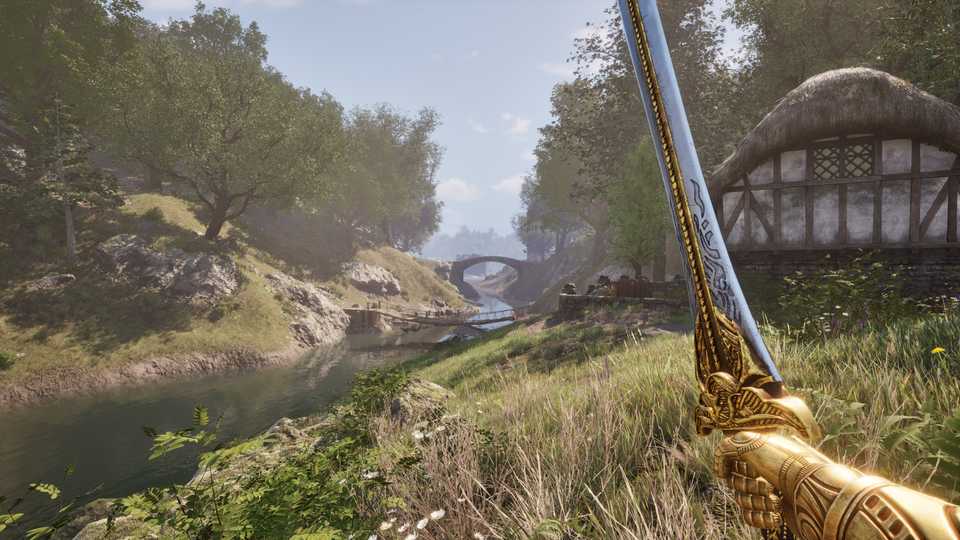
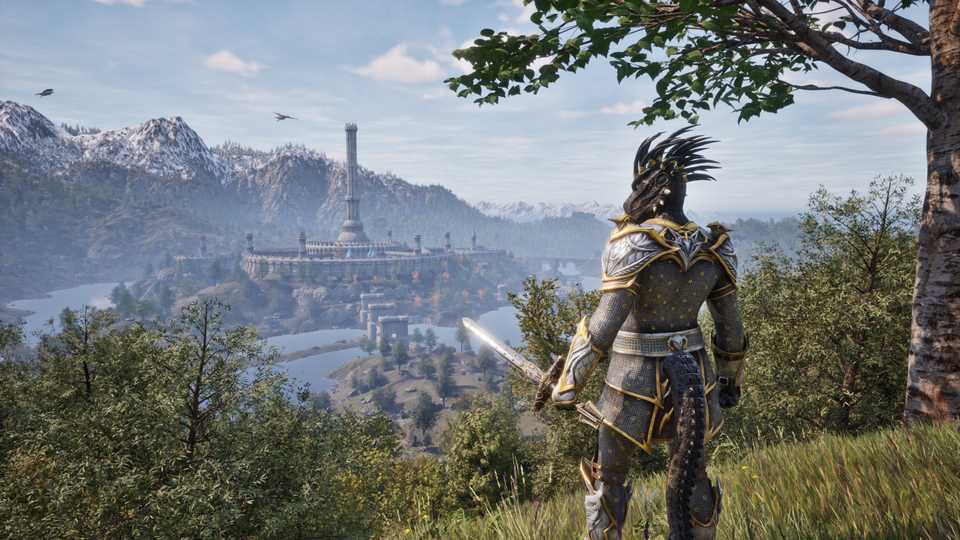
When Oblivion Remastered was announced, much of the attention focused on visual upgrades and technical fixes. But tucked inside the familiar opening sequence is a feature that may prove more important than it first appears: character creation. Though the core mechanics remain similar to the original Oblivion, the re-release subtly refines this opening process, just enough to suggest it could be setting the stage for The Elder Scrolls 6.
From picking a race to fine-tuning facial features, Oblivion Remastered offers the player a familiar yet slightly modernized system. While it still lacks the robust customization options seen in some contemporary RPGs, the remaster does highlight the series’ ongoing struggle to balance player freedom with legacy quirks. It’s these quirks, especially the intentionally awkward-looking characters, that fans have come to both criticize and lovingly embrace.

Oblivion Remastered Mod Has You Stalked by a Level 70 Terminator
A new mod for Oblivion Remastered sees players chased around Cyrodiil by a powerful Terminator.
Elder Scrolls 6's Character Creation Must Learn From its RPG Peers
Character creation in Oblivion Remastered still offers body types instead of using traditional gender labels, which is a notable shift from its original release. While this change offers a more inclusive starting point, it stops short of modern customization standards. In contrast, Dragon Age: The Veilguard pushes the envelope by offering players detailed control over not just body and facial structure, but even the physics of elements like hair. For The Elder Scrolls 6 to feel truly modern, it will need to follow suit, and possibly go even further.
For example, The Veilguard includes hair options that respond dynamically to movement and environment, a far cry from Oblivion Remastered’s stiff and limited hair choices. Offering this kind of responsiveness can make a world feel more alive and grounded, something that could elevate The Elder Scrolls 6 in the same way Skyrim redefined open-world immersion.
Todd Howard has referred to The Elder Scrolls as a series of "chapters," implying each entry builds on the last. If Oblivion Remastered is a study in restraint and nostalgia, then The Elder Scrolls 6 may be the chapter that pushes the customization boundaries forward with confidence.
Dragon’s Dogma 2 Shows the Other Path
If The Veilguard is the blueprint for polished, semi-serious fantasy customization, then Dragon’s Dogma 2 is the character creator blueprint for freedom through absurdity. Capcom’s sequel allows players to create towering giants or impossibly tiny adventurers, reinforcing the idea that not every hero needs to look like a fashion model. This approach aligns closely with what Oblivion once was: an offbeat, sometimes clumsy world where the humor was as much a feature as the story.
In Dragon’s Dogma 2, players frequently share hilarious or unsettling avatars online, using the game’s deep sliders and tools to make truly weird characters. That kind of viral, player-driven creativity could suit The Elder Scrolls 6 perfectly, especially given how much Skyrim already lives in the meme space. Bethesda doesn’t need to remove the “ugly charm” of Oblivion, it just needs to give players the choice between chaos and beauty.
Capcom has embraced the community’s playful distortion of Dragon’s Dogma 2's customization system. Bethesda could benefit by taking a similar stance, leaning into the culture around its quirks rather than resisting it.
Skyrim’s Legacy Demands Something More Flexible
Skyrim is the shadow that looms over everything Bethesda does. Its success transcended the gaming world, pulling in players who had never touched an RPG before. As such, The Elder Scrolls 6 has enormous expectations to meet, not only in story and scope but in letting players tell their own story through their avatar. Character creation is the first point of contact, and if it feels dated or shallow, it can set a poor tone for the rest of the journey.
Even the ability to revise certain decisions after character creation would be a welcome addition. Oblivion Remastered allows for appearance changes later using console commands, but a built-in option to revisit one’s race, birthsign, or class would modernize the experience. In a game expected to last hundreds of hours, offering flexibility is more than a convenience; it’s a necessity.
The reality is that The Elder Scrolls 6 doesn’t just need a character creator. It needs a character identity system that evolves with the player. One that understands how far RPGs have come since 2011 and how far Bethesda’s next chapter needs to go.




-
 OpenCritic Reviews
- Top Critic Avg: 82 /100 Critics Rec: 87%
- Released
- April 22, 2025
- ESRB
- Mature 17+ // Blood and Gore, Sexual Themes, Violence
- Publisher(s)
- Bethesda







WHERE TO PLAY





- Engine
- Unreal Engine 5
- Genre(s)
- Action, RPG, Open-World, Adventure
