


Shadow-dropped nearly two decades after the original 2006 release, this modern revival of The Elder Scrolls 4: Oblivion looks like a remake rather than a remaster, thanks to a shiny coat of Unreal Engine 5 polish.
With upgraded visuals, improved lighting, and full voice-overs intact, Oblivion Remastered is a nostalgic gut-punch in the best way possible, earning love from both long-time fans and a fresh wave of new adventurers.
However, beneath the modern glow lies an aging foundation: the same old Gamebryo logic engine that powered the original. So, while it dazzles the eyes, it sometimes fumbles the feel. So, here are 7 improvements Oblivion Remastered desperately needs.

Oblivion Remastered: Best Side Quests To Play First
The best Oblivion Remastered side quests give players multiple avenues to complete them, or offer a unique experience seen nowhere else in the game.
7 Bring Back the Colors
When High Fantasy Turns Fifty Shades of Fog

Oblivion Remastered appears to be using a grayish fog filter, muting the vibrant color palette that once defined the original. The world now looks noticeably darker and more desaturated. While players can recover some of the classic atmosphere by adjusting gamma and contrast settings, a graphics option for the original color saturation would be a welcome addition. Let's restore the bright, high-fantasy aesthetic that made Cyrodiil so memorable.
6 Have Mercy on the Uncanny Faces & Animation
These Smiling NPCs Would Make Pennywise Proud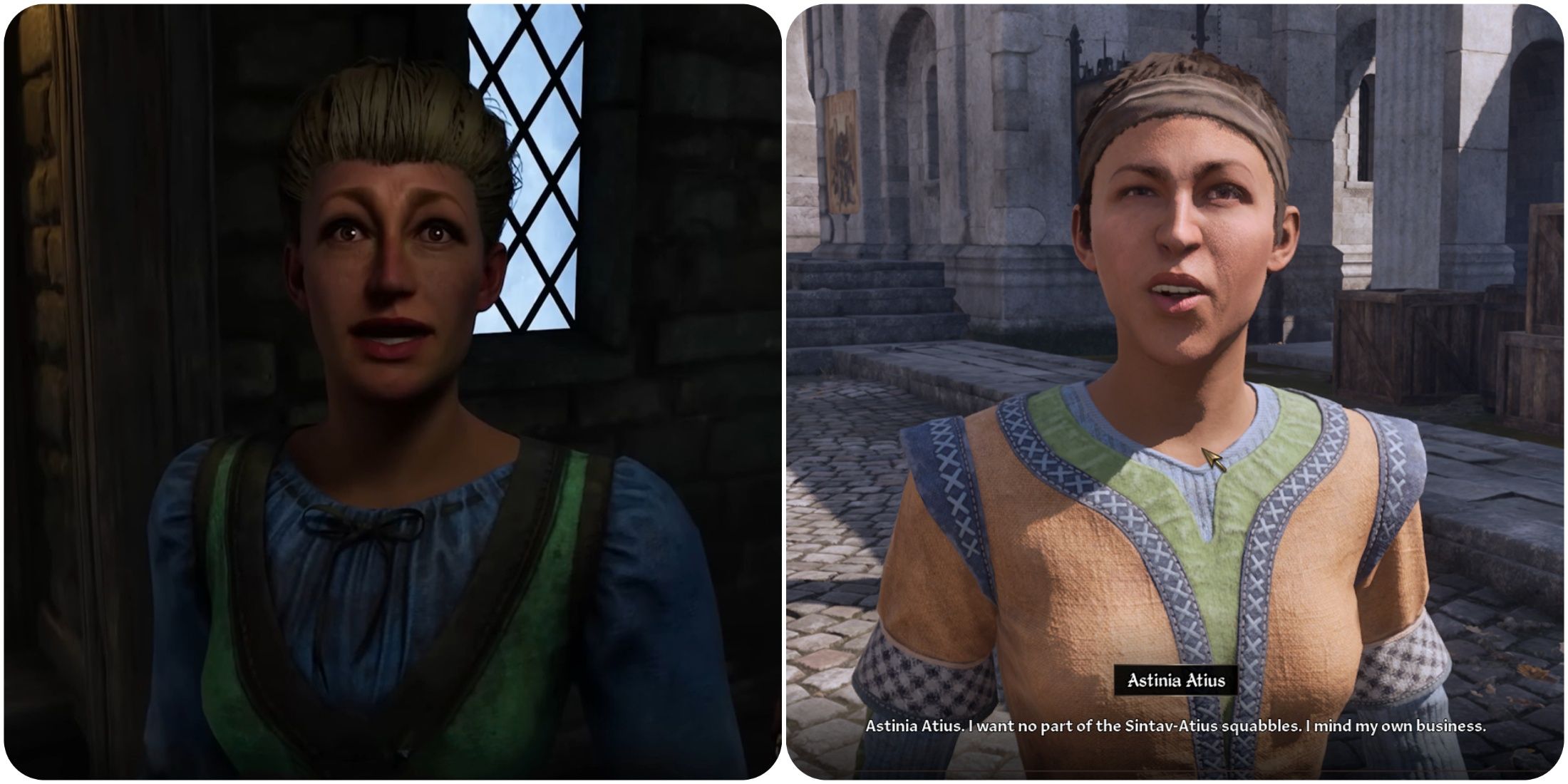
Despite its visual overhaul, Oblivion Remastered continues to suffer from awkward facial animations and stiff body language. While the increased detail brings sharper textures and improved models, it also amplifies every twitch, stare, and contorted grin.
NPCs stare wide-eyed or grin unnaturally, making conversations feel more like nightmarish dreams than immersive RPG exchanges.
It's also not just the faces. Oblivion Remastered delivers unnatural body animations as well that don't match the conversations or gestures. Watching the Emperor enter your prison cell with a rigid walk and a teething smile breaks the seriousness of the scene.
Finally, the running animation. Being the same for every character class, build, and size, it creates an unintentionally hilarious and often awkward spectacle in third person when watching a heavily armored warrior run with the same agility as a lightly armored rogue.
Fixing these quirks is essential for a game built on player immersion and narrative depth. Cyrodiil should feel like a living world again.
5 Squash Bugs and Iron Glitches
The Famous Dish of Kvatch: Irresistible Spaghetti Code

Surprise! Several bugs and glitches from the original Oblivion have carried over to the remastered version. While most of them are harmless, even hilarious at times, others can break up quests or collectively impact the whole playthrough. They include questlines failing to progress even after reloading a previous save file, important NPCs failing to spawn where they should, save files being corrupted, and more.
Watch out for these game-breaking bugs in Oblivion Remastered. Know how not to trigger them, or fix them.
From Ahdarji’s disappearing heirloom to horses reporting crimes and the inability to sit in chairs, the list of strange and frustrating bugs is long. We are probably looking at a series of patches to address all major issues, and players can keep their fingers crossed for the first one to hopefully roll out soon.
4 Reduce the Loading Screens
Opening Doors Shouldn't Trigger Loading Screens, Not in 2025

Following in the footsteps of Fallout 4 and Starfield, Oblivion Remastered continues the Bethesda tradition of long and frequent loading screens. Entering every house, castle, cave, or any transition in general triggers a loading screen. Passing through a corridor alone can mean enduring two loading screens within a minute. These constant pauses break immersion and make the open world feel fragmented rather than alive.
Worse still, the loading times themselves are inconsistent. They can sometimes last just a few seconds, but other times long enough to cause the game to crash.
The community is not asking to eliminate every single loading screen in the game, but minimizing them would surely be an improvement Oblivion Remastered needs, especially for small actions like entering a shop. It would also help controller batteries last longer.
3 Re-rework the Difficulty & Level Scaling
Make Cyrodiil a Challenge, Not a Chore

Oblivion Remastered’s difficulty system lacks balance. Adept feels too easy, while Expert jumps too far. Switching to higher difficulties only turns enemies into damage sponges that hit harder, making combat feel like a chore without actually rewarding skill or build choices.
Additionally, enemies scale directly with player levels, meaning they grow stronger as players level up, even after hitting their skill caps. This system often makes progression feel hollow and unrewarding. Leveling through side quests doesn’t necessarily make the main campaign any easier. Returning to the main quest areas still means facing significantly harder enemies.
Oblivion Remastered can learn from modern RPGs like Elden Ring and make the enemy and loot scale with zones and regions. This approach preserves a genuine sense of growth and discovery, rewarding exploration while keeping challenges appropriately scaled to the area rather than the player’s level alone.
2 Make the World Map Smarter
Zooming Into Dungeons Shouldn’t Be a Fight

The remastered version of The Elder Scrolls 4: Oblivion strangely removes the option to toggle local maps. Now, players must manually zoom into the world map every time until they reach the dungeon layout. This is highly inconvenient as the local map has only one zoom level, and accidentally zooming out snaps back to the overworld.
The world map should be reworked to automatically zoom into the local map section if the player is inside a dungeon. Additionally, a dedicated button for switching between the local and overworld maps would greatly improve usability.
On top of that, quality-of-life improvements like markers for cleared dungeons, like in Skyrim, would go a long way in making exploration more intuitive and rewarding, especially for completionists aiming to unlock every hard achievement the game has to offer.
1 Tackle Performance Bottlenecks
Because the Hero of Kvatch Shouldn't Lag in the Face of Oblivion

Like many Unreal Engine 5 games, Oblivion Remastered struggles with consistent performance despite the engine’s impressive visual capabilities. Even high-end hardware isn’t immune, especially during extended play sessions, hinting at possible memory leaks or inefficient memory management that worsens stability over time.
While smaller instances and enclosed areas like dungeons and caves generally run smoothly, stepping into the open world introduces noticeable frame drops and stuttering. These issues intensify in larger cities and areas where the game has to render large volumes of assets or during scenes with dense crowds and heavy particle effects.
For most Oblivion Remastered PC players, consistently hitting 60+ FPS depends heavily on finding the best graphics settings that balance visual quality and performance.
Smoother transitions between environments, optimized rendering for expansive areas, and better memory usage would go a long way in stabilizing gameplay and ensuring a satisfying experience across all platforms.

The Elder Scrolls IV: Oblivion Remastered
- Released
- April 22, 2025



WHERE TO PLAY





- ESRB
- Mature 17+ // Blood and Gore, Sexual Themes, Violence
- Publisher(s)
- Bethesda
- Engine
- Unreal Engine 5
- Franchise
- The Elder Scrolls
- Number of Players
- Single-player
- Steam Deck Compatibility
- Verified
- PC Release Date
- April 22, 2025
- Xbox Series X|S Release Date
- April 22, 2025
- PS5 Release Date
- April 22, 2025
- Genre(s)
- Action, RPG, Open-World, Adventure
- Platform(s)
- Xbox Series X, Xbox Series S, PlayStation 5, PC
- OpenCritic Rating
- Strong
- X|S Optimized
- Yes
- File Size Xbox Series
- 123.2 GB

