


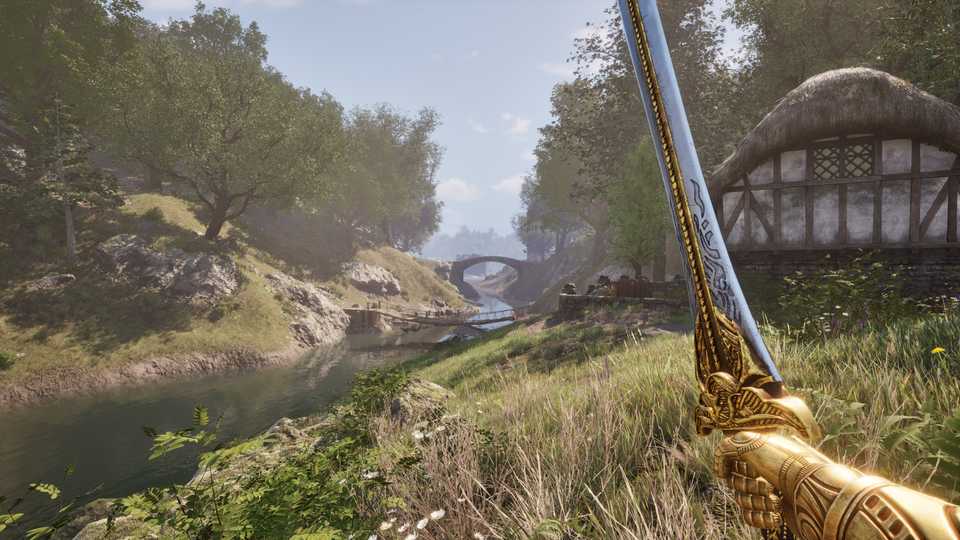
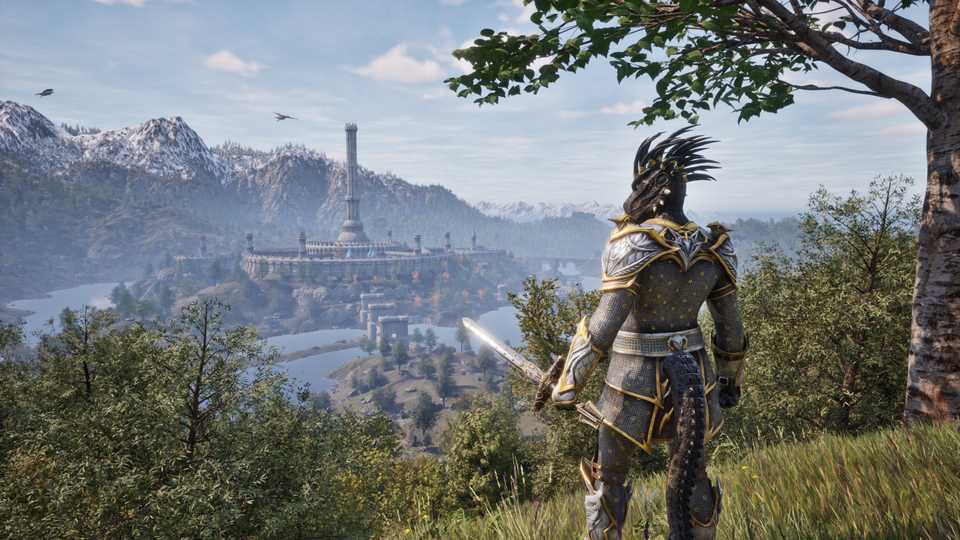
Playing through The Elder Scrolls 4: Oblivion Remastered can be quite an interesting experience. The recently released game certainly looks the part of a modern, spruced-up, AAA title, complete with advanced visual effects, detailed textures, and hot graphical trends like ray-tracing. And while it has many of the infamous hallmarks of Bethesda’s RPGs, including awkward animations and sub-par PC optimization, it generally looks and runs quite well.
But underneath these shiny graphical improvements remains the iconic and charmingly janky RPG from 2006. This lends Oblivion Remastered a decidedly anachronistic quality: it looks like something that could have been released within the past few years, but its combat, exploration, level design, and progression systems are mostly out of step with what audiences expect from a modern title. This is especially evident in the game’s level scaling systems, which are somewhat outdated and worth discussing in the context of contemporary RPG design.

Character Customization Is Oblivion Remastered's Most Unexpected Triumph
The Elder Scrolls 4: Oblivion makes a number of improvements over the original, but character creation is one especially worth mentioning.
Oblivion Remastered’s Level Scaling Is a Complex Subject
Level Scaling Undermines Oblivion Remastered’s Progression
Of all the load-bearing pillars of the RPG genre, few are as essential and pervasive as power creep and progression. It’s a process even the most novice gamers should be familiar with: kill enemies, get XP, use XP to become more powerful and kill stronger enemies for more XP, and so on. While some experimental RPGs may omit this traditional structure, it can be found in just about every mainstream entry in the genre, from Final Fantasy 7 to Dark Souls. And Oblivion follows this traditional formula as well—sort of.
Oblivion, like all of Bethesda’s RPGs, has a level scaling system, which means that enemy NPCs will level up alongside the player, while also donning increasingly more powerful gear. There are arguable benefits to such a system, which will be detailed later on, but many gamers find it contemptible for a number of reasons. The most biting criticism of level scaling is that it robs players of the satisfaction of growing more powerful, as the disparity between players and enemies remains static; there’s no opportunity to return to low-level areas while wielding god-like power. Conversely, there’s no chance to tackle higher-level challenges for the chance to gain better gear, more XP, and the like.
Some critiques of Oblivion’s level scaling system are made on the grounds of immersion and lore consistency. For instance, it makes little sense for a common bandit to be kitted out in high-level, rare gear, just because the player is of a certain level themselves.
Level Scaling Gives Oblivion Remastered a Consistent Cadence
Perhaps the greatest argument in favor of Oblivion’s level scaling is that it gives the game a solid structure, while protecting players from themselves, as it were. Oblivion presents a vast open-world for players to explore, which poses some issues when it comes to difficulty: how does Bethesda choose to position high-level enemy mobs versus low-level ones? Will the difficulty of each open-world area be announced in some way? What happens if the player sneaks into a high-level dungeon without realizing how difficult it is, and is then forced to reload an old save and lose progress?
An open-world RPG like Elden Ring addresses these issues in a number of ways, primarily through predetermined chokeholds and subtle level gating: players might be faced with a particularly hard enemy before entering an area they aren’t ready for, which serves as a warning and guiding hand. But Oblivion is a very different sort of RPG, with a very different approach to open-world exploration, so such techniques can't simply be transplanted to the remaster. In essence, level scaling ensures that both difficulty and material rewards, especially gear, remain consistent throughout the Oblivion experience, for better or worse.




-
 OpenCritic Reviews
- Top Critic Avg: 82 /100 Critics Rec: 87%
- Released
- April 22, 2025
- ESRB
- Mature 17+ // Blood and Gore, Sexual Themes, Violence
- Publisher(s)
- Bethesda







WHERE TO PLAY





The Elder Scrolls IV: Oblivion™ Remastered modernizes the 2006 Game of the Year with all new stunning visuals and refined gameplay. Explore the vast landscape of Cyrodiil like never before and stop the forces of Oblivion from overtaking the land in one of the greatest RPGs ever from the award-winning Bethesda Game Studios.
Rediscover Cyrodiil
Journey through the rich world of Tamriel and battle across the planes of Oblivion where handcrafted details have been meticulously recreated to ensure each moment of exploration is awe-inspiring.
Navigate Your Own Story
From the noble warrior to the sinister assassin, wizened sorcerer, or scrappy blacksmith, forge your path and play the way you want.
Experience an Epic Adventure
Step inside a universe bursting with captivating stories and encounter an unforgettable cast of characters. Master swordcraft and wield powerful magic as you fight to save Tamriel from the Daedric invasion.
The Complete Story
Experience everything Oblivion has to offer with previously released story expansions Shivering Isles, Knights of the Nine, and additional downloadable content included in The Elder Scrolls IV: Oblivion Remastered.
- Engine
- Unreal Engine 5
- Franchise
- The Elder Scrolls
- Number of Players
- Single-player
- Steam Deck Compatibility
- Verified
- PC Release Date
- April 22, 2025
- Xbox Series X|S Release Date
- April 22, 2025
- PS5 Release Date
- April 22, 2025
- Genre(s)
- Action, RPG, Open-World, Adventure
- Platform(s)
- Xbox Series X, Xbox Series S, PlayStation 5, PC
- OpenCritic Rating
- Strong
- X|S Optimized
- Yes
- File Size Xbox Series
- 123.2 GB
