


Summary
- Oblivion Remastered provides a fresh perspective on Skyrim's immersion, making it feel fresh again.
- Skyrim excels in creating immersive landscapes filled with unique moments and quiet experiences.
- While Oblivion offers more player freedom and quirky charm, Skyrim's commitment to aesthetic gives it an iconic look.
In an instant, it’s been a month since Oblivion Remastered was released, and this reimagining of Cyrodiil has made many players look back at Skyrim differently. For some, Oblivion Remastered was the first time they had played The Elder Scrolls 4, having grown up with TES 5 as their first taste of this strange and fantastical universe. Many who are used to Skyrim’s systems have had to get to grips with Oblivion’s way of doing things, finding a lot of pleasant surprises in the previous title as they explore many fan-favorite quests like ‘Whodunit?’ Almost 20 years later.
But there are only so many of these quests to do in Oblivion Remastered, and only so many hours can be spent wandering Cyrodiil, and so, some players are diving back into Skyrim to find a once-familiar land that feels different again. On the surface, the games are both ARPGs in a fantasy world. They shouldn’t feel so different, yet, Skyrim has this pull to it that goes beyond simple nostalgia. Skyrim’s immersion is legendary, and has been one of the core aspects of the game that has kept it so relevant after 14 years without a sequel, and after Oblivion Remastered, Skyrim’s unique style of immersion feels fresh once again.

Now is the Time to Check Out This Game-Changing Skyrim Modlist
A Wabbajack-hosted Skyrim modlist boasts over 4,000 mods and just released its final update, making now the ideal time to give it a shot.
Oblivion Remastered Shines a New Light on Skyrim’s Immersion
Skyrim is not a realistic game. Beyond the obvious things like Dragons, necromancers, and placing buckets on peoples’ heads to avoid detection, it is not built to directly simulate real life. Combat is simple, health pools are large, a player can become a millionaire by just picking up money found in caves, and somehow, the Bards College is considered a legitimate faction.
But jokes aside, TES 5 has never tried to be a realistic game that accurately imitates real life. Rather, its immersion comes from being true to itself. The landscape feels organic, with the creatures that roam it reflecting their local biomes. NPCs live out routines, each with individual stories and personal problems, providing an unreliable narrator that doesn’t feel like it spews information about the world, but rather, contextualizes what the writers want to say in a way that feels authentic. The treatment of Dark Elves in Windhelm is one such example. Bigotry is rife in the city, and everywhere the Dragonborn goes, there will be examples of Nords making life difficult for the Dunmer, allowing the player to make a judgement based on context clues.
The Dragonborn's race will affect what dialogue other characters have with them, particularly if they are a beast race.
How Oblivion’s Immersive Features Differ
Oblivion is similarly good at creating a world that feels true to itself, but in different ways. In many respects, Oblivion’s characters feel just as true to life, but more than a few are quite zany. Memes have given Oblivion a reputation for being unintentionally funny, and while that is impossible to deny, it feels like Bethesda designed some of the goofiness from the start. Paranoia is a great Oblivion quest that shows this very well, with Glarthir’s deranged antics making for quite a fun and silly investigation into the lives of NPCs, but it isn’t the only case. Oblivion’s radiant dialogue system can yield some very humorous results, and many players have probably heard about the population’s trouble with mudcrabs a thousand times already.

Oblivion Remastered Players Are Naming the Game's Most Beautiful Locations
The Elder Scrolls 4: Oblivion Remastered players are talking about the beauty of the game, and point out some of their favorites.
In many ways, Oblivion gives players more freedom of choice than Skyrim does. More quests have alternate ways of solving them, and players are not destined to become a hero of legend like the Dragonborn. In general, a player has more tools to work with in TES 4, able to persuade NPCs to bypass quest steps, craft spells that let them express magic exactly how they want, and feel like they're a real part of a guild thanks to the rank system. It’s different to Skyrim’s ethos, which handles player interactivity in a very different way.
Skyrim’s Landscape is Intimately Familiar, and for Good Reason
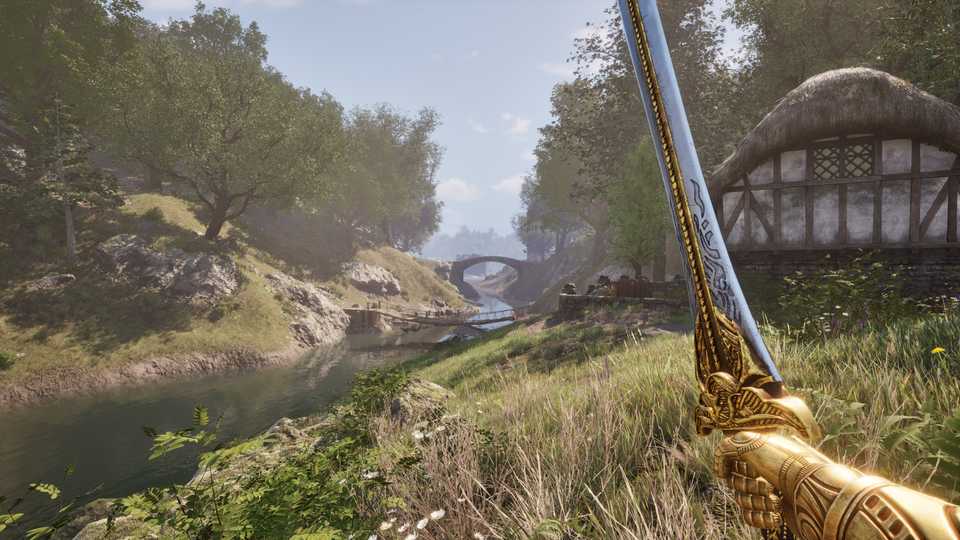
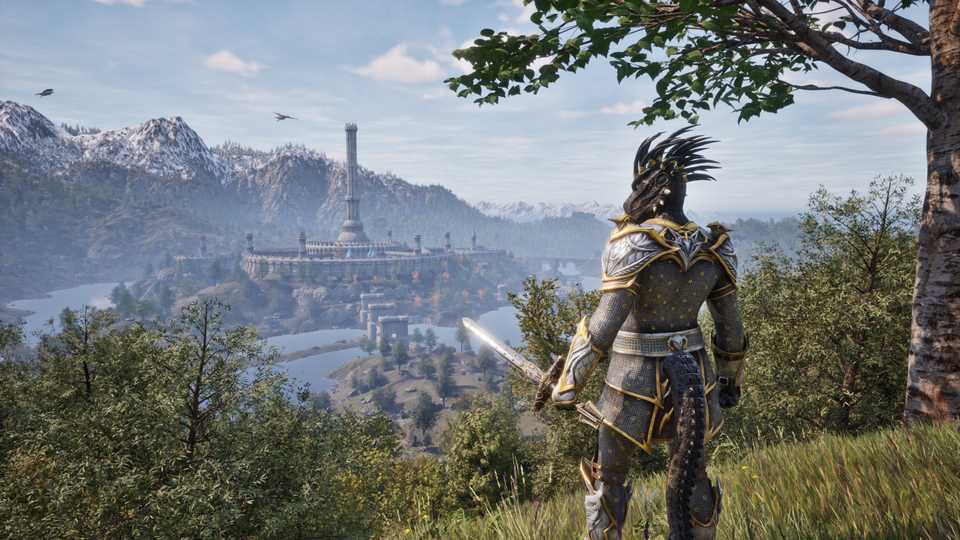
Cyrodiil’s landscape is beautiful, and the remaster has helped to render it in a way that Bethesda could have only dreamed of doing back in 2006. The lush forests of Chorrol, the swamps of the Blackwood, and Anvil’s Gold Coast are equally gorgeous in their own right. But as much as the remaster puts a new skin over these places, there’s still something about Cyrodiil in TES 4 that makes the world feel safer by comparison. It could be down to the more limited technology of the time, but each region of Cyrodiil is roughly the same as the last, and the rolling hills and woods can blend into one, even when there’s an added covering of snow.
Oblivion was developed in the Gamebryo Engine, whereas Skyrim used a modernized version called the Creation Engine.
Skyrim’s rugged landscape stands in stark opposition to the smoothed-out world of its predecessor. Lush hillsides make way for jagged peaks, crashing waterfalls spray foam over hot springs, and rivers meander from the autumnal Rift to the icy Sea of Ghosts. It isn’t just a world of distinct biomes, either; Skyrim feels immersive because the land feels alive. It’s funny to think that both Skyrim and Oblivion were released on the same console generation, and yet they feel so different, but it shows how five years can make the technology that much more powerful.
Skyrim Does Quiet Moments Like No Other
As players traverse the mountains and valleys of Skyrim, buffeted by all weathers, there is this unmatched sensation of belonging. Even with all the quest markers and damage-sponge Bandit Chiefs, the trials and tribulations of crossing one corner of the province to the next give players a feeling for the place, and there are few moments as good as cresting that mountain and seeing the sunrise poking above the horizon. These quiet moments have defined Skyrim for so long, and paired with its quaint soundtrack, it has stopped many in their paths. There are too many anecdotes to count of players sharing moments where everything lined up for them to enjoy that quiet moment, reflecting on everything they’ve done.

Borderlands 4 Is Taking an Open World-Sized Page Out of Skyrim’s Playbook
Borderlands 4 may not be fully open world, but its Skyrim-inspired exploration lets players reach distant landmarks that spark their curiosity.
The player has a direct relationship with the landscape in a way that makes it feel alive and active. Oblivion’s landscape is pretty, but it is mostly static, a canvas for the player to experience its stories on. It makes for some excellent screenshots, and there are hundreds of thousands of incredible screenshots of Oblivion Remastered out there, but it doesn’t always manage to feel larger than those screenshots. It’s hard to say why exactly, but Skyrim’s random events do a lot of heavy lifting to make the world feel reactive. A screenshot of Falkreath might show a quiet, peaceful landscape, but in the seconds after it was taken, a Dragon could show up out of nowhere, giving it the impression that this is not a static world, but one of chaos and change.
Skyrim’s Nordic Aesthetic Brings Back Some of Morrowind’s Weirdness
Something often brought up in discussions about Oblivion is how it moved the franchise away from Morrowind’s distinctly weird style of fantasy, instead emulating The Lord of the Rings. Cyrodiil in Oblivion certainly bears a lot of similarities to Peter Jackson’s LotR films, and the original concepts for TES 4 show that it could have been a very different-looking place. Oblivion still has plenty of its own unique stuff to offer, but its aesthetic can be broadly quite homogenous, similar to a lot of other fantasy worlds. The setting is vaguely European-inspired, with skeletons, zombies, and ghosts roaming the many dungeons, and joinable guilds such as the Mages Guild and Fighters Guild have little distinct flavor to them.
Skyrim Also Watered Down the Source Material, but Added Some New Touches
This is not to say Oblivion has done things badly; it is just how Bethesda chose to make its world. Skyrim hasn’t escaped the shadow of Morrowind’s world building either, as fans of TES 3 will often point to the Nords’ reverence of the Nine Divines as watering down the traditional Nordic pantheon. But Skyrim still acknowledges its past: where Oblivion retconned jungle Cyrodiil, Skyrim tried to show how the Nords had become Imperialized, and the old stuff was in replacing Oblivion’s dungeons of skeletons with ancient barrows full of draugr, for example.
During the events of Oblivion, set 200 years before Skyrim, many Nords seem to worship the old Nordic pantheon, and not the Nine Divines
The main cities are also quite distinct, which sadly wasn’t carried over to the minor ones, but the fact that Markarth is an entirely Dwemer city inhabited by modern-day people, and the Reach is a place teeming with Daedra-worshipping, savage Forsworn, brings back some of that Morrowind weirdness that so many fans loved. Traversing the icy wilds of Solstheim, the ancient Temple of Miraak cuts a striking silhouette against the ashen clouds of Red Mountain. It is just one of many sights that is uniquely Skyrim, and yet, by itself, does not completely define the game’s entire aesthetic, something that arguably, the Ayleid ruins don’t do quite as well.
Oblivion Remastered is truly a great game, and millions of players have been loving it for the past month. But as some players finish their playthroughs, it’s interesting seeing them go back to Skyrim, experiencing that game in a whole new context. While there are all sorts of things Skyrim could have taken from Oblivion that could have arguably improved its gameplay, it can also be argued that its approach to the world and immersion is a step up. The fact that content creators have built careers off roleplaying in Skyrim should say as much. Returning to Skyrim feels like returning home, and while that could be nostalgia talking, it shows just how enduring TES 5 has been after all these years.




-
 OpenCritic Reviews
- Top Critic Avg: 82 /100 Critics Rec: 87%
- Released
- April 22, 2025
- ESRB
- Mature 17+ // Blood and Gore, Sexual Themes, Violence
- Publisher(s)
- Bethesda







WHERE TO PLAY





- Engine
- Unreal Engine 5
- Genre(s)
- Action, RPG, Open-World, Adventure
