


Summary
- Open-world games tend to borrow mechanics from previous successful titles from different genres to boost sales.
- Minecraft influenced the procedural generation in open worlds and popularized crafting systems.
- Menu-based fast travel was popularized by The Elder Scrolls 2 for user convenience.
Open-world games are about as varied as the maps, locations, and geometry they feature, but now, as a well-established genre, each game shares a few common mechanics between them. These gameplay features didn't just come out of nowhere, and just like in game design broadly, the design of one game is built on top of the game innovations of the past.

8 Games With Dark Open Worlds
Games have come a long way over the years, especially with the subject matter, as some games embrace darker themes.
Open-world adventures are not only still highly popular and profitable but also very expensive games to make. This means that, for good or for bad, the studios that can afford to fund these massive projects tend to look around at their peers to see what works and which mechanics are sure to secure high sales. However, at least one game studio had to take a risk with new mechanics in the first place to get the copycat ball rolling.
1 Far Cry 3
The Ubisoft Tower


Far Cry 3

- Released
- November 29, 2012



WHERE TO PLAY





- Developer(s)
- Ubisoft Montreal
- Publisher(s)
- Ubisoft
- Franchise
- Far Cry
- Genre(s)
- FPS, Open-World
- How Long To Beat
- 20 Hours


Ubisoft is perhaps best known for its colossal open-world franchises, chief among them the Assassin's Creed series. The first game isn't strictly an open world, but its maps are huge, not only horizontally but vertically. To give some structure to what could have been an overwhelmingly open environment, Ubisoft Montreal implemented towers with a vista at the top as a way to slowly reveal parts of the map and display points of interest to focus the player. It was later used and refined in Far Cry 3, which did feature a truly open world.
The principle tends to be the same: each tower dotted across the landscape (and prominently highlighted in UI) gradually grants access to more of the environment or more activities. In the years since, love or hate them, the "Ubisoft Tower" has become synonymous with copy-paste content and checkbox busywor k. Other open-world developers have successfully put their stamp on the idea, including Breath of the Wild, which used the towers' physical visibility instead of map markers, clever landscape blocking, and a variety of "mini-towers" surrounding them, or points of interest, to help kindle the player's natural sense of exploration.
2 Minecraft
Crafting & Upgrade Systems


Minecraft
- Released
- November 18, 2011

WHERE TO PLAY

- Publisher(s)
- Mojang
- Number of Players
- 1-4
- Platform(s)
- 3DS, Android, iOS, Nintendo Switch, Nintendo Wii U, PC, PlayStation 3, PlayStation 4, PS Vita, Xbox One, Xbox 360
- Genre(s)
- Sandbox, Survival
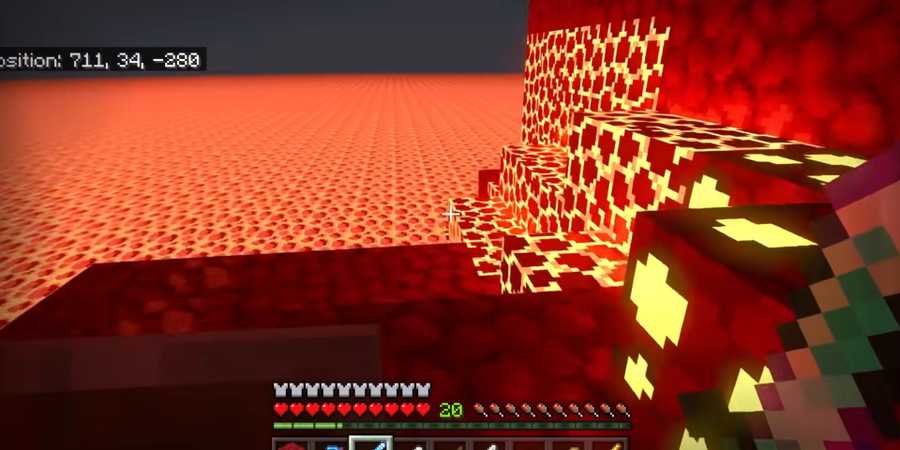
The sandbox mine 'em, craft 'em up Minecraft has been responsible for a number of foundational mechanics and features spilling into gaming genres over the years. Some ambitious open worlds took to leveraging proceedural generation following Minecraft's example. The Redstone contraption building mechanic that helped keep Minecraft fresh after well over 15 years would later be adapted in the excellent Tears of the Kingdom. However, one of the most ubiquitous mechanics to blossom in open-world games everywhere as a result of Minecraft's popularity is crafting.

10 Best Open World Games Without Fast Travel
Fast travel is often a crutch that people lean on in open-world games, but what of those titles that don't have such a feature?
At best, crafting can be a great side activity to oil up the main gameplay loop, and it can be a value multiplier for the assets found throughout the game. This is perfectly demonstrated by the reclamation and recycling gathering and crafting loop in Fallout 4, in which every level, dungeon, or junkyard beckons with exciting treasures for those with a keen pair of eyes and a strong enough back. However, at worst, crafting systems can feel like tacked-on, tedious busywork, especially if the mechanic feels like a completely optional side activity.
3 The Elder Scrolls 2: Daggerfall
Menu-Based Fast Travel


The Elder Scrolls II: Daggerfall
- Released
- September 20, 1996
WHERE TO PLAY
- Developer(s)
- Bethesda Softworks
- Publisher(s)
- Bethesda Softworks
- Franchise
- The Elder Scrolls
- Platform(s)
- PC
- Genre(s)
- RPG
- How Long To Beat
- 31 Hours

While fast travel is seen as a feature of convenience today, it was born out of necessity. The Elder Scrolls 2: Daggerfall's staggering large and realistic landmass would demand too much of most players to traverse organically, being the same size as real-life England. Instead, players are able to pinpoint a pixel on the map screen and choose a variety of travel options. Fast travel in Daggerfall comes with the same risks as traveling in real-time, whereas most open-world games simply take the player character from one point of the map to the other in the blink of a loading screen.
Of course, taking shortcuts around the world had been around before Daggerfall. For example, Dragon Quest 3 features the "Zoom" spell, which allows the player to teleport back to a previously visited location. However, Daggerfall introduced a purely menu-based, non-diegetic travel mechanic that would be available from the start regardless of the player's chosen build or knowledge of spells and exists purely for user-friendliness.
4 Grand Theft Auto 3
The Ubiquitous Minimap


Grand Theft Auto 3
- Released
- October 23, 2001
WHERE TO PLAY



- ESRB
- M for Mature: Blood, Strong Language, Violence
- Developer(s)
- Rockstar Games
- Franchise
- Grand Theft Auto
- Platform(s)
- PS2, Xbox (Original), PC, macOS, Android, iOS
- How Long To Beat
- 15 Hours
Grand Theft Auto 3 popularized non-linear gameplay and immersive NPC and level design, but one of its most "borrowed" innovations was the minimap, which is indispensable for navigating the winding streets of Liberty City. Nowadays, practically every game, regardless of setting or time period, features a GPS-style minimap in one corner of the screen. For example, although there likely isn't a GPS satellite above the medieval fantasy world of The Witcher 3, magical or otherwise, Geralt (or the player) still has access to one at any time during his travels.
Although it is a handy navigation mechanic, especially for open-world games with driving mechanics, some players find that having to focus the entirety of their attention on one corner of the screen somewhat detracts from the experience of moving through a massive and painstakingly rendered environment, especially if quests steps are designed around UI map markers. Some first-person open-world games fold this into a compass bar (such as Skyrim or The Outer Worlds), which forces the player to keep an eye on the horizon ahead of them, but the concept is essentially the same.
5 Ultima 1: The First Age Of Darkness
Gear Upgrades & RPG Elements

|
Platform(s) |
PC |
|---|---|
|
Released |
1981 |
|
Developer(s) |
Origin Systems |
|
Genre(s) |
RPG |
The Ultima series, the crown jewel of the now-defunct Origin Systems, was a pioneer in many respects. Its creator, Richard Garriot, set out to emulate the systems of Dungeons & Dragons and the epic scope of Lord of the Rings. At 19, Garriot single-handedly birthed the RPG and the open-world genre, complete with skills, gear upgrades, and character progression.
While the designers behind many modern open-world games may have taken inspiration from games like Skyrim or Diablo, with their multiple-playstyle perk or skill trees and gradual gear progression, Ultima 1 laid the groundwork for all those concepts to take shape in their modern iterations. Its follow-up, Ultima 2, also included a day and night cycle and a time mechanic that NPCs adhere to, which is common to all open-world games today.