


A leaker has claimed that Microsoft canceled its first-party Xbox handheld because AMD would only agree to work on it if the company produced 10 million units. Hardware sales across the industry have been lagging lately, but Microsoft is still trying to compete in the console market despite shifting much of its focus to software and services. While Xbox did release a handheld in collaboration with ASUS, there were once plans for an in-house alternative.

The joint venture between Microsoft and ASUS may have gotten off to a shaky start with pre-order delays and price controversies, but things have since looked up for the handheld. The ROG Xbox Ally X sold out at some stores less than a day after orders went live, despite the console's $1,000 price tag. Those sales figures may be looking solid right now, but a new leak suggests AMD wanted a much bigger release to commit to working on a dedicated Xbox handheld.

ROG Xbox Ally X Appears in the Wild 2 Weeks Ahead of Official Launch
A few lucky gamers receive their ROG Xbox Ally X way in advance, more than two weeks ahead of the handheld’s official release date.
AMD Reportedly Wanted 10 Million Units to Make SoCs for a First-Party Xbox Handheld
Reputable hardware leaker KeplerL2 offered some insight into Xbox's canceled handheld on a NeoGAF forum, saying the project fell through because AMD wanted a commitment of at least 10 million units before it would agree to make SoCs for the system. When it first came out that Xbox had canceled plans for an in-house handheld, the consensus was that Microsoft was shifting its hardware strategy to emphasize collaborations and a software-first strategy. While that may still be true in part, Kepler's new comments suggest the key deciding factor was that AMD wanted a production run that was higher than what Xbox believed it could safely agree to.

According to Kepler, AMD required 10 million units to justify making a unique SoC. While it's understandable that the company would want to ensure it moves enough hardware to offset the costs of developing a bespoke SoC, it's also easy to see why Microsoft might have thought the 10 million figure to be risky. As of early 2025, the Steam Deck had sold between 3.7 million and 4 million units, reaching less than half of what AMD wanted from Xbox in three years. Earlier handhelds have hit that mark before, with the PlayStation Vita selling 12 million systems in three years, but modern portable PCs have not been hitting those kinds of numbers.

While the in-house Xbox handheld may not have worked out, the company is not abandoning making its own hardware entirely. Despite rumors to the contrary, Microsoft has said it's still investing in first-party consoles, denying the claims that it had canceled the next-generation Xbox.
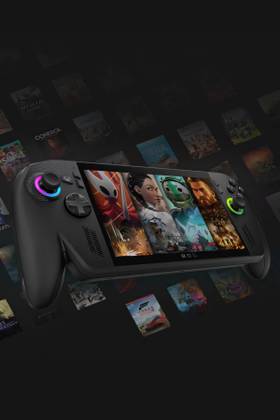
- Brand
- Xbox / ROG
- Operating System
- Windows 11 Home
- Processor
- AMD Ryzen AI Z2 Extreme Processor
- Display
- 7” IPS, 500 nits, 16:9, 120Hz refresh rate, FreeSync Premium, Corning Gorilla Glass Victus + DXC Anti-Reflection
- Resolution
- FHD 1080p
- HDR Support
- No
- Memory
- 24GB LPDDR5X-8000
- Storage
- 1TB M.2 2280 SSD (upgradable)
- Wi-Fi
- Wi-Fi 6E (2 x 2)
- Bluetooth
- Bluetooth 5.4
- Ports
- 1x USB4 Type-C with DisplayPort™ 2.1 / Power Delivery 3.0, Thunderbolt™ 4 compatible, 1x USB 3.2 Gen 2 Type-C with DisplayPort™ 2.1 / Power Delivery 3.0, 1x UHS-II microSD card reader (supports SD, SDXC and SDHC; UHS-I with DDR200 mode), 1x 3.5mm Combo Audio Jack
- Battery
- 80Wh
- Dimensions
- 290.8 x 121.5 x 50.7mm
- Weight
- 715g
- Included
- 65W charger, stand
Source: NeoGAF