


Summary
- Roddenberry's original Star Trek 2 pitch involved a time-travel plot centering around the JFK assassination.
- Paramount rejected his controversial and convoluted idea in favor of a more action-packed and character-driven sequel.
- The rejection of Roddenberry's concept led to the creation of The Wrath of Khan, showcasing the importance of fresh perspectives.
When it comes to Star Trek behind-the-scenes drama, few stories are as wild as Gene Roddenberry’s antics during the early movie years. The man who created one of the most beloved sci-fi universes of all time also had some...ambitious ideas. And none were more eyebrow-raising than his original concept for Star Trek 2 — a film that, if made, might have killed the franchise before it could boldly go anywhere again.
After the commercial success but critical indifference surrounding Star Trek: The Motion Picture, Paramount found itself in an awkward spot. The movie made some money, but it didn’t quite soar. Many fans described it as slow, sterile, and overly cerebral. Critics echoed the sentiment. There were long, drawn-out shots of the Enterprise that felt more like spaceship glamour photography than storytelling. The philosophical ponderings, while in line with Roddenberry’s ideals, left audiences cold. Paramount executives wanted something different for the sequel: more character-driven drama, more action, and most importantly, less Gene Roddenberry.

Star Trek: How A 1967 Production Memo Debunked a Long-Held TOS Fan Theory
A producer's memo from an episode of Star Trek: The Original Series proves a popular fan theory about the Starfleet insignia dead wrong.
Roddenberry's Abandoned Star Trek 2 Plot
JFK Assassination...In Space?

When Roddenberry marched in with his pitch for the second movie, the studio was already wary, and for good reason. His concept for Star Trek 2 wasn’t just bold — it was bonkers, and controversial among studio executives. The story, detailed in The Making of Star Trek 2: The Wrath of Khan, included a high-stakes political conspiracy that would have put Starfleet at the center of one of the most significant events in American history.
If Roddenberry had gotten his way, fans would have seen Captain James T. Kirk, played by icon William Shatner, and the crew of the USS Enterprise travel backwards in time to actually ensure the assassination of President John F. Kennedy for the sake of keeping history unchanged. Needless to say, this script didn’t get the green light. Here's a breakdown of the plot:
- The Enterprise detects a temporal distortion and discovers someone is tampering with 20th-century Earth history.
- The crew travels back to 1963 and discovers that someone from the future is trying to prevent JFK’s assassination.
- Spock (Leonard Nimoy) and McCoy (DeForest Kelley) debate whether letting JFK die is morally acceptable if it protects the timeline.
- In a shocking twist, Kirk himself may be the one who fires the fatal shot. Essentially, he becomes Lee Harvey Oswald with a phaser.
Why Roddenberry’s Pitch Was Rejected
Paramount didn’t just reject Roddenberry’s pitch — they practically launched it into deep space. The idea was too controversial, too convoluted, and ultimately too disconnected from what audiences wanted from Star Trek. Remember, this was in the early 80s, when the JFK assassination was still fresh in cultural memory. The thought of fictionalizing it in such a cavalier manner didn’t sit right with the studio.
The idea was a mess. After The Motion Picture had already been accused of being too slow and overly intellectual, the last thing Paramount wanted was another moral philosophy debate in space. They needed energy. They needed stakes. They needed a villain.
Behind closed doors, there was also a growing frustration with Roddenberry’s tight grip on the creative process. His vision had gotten the franchise off the ground, but by the early 1980s, it was beginning to feel outdated. Executives felt it was time to bring in fresh creative minds who could revitalize the brand and make Star Trek exciting again.
The Internet Reacts With Horror and Humor
When details of Roddenberry’s scrapped script resurfaced decades later, fans on forums like Reddit couldn’t help but react — often with a mix of bafflement and comedy. Some users expressed outright horror at the idea, calling it a complete tonal mismatch for the franchise. One popular comment simply read, “This would have been terrible,” echoing the general sentiment of the fanbase.
One fan pointed out the script's connection to the iconic TOS episode "The City on the Edge of Forever," which also explores the idea of allowing a tragic death in order to preserve history. They admitted that while the concept was interesting and grounded in Trek lore, it likely wouldn’t have resonated on the big screen the way The Wrath of Khan did. “A mildly intriguing 'What if',” they wrote. “Maybe in a parallel universe, people are meme-ing 'KENNEDYYYYYYYYYYYYYYYYYYYYYYYYYYYY!!'”
Another user offered a blunt but widely shared opinion:
“I honestly think if Gene stayed in full control Star Trek would have never took off into multiple series and it would have died with the movies.”
They cited the bloated budget and tepid reception of The Motion Picture compared to the leaner, more successful Wrath of Khan as proof.
Perhaps the most thoughtful take came from a user who remarked: “I have always felt that Trek is at its best when Roddenberry’s vision is filtered through someone else.” They credited collaborators like Gene Coon in TOS, Harve Bennett and Nicholas Meyer in the movie era, and Ira Steven Behr for DS9 as the real driving forces who translated Roddenberry’s ideals into compelling drama.
Still, a few fans acknowledged that the idea, while flawed, was born from a desire to make a statement. Roddenberry wanted Star Trek to matter — to say something about history, morality, and the cost of progress. But ultimately, it was a swing and a miss.
What We Got Instead: A Wrath to Remember
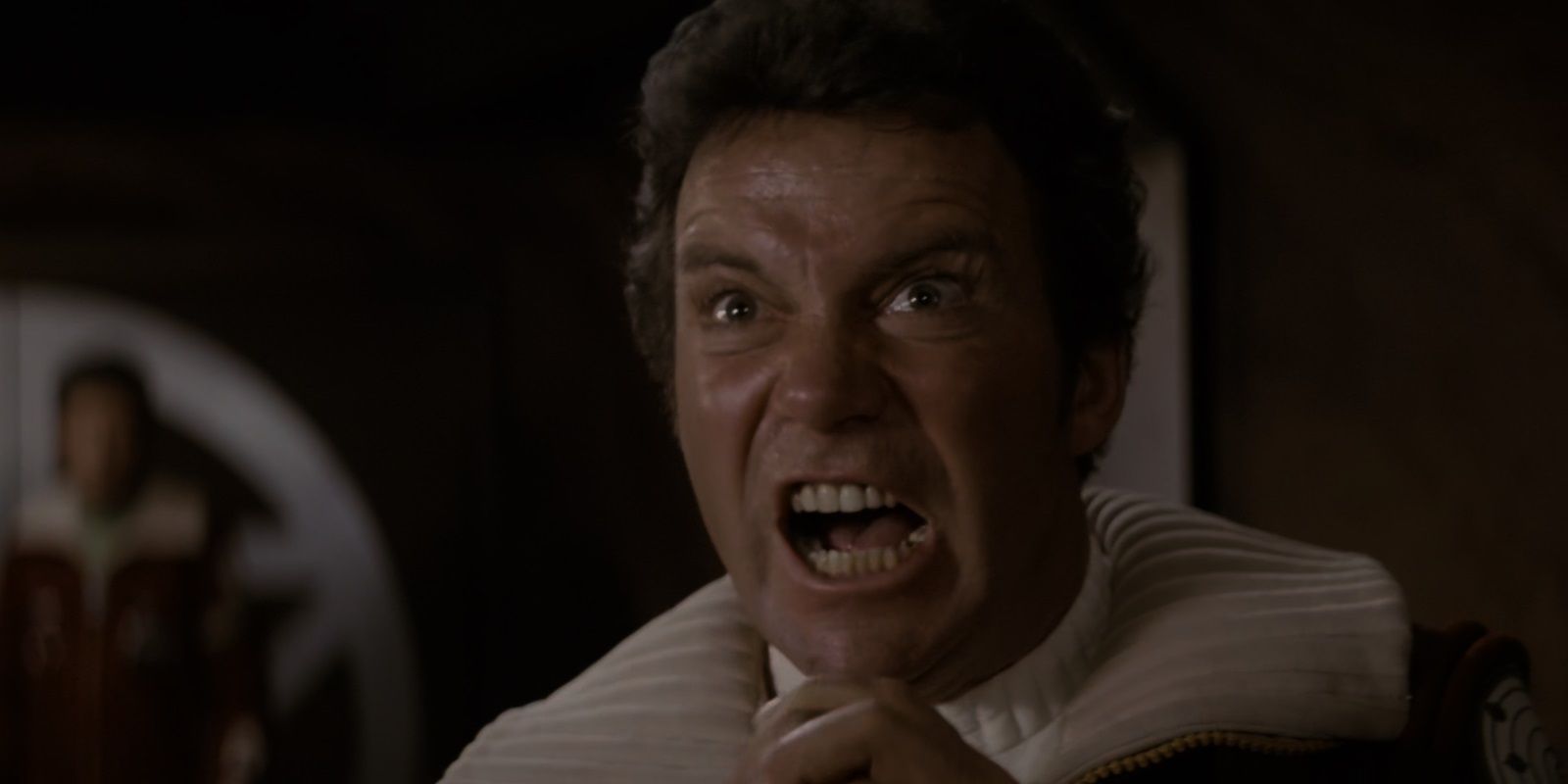
Roddenberry didn’t take the rejection quietly. Feeling pushed out of the franchise he created, he reportedly grew combative with the new direction. Sources close to the production of The Wrath of Khan described his involvement as unhelpful at best and obstructive at worst.
Though demoted to an "executive consultant" title, Roddenberry used his limited influence to leak early script drafts to fan groups in an attempt to stir backlash. He also objected to the film’s militaristic tone and particularly to Spock’s death, which he felt betrayed the spirit of the series.
Harve Bennett and Nicholas Meyer, brought in to steer the sequel, often had to work around Roddenberry’s interference. The irony is that by trying to sabotage the new direction, Roddenberry underscored exactly why Paramount felt the need to move on. With Roddenberry moved into a largely ceremonial role, Harve Bennett famously sat down to watch all 79 episodes of TOS and zeroed in on what the movies had been missing: a compelling antagonist. Then Meyer rewrote the script in just 12 days without taking screen credit.
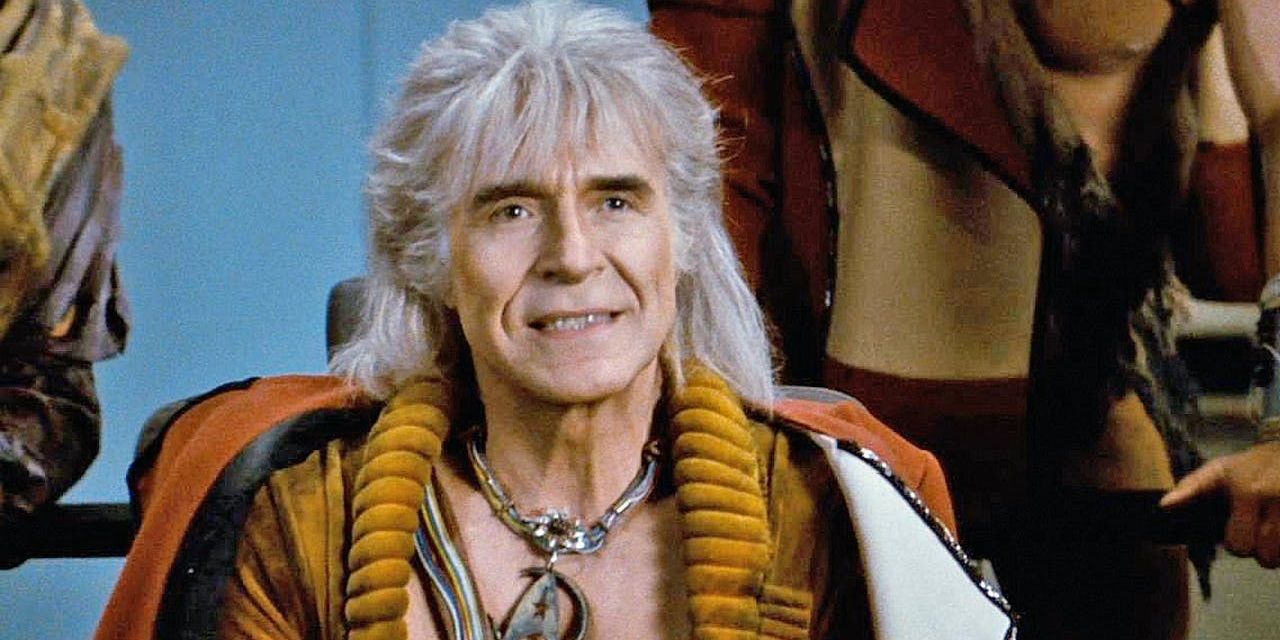
That led to the return of Khan Noonien Singh, played with scene-chewing brilliance by Ricardo Montalbán. Under the direction of Nicholas Meyer, The Wrath of Khan became everything The Motion Picture wasn’t: taut, emotional, action-packed, and character-focused. It tackled themes of aging, sacrifice, and vengeance, all while delivering iconic moments that still resonate today.
From the introduction of the Kobayashi Maru test to Spock’s unforgettable sacrifice, The Wrath of Khan became a benchmark for what Star Trek could be when handled with both reverence and fresh perspective. The shift away from Roddenberry’s control proved, in this case, to be a blessing.
The Roddenberry Paradox: Star Trek Visionary; Sometimes Wildly Off-Base
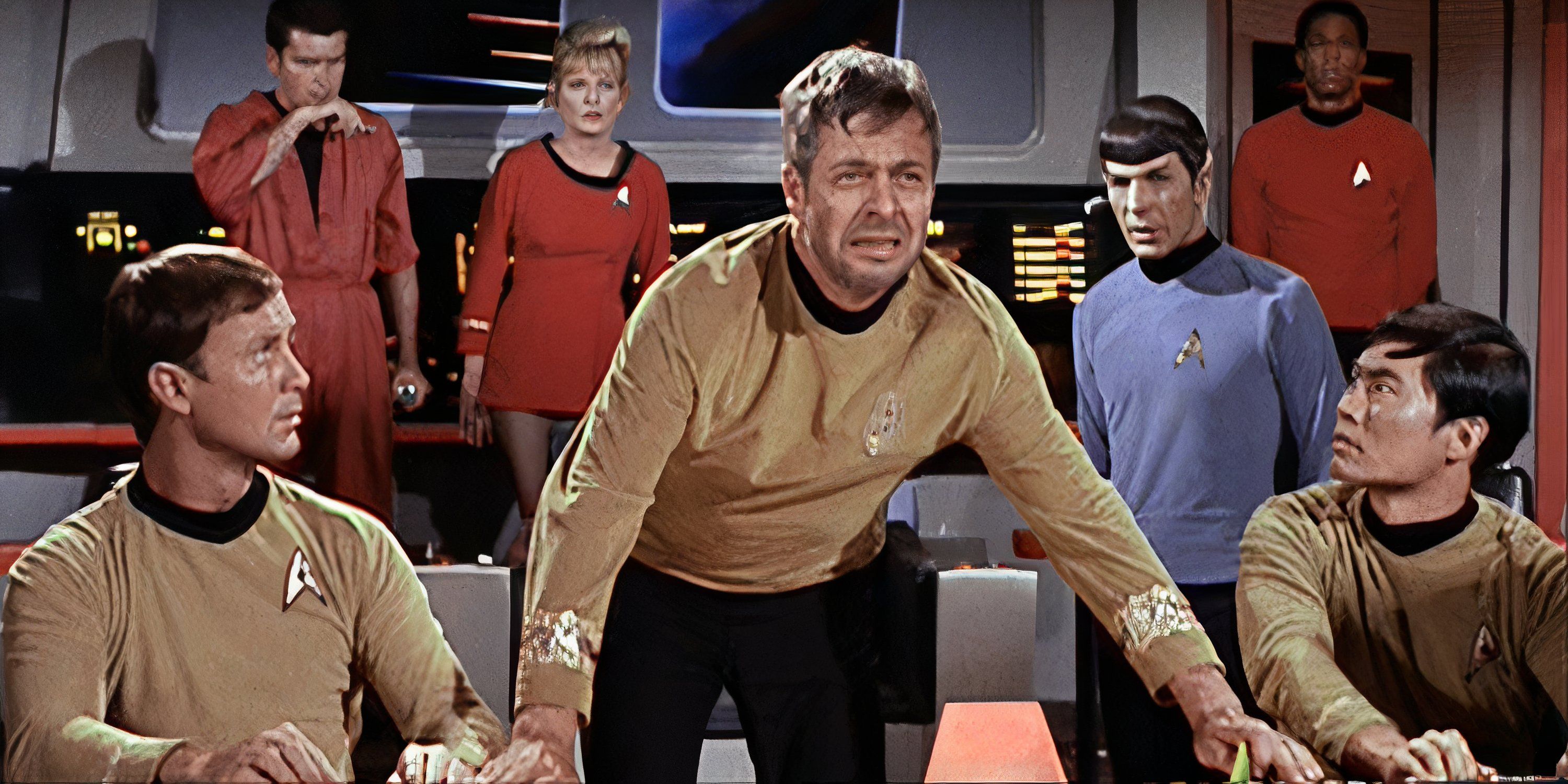
To his credit, Roddenberry was never short on vision. He believed Star Trek could be a vehicle for social commentary, a platform to explore the best and worst of humanity. And it was. Many of the best episodes of TOS bear his philosophical fingerprints.
But Roddenberry’s strength as a world-builder sometimes came at the expense of narrative clarity or audience connection. He loved to challenge viewers, but occasionally, those challenges turned into alienating experiments. The rejected JFK script wasn’t his only oddball pitch. Fans will remember episodes featuring space hippies, duplicate Kirks, and even Abraham Lincoln floating in the void.
Roddenberry’s genius was real, but it was also untamed. Without editors, collaborators, and, yes, studio execs to push back, his ideas could drift far from what made Star Trek special in the first place. In hindsight, Paramount's decision to sideline Roddenberry's time-travel assassination plot may have saved the franchise. The Wrath of Khan reinvigorated Star Trek and proved that letting new voices play in the sandbox could lead to greatness. Roddenberry may have been the father of Star Trek, but sometimes even a legend needs someone to say, "Maybe not this time, Gene."
- Created by
- Gene Roddenberry
- First Film
- Star Trek: The Motion Picture
- Latest Film
- Star Trek Beyond
- First TV Show
- Star Trek: The Original Series
- Latest TV Show
- Star Trek: Strange New Worlds
- Creation Year
- 1966